New federal court records obtained by The Salty Soldier reveal the baby’s age, alleged cause of death and evidence investigators collected after searching the on-post Fort Benning home shared by an active-duty soldier and his partner.
The baby at the center of a Fort Benning felony-murder case was only about seven weeks old when prosecutors say he died from malnutrition and dehydration inside the family’s on-post military housing.
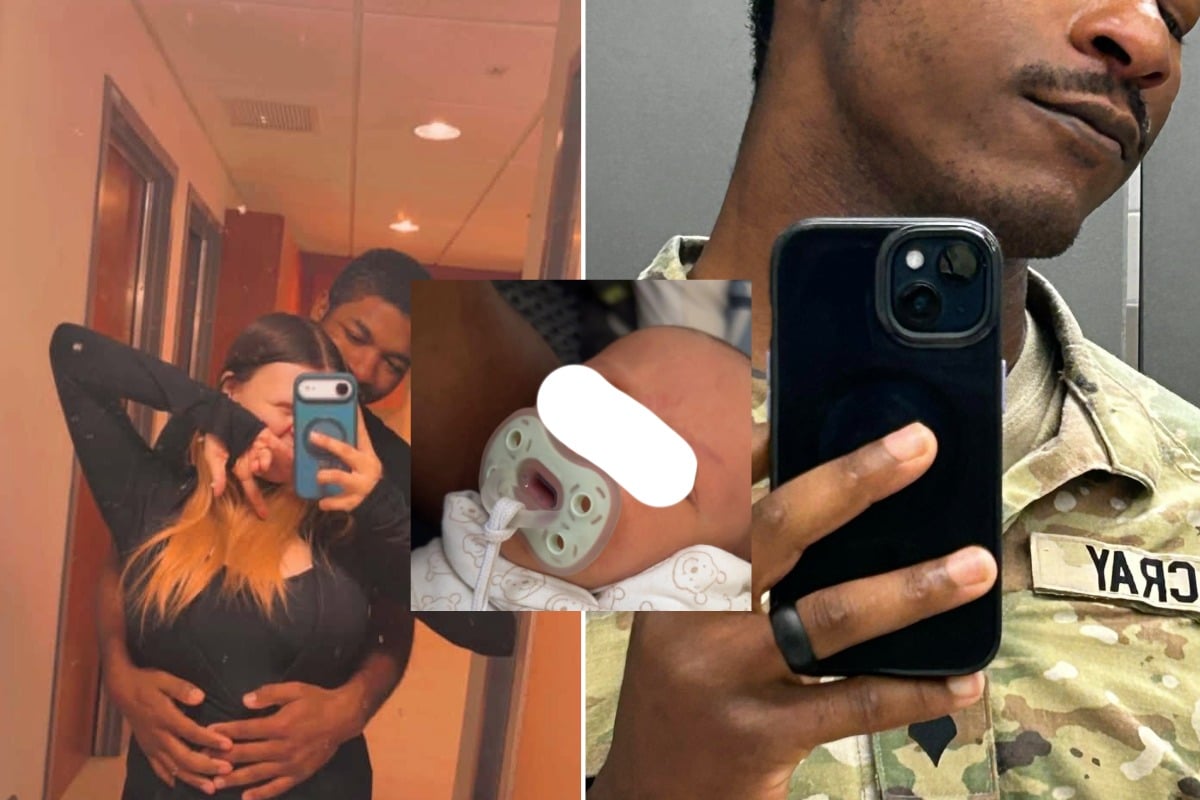
New federal court records obtained by The Salty Soldier provide the clearest picture yet of what investigators believe happened inside the Fort Benning residence shared by active-duty soldier Ladarrion McCray and Emma Bradshaw.
The couple is accused of depriving their infant son of necessary food and sustenance while also neglecting three dogs so severely that one died and the other two suffered significant muscle wasting.
McCray and Bradshaw are now charged with felony murder by child abuse, first-degree cruelty to children, making false statements, animal crushing, aggravated animal cruelty and two counts of animal cruelty.
Federal prosecutors say their son, identified in court records only as L.M., was approximately seven weeks old when he died Jan. 28. A newly obtained government filing says the child is alleged to have died from malnutrition and dehydration.
That detail was not included in the Justice Department’s initial public announcement of the case, which said only that McCray and Bradshaw allegedly deprived their son of necessary sustenance from Jan. 14 through Jan. 28, ultimately resulting in his death.
The alleged abuse occurred while the couple and their newborn son were living in military housing on Fort Benning.
McCray had recently transferred to the installation when Bradshaw joined him there. She was pregnant when she arrived at Fort Benning, according to federal prosecutors.
The newly obtained records also reveal the scope of the investigation.
Investigators obtained the baby’s birth and treatment records, along with medical records connected to Bradshaw’s pregnancy and the child’s birth. They also collected veterinary records for all three dogs, including necropsy records for the dachshund that died.
Army Criminal Investigation Division agents searched the couple’s on-post residence and seized cell phones belonging to both Bradshaw and McCray. Investigators extracted data from those phones, although prosecutors have not publicly disclosed what was recovered.
By Jan. 28, prosecutors allege, the couple’s infant son was dead and all three dogs inside the Fort Benning home had been subjected to serious neglect.
Army CID agents executed a search warrant at the residence that day.
Investigators found a male hound and female Doberman that appeared severely malnourished. The dogs were taken to an animal shelter on Fort Benning, where medical personnel documented severe malnutrition and significant muscle wasting.
The third dog, a female dachshund, was dead.
Agents found the animal’s remains inside a trash barrel outside the residence. Prosecutors say the dog had been placed in a garbage bag and discarded with the household trash.
A necropsy later concluded the dachshund died from starvation.
Prosecutors allege McCray and Bradshaw failed to provide the three animals with adequate food, water, sanitary conditions and ventilation.
The couple allegedly gave Army CID investigators a different explanation.
According to the indictment, both told agents that the dachshund became sick, died and was buried at a park outside Fort Benning.
Federal prosecutors say that story was false.
Bradshaw and McCray are also accused of telling investigators that their infant son had shown no signs of illness before his death.
Prosecutors allege both parents knew the child had been exhibiting symptoms of severe malnourishment before he died.
Those alleged statements now form separate federal false-statement charges against each defendant.
The case initially looked very different when federal charges first appeared in June.
The original indictment focused on the dogs and the couple’s alleged statements to investigators. Neither McCray nor Bradshaw was initially charged with causing their son’s death.
McCray was arrested by an Army CID special agent at Fort Benning on June 11. He pleaded not guilty and was released on a $10,000 unsecured bond.
Bradshaw appeared in federal court four days later. Prosecutors sought to have her detained, but she was also released on a $10,000 unsecured bond and ordered to reside at the Lovelady Center, a residential program in Birmingham, Alabama.
It was not until July 14 that a federal grand jury returned a superseding indictment adding felony murder and first-degree cruelty to children.
At a July 22 hearing, both defendants pleaded not guilty to the new charges. Despite the addition of a murder charge carrying the possibility of life in prison, the court left both defendants’ $10,000 unsecured bonds in place and modified their release conditions rather than ordering them detained.
McCray’s original release conditions prohibited him from living in any home with a pet.
That restriction was later modified after the court learned that his mother and her husband owned four dogs at their Valdosta home. His parents told the court they were aware of the charges against McCray and would remain solely responsible for the animals.
The judge then permitted McCray to live at the home following his military discharge.
Bradshaw’s conditions were stricter when it came to animals. Her release order prohibited her from possessing a pet “in any way for any reason” and barred her from residing in a home with one.
The Justice Department has said McCray is also subject to proceedings to remove him from military service because of the alleged conduct.
The latest court filings suggest the prosecution will rely heavily on medical, veterinary and digital evidence.
Prosecutors told the court that while the discovery file itself is not unusually large, the nature of the allegations will require significant time for defense attorneys to review medical evidence and consult expert witnesses.
The government estimates its presentation at trial would take approximately one week, not including defense witnesses or rebuttal testimony.
On Sept. 19, prosecutors delivered discovery materials to defense attorneys on a hard drive. A filing two days later said the production was detailed in a separate discovery log that has not been made public.
The government has also indicated that it may seek to introduce additional evidence under Federal Rule of Evidence 404(b), which can allow evidence of other acts or conduct for limited purposes. Prosecutors said they intend to file a separate notice explaining what evidence they want to use and why.
The court has placed discovery in the case under a protective order, restricting who may receive the material and requiring identifying information to be removed from evidence that later becomes part of the public court record.
The case has since been declared complex, and the trial has been pushed from the September 2026 term to the September 2027 term to give both sides additional time to review the medical records, digital evidence and other material collected during the investigation.
For prosecutors, however, the central allegation remains far less complicated: a seven-week-old baby and three dogs were dependent on two adults living with them inside military housing on Fort Benning for their most basic needs.
By Jan. 28, prosecutors say, the baby and one of those animals were dead.
Bradshaw and McCray have pleaded not guilty. The charges are allegations, and both defendants are presumed innocent unless and until proven guilty beyond a reasonable doubt.
© 2026 The Salty Soldier. All rights reserved. Reproduction without written consent is strictly prohibited.