
Months after a decorated Fort Riley Military Police noncommissioned officer was arrested and accused of serious sexual offenses in Kansas, prosecutors dismissed the case and a judge later ordered the records of his arrest and prosecution expunged.
Now, Staff Sgt. Roland Joseph Dore Jr.’s attorney says video evidence and changing accounts from the woman who accused him showed that Dore had been falsely accused.
Dore, then 35, was arrested in December 2025 and later charged in Geary County District Court with one count of rape and one count of sexual battery stemming from an alleged Dec. 21 encounter in Junction City.
The accusations carried potentially devastating consequences for a career Soldier who, only months earlier, had been publicly recognized as one of the Military Police Corps’ top-performing noncommissioned officers.
Editor’s note: Because this publication is subject to advertiser and monetization restrictions governing sensitive content, some details have been summarized or omitted from this version of the report. Those edits were made to comply with platform advertising standards, not to withhold relevant information from readers. A more complete version containing additional details from court filings, prior coverage, and the evidentiary record is available at The Salty Soldier Uncensored.
But the case never went to trial.
On July 10, while the case was before the court for a preliminary examination, Geary County Attorney Krista Blaisdell informed the court that the State wanted to dismiss the charges.
Dore’s attorney did not object, and the court dismissed the case without prejudice.
A little more than a month later, on Aug. 25, Geary County District Court Judge Courtney D. Craver granted Dore’s petition to expunge the records of his arrest and prosecution.
The expungement order states that all charges had been dismissed and that clearing the records was in the interests of justice.
Neither the dismissal order nor the expungement order explains why prosecutors chose to end the case.
Dore’s attorney, Christopher Joseph, has now provided The Salty Soldier with his account of what he says happened before the prosecution ended.
“Roland Dore was falsely accused. There is a video of what happened. The accuser made claims that were wildly inconsistent with what the video showed. Her version of events changed repeatedly,” Joseph said.
Joseph said the woman later testified during Dore’s preliminary hearing and again made statements that conflicted with both her earlier accounts and the video evidence.
“She testified at the preliminary hearing and said things that were inconsistent with both her prior statements and the video,” Joseph said. “During cross examination, she asked for a break, left the courtroom and never returned. The prosecutor then dismissed the case.”
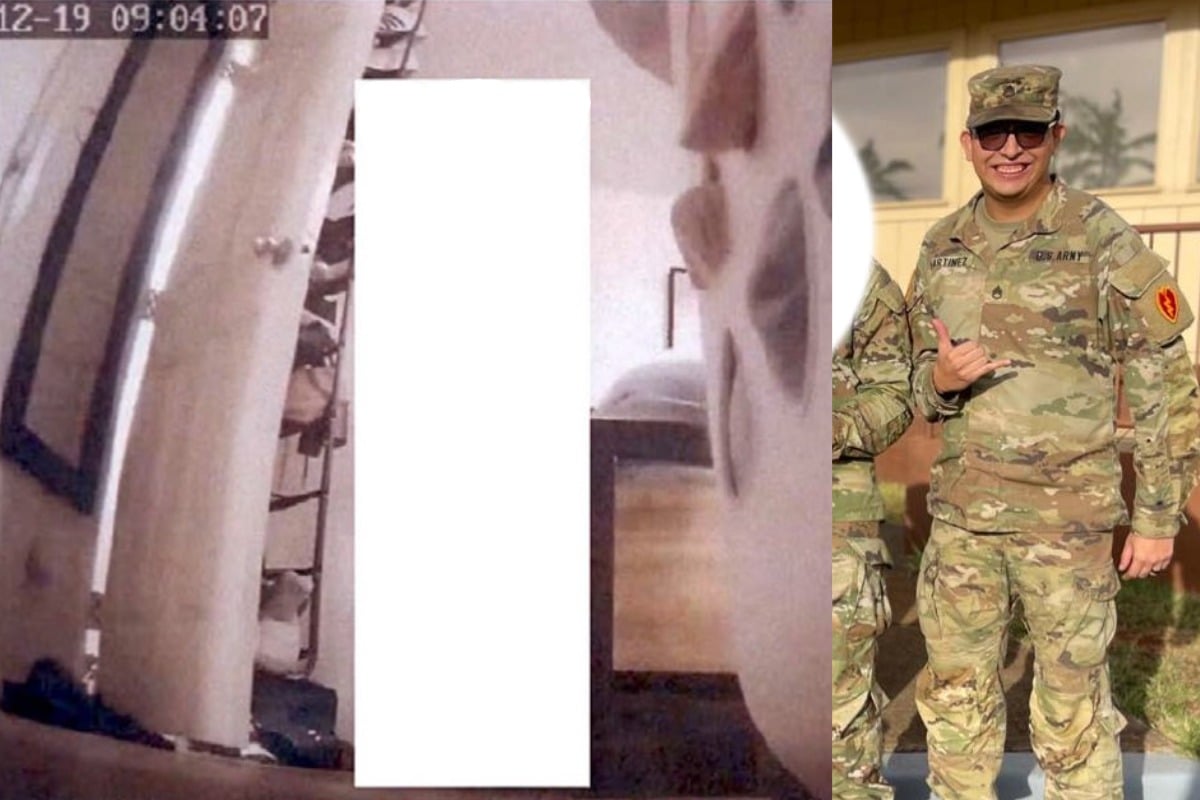
Court records obtained by The Salty Soldier while the case was still active independently confirm that video evidence of the underlying encounter existed.
In February, Craver approved a protective order jointly requested by prosecutors and Dore’s defense attorneys.
The order described the footage as video captured Dec. 21 showing “acts and circumstances underlying the charges” and placed strict limits on who could possess, view or disclose it.
Even Dore was not permitted to possess a copy. He could view the footage only while his attorney maintained custody and control of it.
Those restrictions remain important because Joseph says the video is central to his contention that Dore was falsely accused, but he cannot provide The Salty Soldier with a copy for independent review.
Joseph also said police conducted two recorded interviews with the woman and that her accounts differed substantially from one another and from what he says was captured on video.
The Salty Soldier has not independently viewed the protected footage or the recorded police interviews and therefore is not presenting Joseph’s characterization of those materials as an independent factual finding.
However, court filings obtained before the case was expunged show that Dore’s defense had been developing evidence challenging aspects of the prosecution’s case months before the charges were dismissed.
In May, the defense asked the court to preserve testimony from Cole Wilson, whom Joseph identified in a filing as a material witness.
According to the filing, Wilson lived with the woman at the time, knew she planned to meet Dore, spoke with and observed her after she returned, and later accompanied her to the police department.
The State did not oppose preserving Wilson’s testimony, and the court granted the request.
A subsequent filing scheduled Wilson’s deposition before a certified court reporter and specified that the testimony would be recorded by both video and audio.
The case eventually reached the preliminary-hearing stage in July.
A preliminary hearing is not a trial. It is an early stage in a felony prosecution where the State must present enough evidence for the case to continue toward trial.
The official dismissal order shows that Dore appeared with Joseph and that Blaisdell represented the State.
During that proceeding, Blaisdell informed the court that prosecutors wanted the charges dismissed.
The written order does not explain why.
Joseph says the events immediately before that decision are significant.
According to Joseph, the woman had been testifying and answering questions under cross-examination when she requested a break. He said she left the courtroom and did not return.
The State then dismissed the case.
Joseph said an audio recording of the preliminary hearing exists and would document the woman’s testimony, the cross-examination, her request for a break and the proceedings leading to the dismissal.
He said there is no written record explaining the prosecutor’s rationale for ending the case.
The dismissal was entered without prejudice, meaning the judge did not issue a verdict finding Dore guilty or not guilty.
The case, however, was not refiled.
Instead, Dore sought to have the records associated with the arrest and prosecution cleared.
On Aug. 25, the court granted that request.
The expungement order directed that records of Dore’s arrest and prosecution be expunged and that notice be sent through the criminal justice system to agencies that could possess related records.
The order does not independently find that the accusations were fabricated.
Joseph’s position is stronger: he says the evidence showed Dore was falsely accused.
The Salty Soldier contacted the Geary County District Court after obtaining the dismissal and expungement orders. Trial Court Clerk Karen Stearns responded that the court had “no information to provide.”
After Joseph later provided his on-the-record account of what occurred during the preliminary hearing, The Salty Soldier sent Stearns a follow-up asking the court to confirm, deny or clarify his description of the proceedings. The court did not respond to the follow-up before publication.
The legal case against Dore is now over.
His arrest came only months after a major professional achievement.
In September 2025, Dore was publicly honored at Fort Leonard Wood after receiving the Regimental Command Sergeant Major James W. Frye Noncommissioned Officer of Excellence Award, an honor recognizing leadership and professional performance within the Military Police Corps.
Previous reporting by The Salty Soldier also documented Dore’s service as a Fort Riley-based Military Police staff sergeant and his prior military service overseas.
The arrest placed that military career and reputation under a very different kind of public scrutiny.
Dore has not filed a civil lawsuit over the case, according to Joseph. But the absence of a lawsuit should not be interpreted as resolving the underlying factual dispute. Civil cases can be costly, difficult to pursue and may offer little practical recovery even when someone believes they have been wronged.
What is established is how the criminal case ended.
Dore was accused of serious crimes and publicly identified after his arrest.
He was never convicted.
The State dismissed the charges during the preliminary-hearing stage, and the records of his arrest and prosecution were later expunged.
His attorney now says video evidence and the woman’s changing accounts showed that Dore had been falsely accused.
The court records do not independently make that final finding, but they do establish that the video existed, that prosecutors and defense attorneys jointly sought to protect it from disclosure, and that the State ultimately chose not to continue the prosecution.
The Salty Soldier previously reported on Dore’s arrest and the criminal proceedings while the case remained active. This follow-up is intended to ensure that the public record also reflects how the case ultimately ended.
© 2026 The Salty Soldier. All rights reserved. Reproduction without written consent is strictly prohibited.