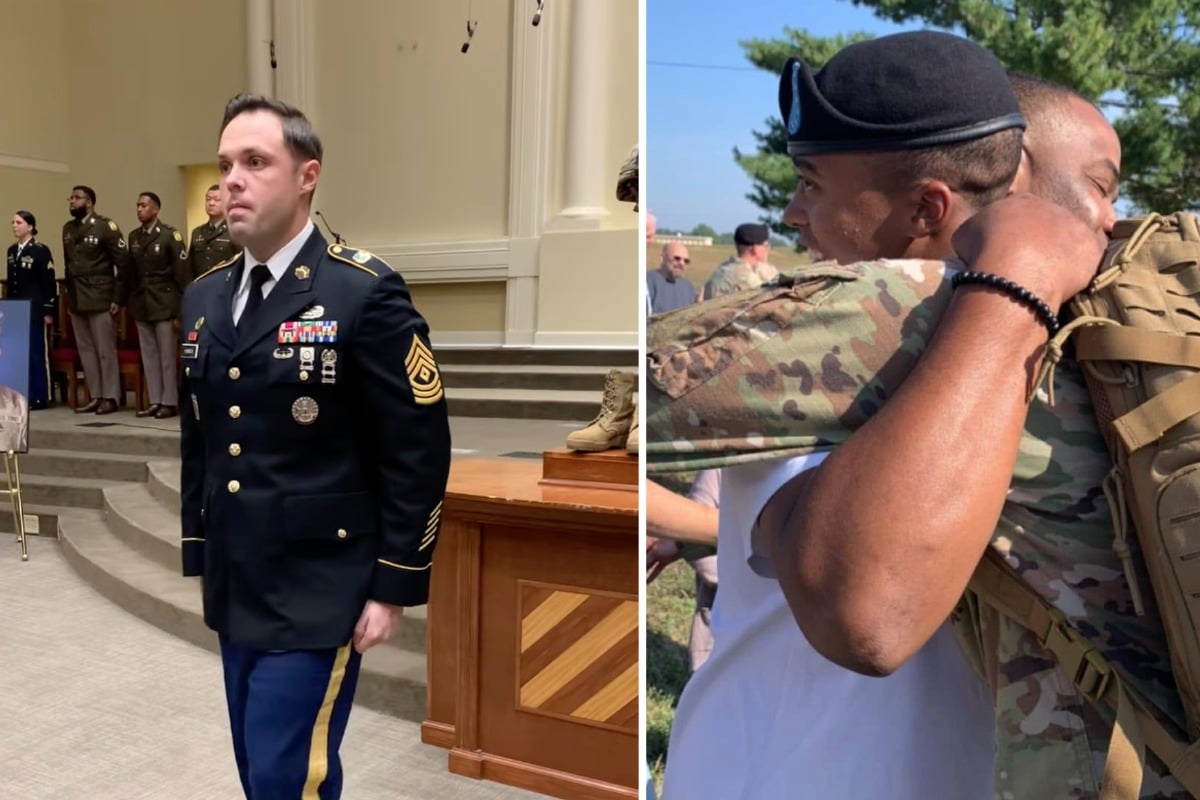
A Fort Benning drill sergeant assigned to help train the Army’s newest infantry Soldiers repeatedly violated a military protective order after an alleged domestic violence incident, according to court-martial records obtained by The Salty Soldier.
Staff Sgt. Bradley A. Dorton, assigned to B Company, 2nd Battalion, 29th Infantry Regiment, 197th Infantry Brigade, pleaded guilty on May 4, 2026, to 11 specifications of failing to obey a lawful written order and one specification of assault consummated by a battery. A military judge sentenced him to 180 days of confinement.
The battalion is part of Fort Benning’s Maneuver Center of Excellence, where drill sergeants are responsible for training future infantry Soldiers through One Station Unit Training (OSUT).
Seventeen days after his court-martial, he announced that his Army career was ending on social media.
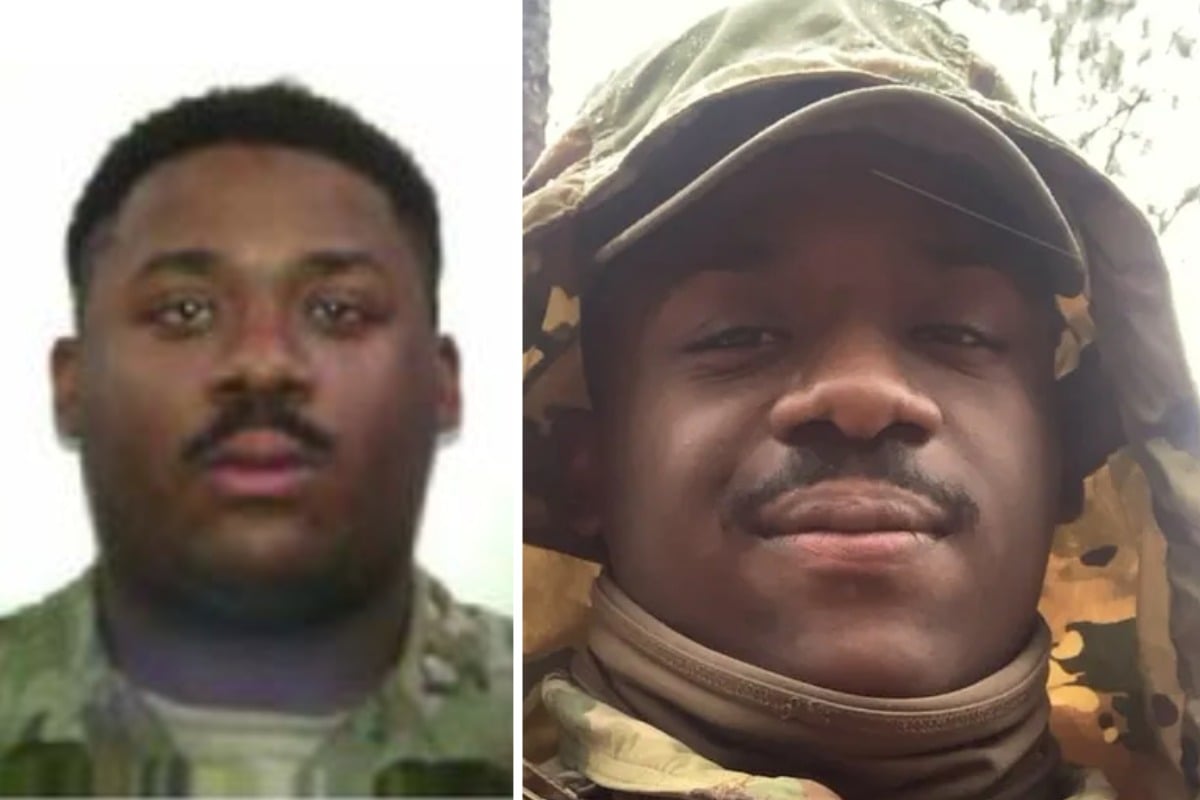
“My time in the Army is coming to a close,” Dorton wrote on May 21. The post featured photographs of him wearing a drill sergeant hat and reflected on nearly a decade of military service but made no mention of the court-martial. One week later, the military judge formally entered judgment in the case.
The Army’s public court-martial summary provides only a brief description of Dorton’s convictions. The underlying charge sheet, Statement of Trial Results and Entry of Judgment tell a much broader story.
According to those records, prosecutors initially pursued far more serious allegations than those resulting in conviction.
Dorton was originally charged with domestic violence under Article 128b after prosecutors alleged he grabbed his spouse by the neck during an incident on or about Sept. 19, 2025. A second charge alleged the woman was holding a child under the age of 16 at the time, resulting in an additional child endangerment charge under Article 119b.
Both charges were later dismissed as part of a plea agreement.
Instead, Dorton pleaded guilty to a narrower Article 128 offense after admitting he unlawfully pushed the woman on the neck with his hand during the same incident. The publicly released records do not include the plea agreement or stipulation of fact explaining why the original domestic violence and child endangerment charges were dismissed.
Two days after the alleged assault, military authorities issued Dorton a DD Form 2873 Military Protective Order prohibiting him from contacting the protected woman or returning to her residence.
According to the records, he began violating those restrictions almost immediately.
Rather than complying with the order, Dorton admitted repeatedly contacting the protected woman over the following month. Court records document prohibited phone calls and text messages beginning Sept. 22 and continuing through late October. Several of those contacts allegedly occurred through county JailATM communication systems. Because portions of the records remain redacted, the publicly released documents do not explain why those systems were used or identify which party was in custody at the time.
The violations extended beyond phone calls.
Dorton also admitted entering the protected woman’s residence on multiple occasions despite the military protective order. Those repeated contacts and entries ultimately accounted for nearly all of the Article 92 convictions in the case.
The original charge sheet also accused Dorton of violating firearm-related provisions of the protective order by failing to remove a personally owned firearm from the residence and by failing to register the weapon after bringing it onto Fort Benning in accordance with installation regulations. Both allegations were dismissed under the plea agreement.
While awaiting trial, prosecutors further alleged Dorton violated command-imposed administrative restrictions by driving despite being prohibited from doing so and by twice leaving his barracks without the required escort. Those three additional Article 92 specifications were also dismissed.
The records reveal another detail not mentioned in the Army’s public summary. During the case, a Rule for Courts-Martial 706 inquiry—commonly known as a sanity board—was ordered. Such inquiries evaluate an accused’s mental capacity to stand trial and mental responsibility at the time of the alleged offenses. The publicly released documents do not disclose the results of that evaluation or explain why it was requested.
Although the military judge sentenced Dorton to 180 days of confinement, he received 169 days of credit for time already spent in pretrial confinement, meaning nearly all of the sentence had been served before the court-martial concluded.
The sentence did not include a punitive discharge, reduction in rank, forfeiture of pay or a fine. The Entry of Judgment also reflects that the convening authority took no post-trial action.
Because the court-martial did not adjudge a punitive discharge, the publicly available records do not establish how Dorton’s military service ultimately ended. His Facebook post suggests his Army career was coming to a close, but the records do not indicate whether he voluntarily separated, retired or was later administratively discharged.
© 2026 The Salty Soldier. All rights reserved. Reproduction without written consent is strictly prohibited.