A Fort Bragg staff sergeant accused of possessing 73 videos depicting the sexual abuse of children pleaded guilty this month to two felony counts, ending a case that initially drew attention because of the sheer number of charges against him.
But newly obtained court records tell a different and more disturbing story than a tally of files or criminal counts.
They describe children.
Some were estimated to be only 3 or 4 years old. Others were 5, 6, 8 or 10. Prosecutors alleged that some were asleep when adults sexually abused or exploited them. Others were recorded crying, including one young girl who prosecutors said was crying in pain while being assaulted and another who was allegedly crying and telling an adult to stop.
Editor’s Note: This public version of the article has been edited to omit the most graphic descriptions contained in the criminal indictments. The full uncensored version, including additional details from the court records, can be read at The Salty Soldier Uncensored.
The records provide an unusually stark look at what the phrase “child sexual abuse material,” or CSAM, can conceal when criminal cases are reduced to the number of images, videos or files found on a computer.
Behind each authentic recording is a child who was abused or exploited before the file ever existed.
And while the man accused of possessing those recordings now has a conviction, a sentence and a place in the court record, the documents reviewed by The Salty Soldier leave another question unanswered: What happened to the children depicted in them, and were the people who abused them ever caught?
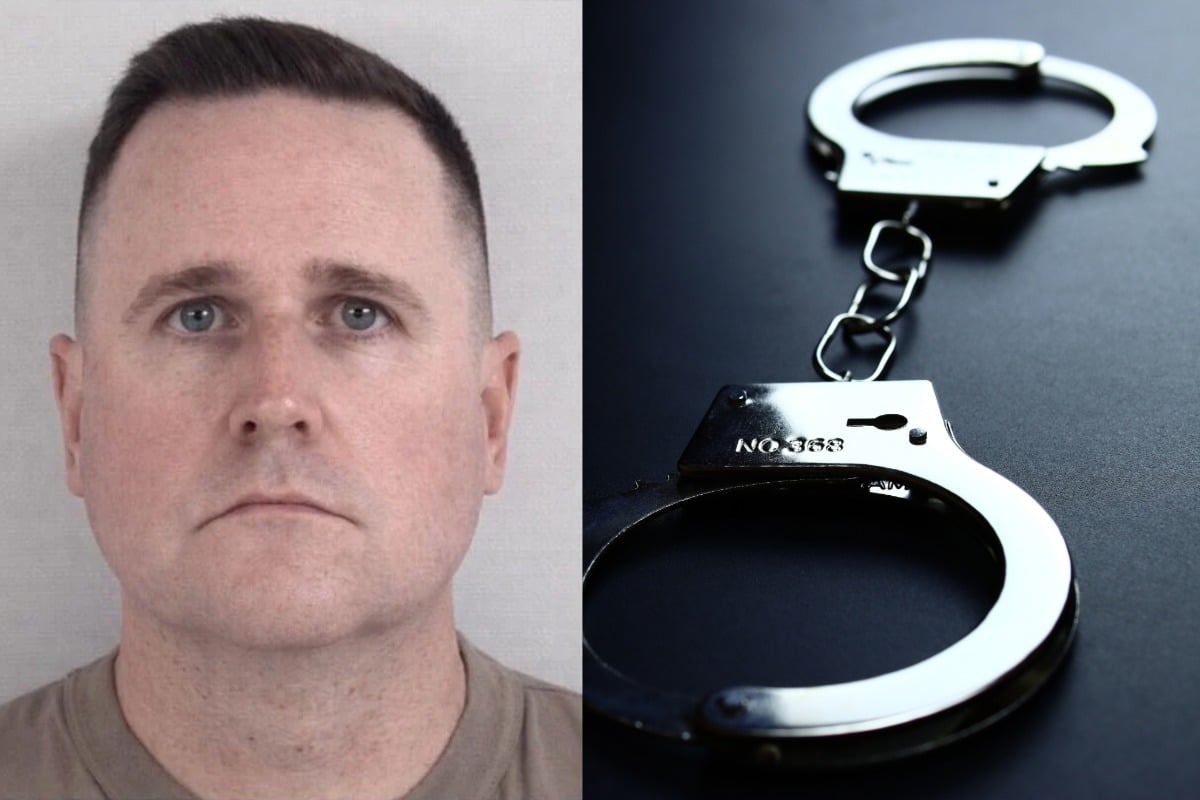
Staff Sgt. Charles M. Zukowski, 43, was arrested March 27 following an investigation by the Fayetteville Police Department.
According to an affidavit filed by Fayetteville Police Detective Preston Howell Jr., the department’s cyber unit and U.S. Army Criminal Investigation Division jointly executed a search warrant at Zukowski’s Fayetteville residence on March 25. Investigators recovered an ASUS laptop. Howell obtained another warrant to search the computer the following day.
Howell wrote that he found 73 different videos of child sexual assault material on the computer and personally reviewed them, describing the recordings collectively as depicting prepubescent children engaged in sexual acts.
Zukowski was subsequently charged with 73 counts of third-degree sexual exploitation of a minor under North Carolina law.
For months, that number — 73 — largely defined the case.
The indictments show what was behind it.
One Cumberland County grand jury indictment alleged that a video depicted a boy estimated to be between 3 and 4 years old in a sexually abusive situation involving an adult man. The same indictment described another recording involving an 8- to 10-year-old girl who prosecutors alleged was being assaulted by an adult while crying and saying “stop.”
Another indictment alleged a depiction involving a girl estimated to be between 3 and 4 years old engaged in sexual activity with an adult woman. A separate count in the same case described a girl estimated to be between 3 and 5 years old.
In another case, prosecutors alleged a recording showed a sleeping girl estimated to be between 5 and 7 years old while an adult man sexually abused her. Another count alleged someone removed the clothing of a sleeping girl estimated to be between 10 and 11 years old and exposed her to the camera.
A separate indictment alleged a girl estimated to be between 6 and 8 years old was sexually assaulted by an adult man while “crying in pain.”
The indictments also describe numerous other alleged recordings involving elementary-school-aged children and adults engaged in sexual acts with them. In some counts, more than one child appeared in the same recording.
The descriptions are graphic enough that The Salty Soldier is not reproducing most of them in this public version.
Their significance, however, is difficult to miss.
The words “73 videos” can sound like an inventory. The court records instead describe recordings of real children — children who had to be sexually exploited, abused or exposed before those videos could ever be possessed, copied or viewed.
The records do not establish that there were 73 different victims. Multiple recordings could depict the same child, while some individual videos contained more than one child. The indictments reviewed by The Salty Soldier also do not identify the children by name.
More importantly, they do not say what happened to them afterward.
It is unclear from the available public records whether each child had already been identified by law enforcement, whether some remained unidentified when the material was found on Zukowski’s computer, whether any of the children were still at risk, or whether the adults depicted abusing them were identified and prosecuted.
Those unanswered questions extend beyond Zukowski.
Possession cases commonly focus on the person who downloaded, stored or viewed abusive material. But the underlying recordings document separate crimes against children, often committed somewhere else and potentially long before a file is recovered from a defendant’s computer.
In Zukowski’s case, the person accused of possessing the material is now known publicly. The identities and outcomes of the children depicted in most of those recordings — and of the people shown abusing them — remain absent from the court records reviewed by The Salty Soldier.
Zukowski ultimately pleaded guilty Oct. 8 to two Class H felony counts of third-degree sexual exploitation of a minor.
The two counts that resulted in convictions concerned material prosecutors alleged depicted an unidentified girl between 11 and 13 years old engaged in sexual activity with an adult man and an unidentified girl between 15 and 17 years old engaged in sexual activity with a male between 15 and 17.
Those two convictions represented only a small portion of the original case.
As part of the plea agreement, prosecutors dismissed 10 counts each in seven companion Superior Court cases — 70 charges in total.
An additional charge in the lead case had previously been dismissed after prosecutors obtained the later indictment, leaving the original 73 charges resolved through two convictions and 71 dismissals.
The dismissed charges included many of the allegations involving the youngest children and some of the most severe abuse described in the indictments.
Dismissal does not mean those allegations were proven in court, nor does it mean Zukowski admitted possessing each of the files described in the dismissed counts. His guilty pleas applied only to the two offenses of conviction.
The plea agreement called for a split sentence and allowed Zukowski’s time in pretrial confinement to count toward the active portion of his punishment. It also required him to follow the rules of the sex-offender registry while on supervised probation and waive any possessory interest in property seized during the investigation.
Judge Stephen Stokes imposed a sentence of five to 15 months but suspended its execution and placed Zukowski on supervised probation for 36 months. Court records credit him with 196 days already spent in confinement.
The court also ordered him to register as a sex offender and imposed extensive restrictions governing contact with minors, sexual material, treatment and electronic devices.
Zukowski’s case is therefore finished, at least at the state trial-court level.
But the stories contained inside the files are not.
The public court record tells readers who possessed the videos, what he was charged with and what punishment he received.
It says far less about the children whose abuse was recorded.
For them, the most important questions remain outside the case docket: whether they were identified, whether they were brought to safety, and whether the people who hurt them were ever held accountable.
© 2026 The Salty Soldier. All rights reserved. Reproduction without written consent is strictly prohibited.