Social media posts dating back to 2024 describe alleged encounters inside military installations, including a building designated for senior military personnel. The claims raise questions about installation security, military readiness, fraternization, and command oversight.
FORT CAMPBELL, Ky. — A social media account with apparent ties to the Fort Campbell military community has spent more than two years publicly advertising anonymous sexual encounters, including recurring lunchtime gatherings allegedly held on the installation and earlier activity associated with military housing in South Korea.
The advertisements, which date back to August 2024, describe encounters at U.S. Army installations, sometimes during normal duty hours. One post identified a specific government-owned residential building at Camp Humphreys, South Korea, while another claimed that approximately 22 men attended a gathering near Fort Campbell before supplies ran out.
Editor’s note: This article has been edited for public reporting and general-audience publication. The full article without any omitted evidence or details is available at www.TheSaltySoldierUncensored.com
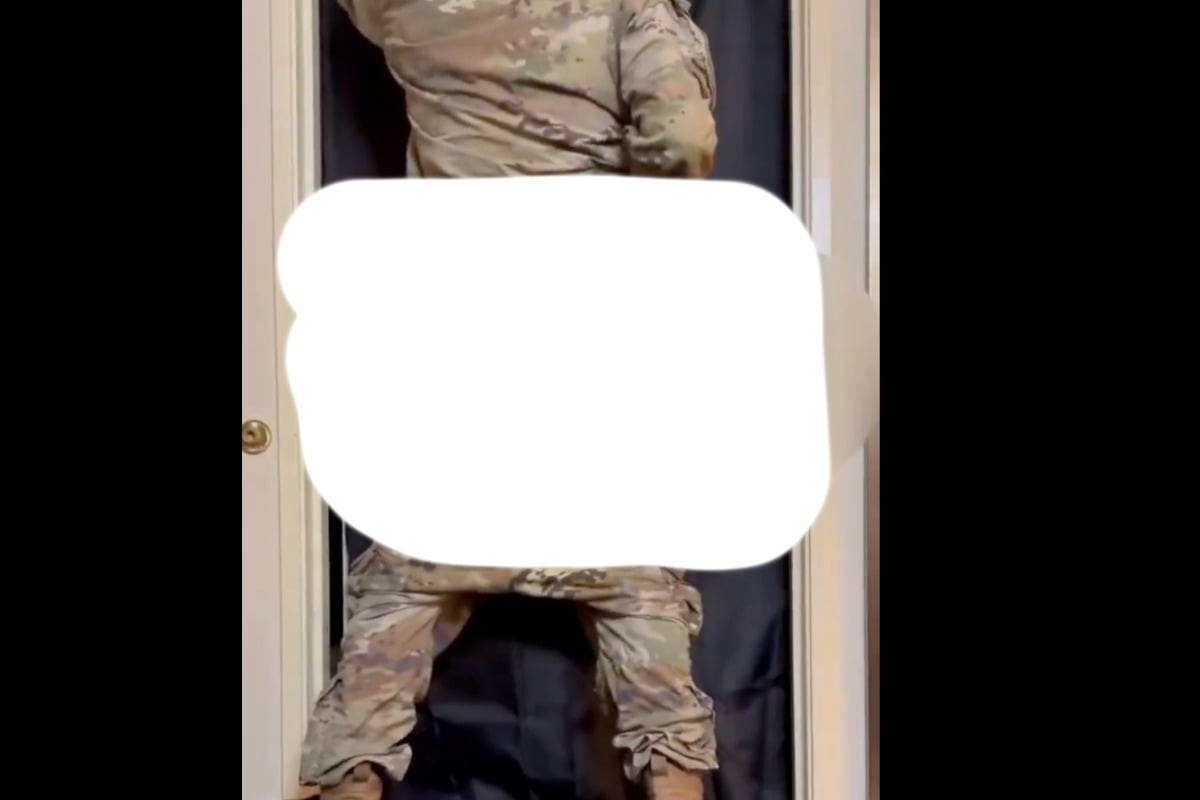
The account has also published adult photographs and videos, including footage depicting an individual wearing what appears to be a U.S. Army camouflage uniform during a sexual encounter.
The publicly accessible material raises questions that extend well beyond private relationships, including military readiness, sexually transmitted infections, fraternization, exploitation, installation security, and the potential misuse of government-provided housing.
Although the account’s military status and the circumstances of the advertised gatherings have not been established through official records, the posts themselves document a sustained pattern of claims involving two major Army installations.
On November 5, 2025, the account advertised what it described as a private, anonymous gathering at a residence on Fort Campbell near Gate 2.
The advertised hours were approximately 11:30 a.m. to 1 p.m., overlapping with the normal military duty day.
The post described a concealed setting intended to preserve participants’ anonymity and instructed prospective visitors to contact the organizer privately for additional information. It also indicated that a female acquaintance might participate.
The following day, the account claimed that approximately 22 men and one woman had attended an event.
According to the account, the gathering ended when the organizers exhausted their supply of condoms. The author thanked participants and expressed an intention to organize additional events.
That claim represents one of the most significant details in the account’s public history because of the number of people allegedly involved and the stated location on military property.
The advertisements did not end there.
In June 2026, the same account advertised daily anonymous encounters on Fort Campbell between 11:30 a.m. and 1 p.m.
The post again directed prospective participants to make private contact before receiving the location and indicated that another individual would assist during certain sessions.
Other posts advertised availability during evenings, weekends, and throughout entire weeks.
By November 2026, the account was still publishing advertisements for similar gatherings in online communities associated with Fort Campbell and nearby Tennessee communities.
The repeated lunchtime scheduling raises questions about whether any military personnel were participating during assigned duty hours, whether the locations were authorized for such activity, and whether installation authorities had received reports about the advertisements.
The account’s apparent connection to Army installations extends to South Korea, where its earliest documented advertisements appeared in 2024.
On August 5, 2024, the account published an advertisement in a Camp Humphreys-related online community claiming that anonymous sexual encounters were available inside Building 6022.
Interested participants were instructed to contact the account privately to obtain a room number.
An examination of Army housing information reveals that Building 6022 is part of a residential complex designated for senior military personnel.
Public mapping records identify Building P6022 at 6022 12th Street, U.S. Army Garrison Humphreys, South Korea.
More significantly, the Army’s Directorate of Public Works identifies Buildings 6021 through 6024 as part of the installation’s Senior Leader Quarters (SLQ) residential housing complex.
According to official Army housing guidance, Senior Leader Quarters generally accommodate eligible unaccompanied officers and senior noncommissioned officers, including enlisted personnel in grades E-7 and above.
These are government-provided residential facilities intended to house eligible service members.
Army housing guidance also establishes conditions governing occupancy, visitors, and the authorized use of assigned residential quarters.
The account’s reference to Building 6022 therefore raises a significant question: Was someone using government-provided housing designated for senior military personnel to arrange anonymous sexual encounters?
The account did not publicly identify the room occupant or the person responsible for providing access.
However, the building reference provides an unusually specific detail for military authorities to examine.
The account’s online history also establishes a geographical timeline.
During the latter half of 2024, the account repeatedly advertised encounters in communities associated with Camp Humphreys, Osan Air Base, and other locations in South Korea.
In December 2024, it advertised a private group gathering involving multiple men and women and described arrangements for attendees.
In January 2025, the account stated that it was staying in lodging and spending its final night in Korea.
By March 2025, an associated social media account was advertising similar encounters around Fort Campbell and Clarksville, Tennessee.
Throughout the remainder of 2025, the account continued posting about availability in the Fort Campbell area, including references to being on the installation during daytime hours.
This sequence suggests that the account operator relocated from South Korea to Tennessee in early 2025.
Whether that relocation was connected to an official military reassignment remains unknown.
Nevertheless, the account’s repeated references to military installations, government residential facilities, and daytime availability raise questions about the individual’s connection to the military community.
The investigation also reviewed adult photographs and videos associated with the social media accounts.
The material includes recordings of sexual activity and images appearing to feature recurring participants.
Of particular interest is footage showing an individual wearing what appears to be an Army Operational Camouflage Pattern uniform and military-style boots while participating in an intimate encounter.
The recording bears a watermark associated with the same social media presence responsible for the advertisements.
The visible portion of the recording does not establish the individual’s identity, military rank, unit assignment, or where the encounter occurred.
The significance of the footage is its association with an account that has repeatedly described activity at military installations.
Other posts also discuss anonymous encounters, private arrangements, and offers of financial compensation to prospective partners in the Clarksville area.
Together, the material raises questions about privacy, consent, and whether any participating service members could face coercion or exploitation through the collection or circulation of sensitive personal images.
The military implications of the advertised gatherings extend beyond the possible use of government property.
Sexually transmitted infections remain an established force-health concern within the U.S. military.
In November 2025, the Defense Health Agency published its annual surveillance report examining sexually transmitted infections among active-duty personnel between 2016 and 2024.
The report documented infections including chlamydia, gonorrhea, syphilis, genital herpes, and human papillomavirus.
According to military health officials, sexually transmitted infections can adversely affect service members’ health, availability for duty, and ability to perform assigned responsibilities.
The consequences of untreated infections can extend beyond individual health concerns and potentially affect force readiness.
The reported scale of the alleged gatherings, combined with repeated advertisements for anonymous encounters, makes military public health a relevant area of concern if active-duty personnel were involved.
The account’s description of supplies running out during one alleged event also raises questions about the precautions and health safeguards associated with the advertised activity.
There is no evidence presented in this report that any participant contracted an infection through these encounters. The broader concern is whether organized activity involving military personnel, if substantiated, could create preventable health risks affecting readiness.
The Army maintains regulations governing personal relationships that may undermine good order, discipline, or military authority.
Under Army Regulation 600-20, certain relationships between officers and enlisted personnel, as well as between noncommissioned officers and junior enlisted Soldiers, are prohibited.
Other relationships may violate military policy when they compromise supervisory authority, involve coercion, or negatively affect good order and discipline.
If the advertised gatherings involved military personnel from different ranks or units, the circumstances could warrant examination under applicable regulations.
The anonymity described in the advertisements presents additional concerns.
Participants who do not know one another’s identities, military ranks, or professional relationships could unknowingly become involved in situations presenting conflicts under military rules.
The exchange of intimate photographs and existence of adult recordings also introduce potential vulnerabilities involving privacy, coercion, harassment, blackmail, or extortion.
Sensitive personal material can be particularly damaging when used to threaten an individual’s career, relationships, reputation, or access to sensitive duties.
These are recognized security and personal-protection concerns, although no specific instance of extortion has been established in connection with these accounts.
Another issue involves installation access.
Fort Campbell and Camp Humphreys are controlled military installations with security requirements governing entry and access to facilities.
If the alleged gatherings occurred in government-provided residential quarters, questions would arise about how visitors gained access, whether installation access procedures were followed, and whether assigned housing was being used in accordance with military policy.
Perhaps the most significant aspect of the investigation is how openly the alleged activity has been advertised.
The account’s documented history stretches from August 2024 through November 2026.
During that period, it identified a specific Army residential building at Camp Humphreys, repeatedly advertised anonymous gatherings associated with Fort Campbell, described recurring sessions during lunchtime hours, and claimed to have accommodated approximately 22 men at one event.
These were not merely private conversations. The advertisements appeared in publicly accessible online communities associated with military installations.
The account’s continued activity raises questions about whether military police, installation security personnel, or command authorities were ever alerted to the posts.
It also raises questions about whether the Army has procedures for reviewing credible public reports that government housing or other installation facilities may be used for unauthorized purposes.
For commanders responsible for maintaining good order and discipline, protecting military personnel, and preserving unit readiness, the possible implications are substantial.
Sexual activity between consenting adults is not, by itself, evidence of military misconduct.
The questions in this case concern the alleged use of military property, possible violations of regulations, duty-hour participation, installation access, and the potential for exploitation or preventable health risks.
The Army has a responsibility to protect its personnel, safeguard its facilities, and investigate credible allegations of misconduct that may affect readiness and security.
The posts document what the account has publicly claimed. Determining whether the described activity actually occurred on military property, whether military personnel participated, and whether any violations occurred is a matter for the appropriate military authorities.
For the military community, the larger question remains whether these public claims have ever prompted official scrutiny—and what safeguards exist to prevent the misuse of military facilities.
© 2026 The Salty Soldier. All rights reserved. Reproduction without written consent is strictly prohibited.