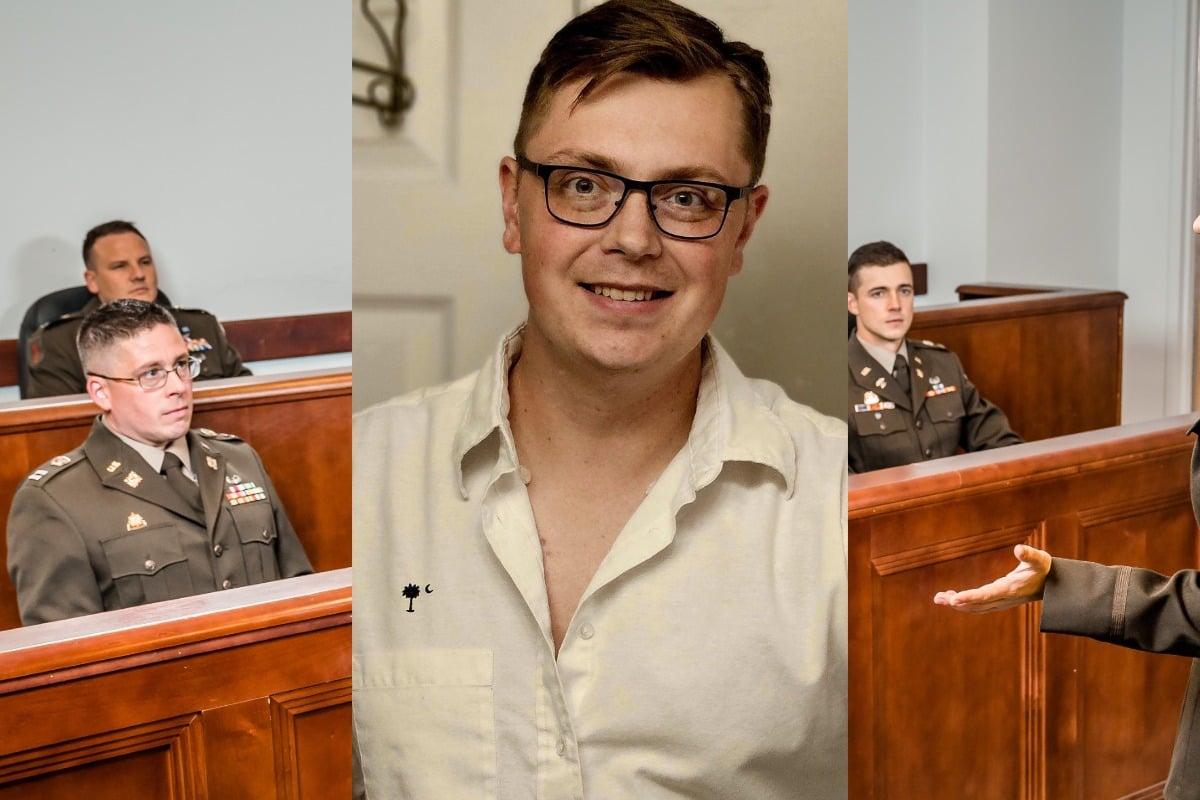

A U.S. Army staff sergeant assigned to the 101st Airborne Division at Fort Campbell was convicted of possessing child pornography and sentenced to 10 months in confinement after a civilian mental health therapist disclosed information from their private counseling sessions to Army criminal investigators, triggering an investigation that ultimately led to his court-martial.
Staff Sgt. Devyn R. Woodard, assigned to A Company, 129th Division Sustainment Support Battalion, 101st Division Sustainment Brigade, pleaded guilty to one specification of possessing child pornography in violation of Article 134 of the Uniform Code of Military Justice.
On August 14, 2026, military judge Col. John R. Longley III sentenced Woodard to 10 months of confinement, reduction to the rank of private (E-1), and a bad-conduct discharge. The punishment was consistent with the terms of a plea agreement.
But the circumstances surrounding Woodard’s conviction began more than a year earlier, when the noncommissioned officer voluntarily sought mental health treatment in Clarksville, Tennessee.
Court records reveal that Woodard’s therapist reported statements he made during confidential counseling sessions to the Army Criminal Investigation Division (CID), prompting investigators to obtain search warrants, seize electronic devices, and ultimately uncover the evidence used to prosecute him.
The disclosure would become the subject of a legal battle over patient confidentiality, the limits of military evidentiary privilege, and whether a therapist’s concerns about a potential threat to a child justified sharing a patient’s statements with law enforcement.
According to a July 27, 2026, ruling by Longley, Woodard began receiving mental health treatment in early March 2025 for anxiety, depression, and trauma stemming from sexual abuse he experienced as a child.
His therapist, whose name was redacted from the publicly available court documents, practiced at a counseling provider in Clarksville. Although she had not yet obtained her independent professional license, she held degrees in psychology and clinical mental health counseling, had completed approximately 3,000 hours of residency, and practiced under the supervision of a licensed professional.
During one session, Woodard disclosed his childhood trauma and acknowledged that he had encountered child sexual abuse material (CSAM), initially describing the encounter as accidental.
After discussing the disclosure with her supervisor, the therapist determined that she was not required to report the information at that point, according to the military judge’s findings.
She also concluded that Woodard needed specialized treatment beyond her training and intended to refer him to another mental health professional.
During a subsequent session, however, Woodard admitted that his earlier account had been misleading. Rather than accidentally encountering the material, he acknowledged actively seeking and possessing it on electronic devices.
He also disclosed an attraction to children and told the therapist that his wife did not know about that attraction.
Of particular concern to the therapist was Woodard’s admission that he had a three-year-old stepdaughter living in his home and was routinely alone with her.
Although Woodard denied being sexually attracted to his stepdaughter, he reportedly expressed fear that his feelings could change.
The court’s ruling described another statement involving an occasion when Woodard was comforting his stepdaughter. According to the ruling, the child had told him, “don’t touch me daddy.”
Woodard’s therapist viewed that disclosure, in combination with his other admissions, as cause for concern about the child’s safety.
The ruling does not establish that Woodard sexually abused his stepdaughter, and the publicly available charging documents do not accuse him of doing so.
After consulting with her supervisor and other mental health professionals, the therapist concluded that Woodard presented a danger to the child.
On March 24, 2025, she contacted Army CID and disclosed information obtained during their counseling sessions.
The therapist’s disclosure set off a chain of investigative actions.
An Army CID special agent contacted the Oak Grove Police Department in Kentucky, which obtained a search warrant for Woodard’s residence.
Investigators also contacted Kentucky’s Department for Community Based Services to notify child protective authorities about the potential safety concerns involving Woodard’s stepdaughter.
On March 25, 2025, Oak Grove police searched Woodard’s residence and seized electronic equipment.
Woodard was subsequently interviewed by Army CID investigators, who informed him that someone had reported he was viewing child sexual abuse material.
During that interview, Woodard acknowledged viewing the material and reportedly explained that he had initially encountered it as a coping mechanism, prompting him to seek professional help.
Information obtained during the interview was subsequently used to secure another warrant authorizing a search of the electronic devices previously seized from his residence.
A forensic examination identified material that investigators associated with child sexual abuse.
According to the military judge’s findings, the examination identified two Tor-related URLs associated with child sexual abuse material on Woodard’s cellphone.
Investigators also identified 47 pictures and thumbnail files classified as “Category 2 (Age-Difficult)” media on his laptop, along with 1,612 artifacts categorized as computer-generated or animated child sexual abuse material.
The forensic descriptions are important distinctions. The court’s findings do not establish that all 1,612 artifacts were photographs of real children.
Ultimately, the Army charged Woodard with one specification of possessing child pornography. The final findings worksheet identified the offense period as approximately November 15 through December 15, 2023, and described possession involving one or more digital images of what appeared to be a minor engaged in sexually explicit conduct.
Before Woodard’s conviction, his defense team attempted to prevent prosecutors from using the evidence obtained as a result of the therapist’s report.
In a motion filed June 5, 2026, defense attorney Capt. Thomas E. Goers argued that Woodard’s statements were protected under Military Rule of Evidence 513, which establishes a psychotherapist-patient privilege for certain confidential communications made during mental health treatment.
The defense maintained that Woodard had voluntarily sought professional help, disclosed sensitive information for treatment purposes, and never authorized his therapist to share those communications with criminal investigators.
His attorneys also disputed whether his statements established a sufficient threat to justify the disclosure.
They emphasized that Woodard had denied being sexually attracted to his stepdaughter and argued that attraction to adolescents did not, by itself, establish that he presented a danger to a three-year-old child.
The defense further argued that the therapist should have considered alternatives to reporting the information to criminal investigators, including contacting child protective services if she genuinely believed the child was in danger.
According to the motion, an ethics consultation had indicated that the therapist was permitted, but not necessarily required, to report Woodard’s statements.
The defense maintained that information obtained through the allegedly improper disclosure should not have been used to secure search warrants or obtain additional statements from Woodard.
Attorneys sought to suppress the seized devices, evidence discovered during their forensic examination, and Woodard’s March 25, 2025, statements to CID.
They warned that allowing the evidence to stand would undermine the confidentiality protections intended to encourage service members to seek mental health treatment and speak candidly with their providers.
The government opposed the motion, arguing that the therapist’s disclosure fell within exceptions to the privilege because she reasonably believed Woodard’s mental or emotional condition made him a danger to another person.
Prosecutors also argued that other exceptions applied, including provisions involving contemplated future crimes and disclosures necessary to protect military dependents.
On July 27, 2026, Longley denied the defense’s motion to suppress the evidence.
In his seven-page ruling, the judge acknowledged that Woodard had established a psychotherapist-patient relationship and that his statements were made in the course of seeking treatment.
Ordinarily, such communications would be protected by Military Rule of Evidence 513 unless an applicable exception removed that protection.
The judge concluded that an exception did apply.
Under M.R.E. 513(d)(4), the privilege does not apply when a psychotherapist believes a patient’s mental or emotional condition makes the patient a danger to another person, including the patient.
Longley determined that the therapist sincerely and reasonably believed Woodard posed a danger to his stepdaughter.
He cited Woodard’s admissions concerning his attraction to children, his possession of child sexual abuse material, his routine access to the child, and his own statements expressing concern about his future behavior.
The judge also considered the therapist’s educational background, supervision, and consultations with other professionals before she contacted law enforcement.
Although Woodard had denied being attracted to his stepdaughter, Longley concluded that the therapist’s concerns were supported by the circumstances.
The ruling further found that exceptions under M.R.E. 513(d)(5), involving communications contemplating future criminal conduct, and M.R.E. 513(d)(6), concerning the safety and security of military dependents, applied.
Because the judge determined that exceptions to the privilege existed, he concluded that the government had not obtained evidence in violation of M.R.E. 513.
The defense’s motion was denied.
The decision did not establish that Woodard had sexually abused his stepdaughter. Rather, it addressed whether the therapist’s belief that he presented a danger was sufficient to remove the privilege protecting the communications.
Nor did the ruling independently determine whether Tennessee law required the therapist to make the specific disclosure she made. The court resolved the suppression dispute under the military evidentiary rules.
Following the unsuccessful suppression effort, Woodard’s case proceeded toward trial.
Earlier court listings had identified a not-guilty plea and an enlisted-panel forum. An August 11 docket entry reflected a change to a guilty-plea proceeding before a military judge alone.
On August 14, 2026, Woodard was convicted pursuant to his guilty plea.
The Army’s official Statement of Trial Results confirms that he was sentenced to 10 months of confinement, reduction to E-1, and a bad-conduct discharge, with no additional fine or forfeiture adjudged.
The document also identifies the conviction as an offense requiring sex offender registration under the applicable federal military reporting provisions.
Woodard’s conviction came after the military judge rejected the defense’s attempt to exclude the evidence obtained following his therapist’s report.
The case illustrates the consequential limits of confidentiality in military mental health treatment.
Woodard sought professional assistance and disclosed information that ultimately caused his therapist to alert criminal investigators. Those disclosures led to searches of his residence and electronic devices, the discovery of incriminating evidence, and eventually his conviction.
His defense argued that allowing those disclosures to drive a criminal investigation threatened the trust essential to effective mental health treatment.
The government maintained that the therapist’s concerns about the safety of a young child justified her actions, a position the military judge ultimately accepted under the exceptions to M.R.E. 513.
Woodard’s prosecution demonstrates how statements made in a private counseling session can become the starting point for a military criminal investigation when a therapist believes a patient presents a danger to someone else.
© 2026 The Salty Soldier. All rights reserved. Reproduction without written consent is strictly prohibited.