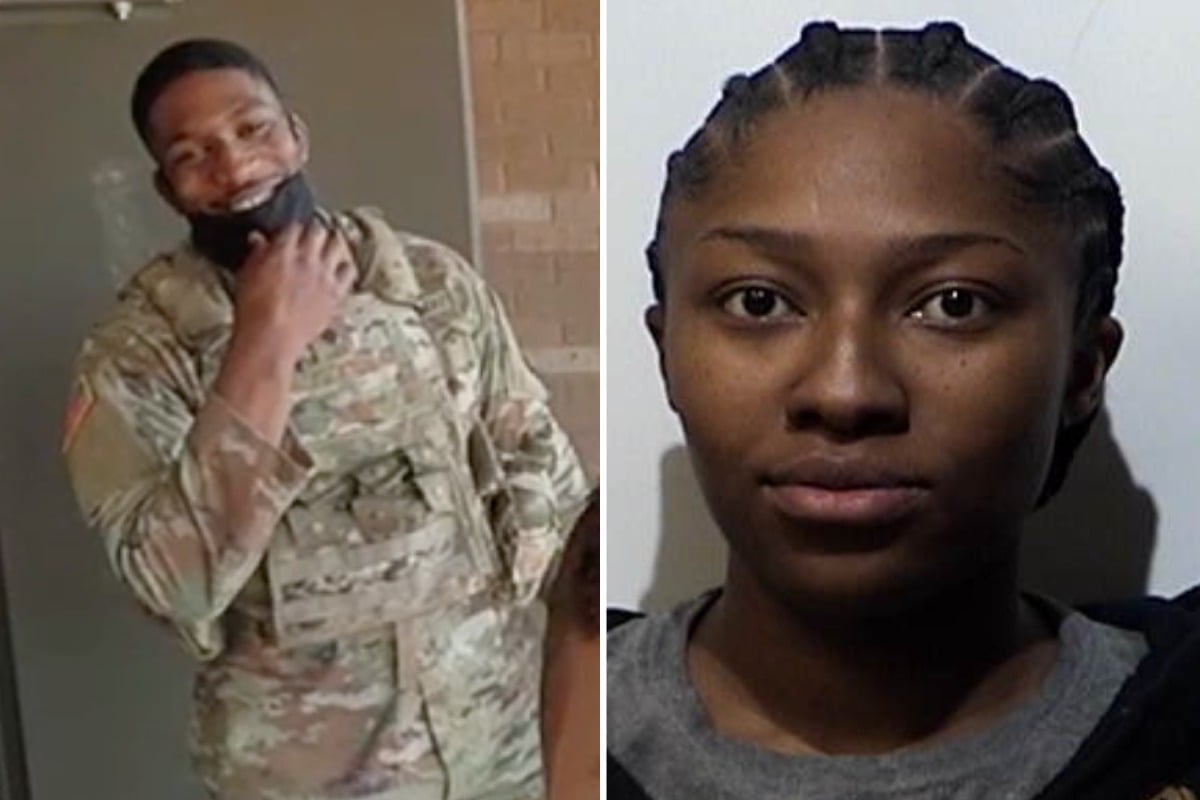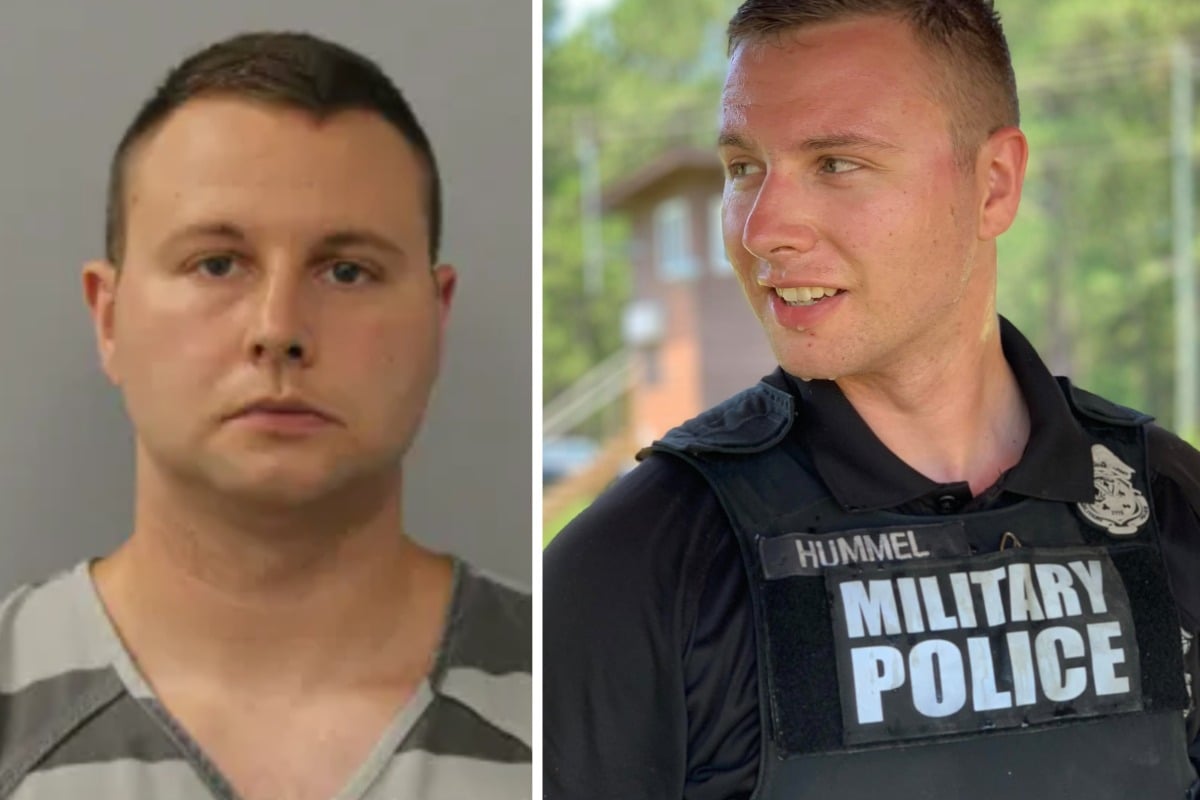

A Kansas National Guardsman accused of secretly working for Russian intelligence was allegedly suffering from serious mental health problems when FBI agents drew him into an undercover operation that their own supervisors had warned against — referring to the proposed sting as a “false flag.”
Now, newly filed federal court documents accuse the FBI of manufacturing the very crime it ultimately charged him with committing.
In a December 2024 internal email reproduced in a federal court filing, an FBI supervisor explicitly advised agents against proceeding with the proposed “false flag” operation, citing concerns about the National Guardsman’s mental health and the risks of continuing the investigation.
Despite that warning, undercover agents posing as Russian intelligence operatives allegedly spent months cultivating a relationship with Canyon Anthony Amarys, eventually providing the money, equipment, travel arrangements, and instructions for an attempted illegal shipment of an aircraft radio intended for Russia.
The allegations are detailed in a 16-page motion filed October 13, 2026, by attorneys representing Amarys, 28, who was arrested in October 2025 and charged with attempting to violate the Export Control Reform Act.
But the defense’s accusations go beyond the tactics used in a typical undercover investigation.
Internal FBI emails reproduced in the filing suggest that concerns about Amarys’s mental health, competence, and access to sensitive information were raised within the agency before the alleged crime occurred.
One FBI official questioned whether investigators were pursuing a misguided Army private first class with questionable competence and no access — raising questions about whether Amarys represented a meaningful national security threat in the first place.
His attorneys now argue that federal agents exploited a psychologically vulnerable individual and orchestrated an offense he otherwise lacked the resources or knowledge to commit.
Amarys pleaded not guilty to the federal charge and was later released under court-ordered conditions. His defense is seeking dismissal of the indictment, arguing that the government’s conduct was so extreme that allowing the prosecution to continue would violate his Fifth Amendment right to due process.
The allegations have not been established by a court, and the motion presents the defense’s account of the investigation.
167 Phone Calls to Russia Triggered FBI Attention
According to the defense filing, the investigation began with an unusual series of phone calls in August 2024.
Over the course of a single weekend, Amarys allegedly placed 167 calls to Russian government entities and eight additional calls to American and other foreign government offices located inside Russia.
His attorneys claim the calls occurred while Amarys was experiencing paranoia, substance-use problems, and worsening symptoms of what they identify as schizophrenia.
None of the Russian government offices returned his calls, according to the motion.
The defense maintains that Amarys had no established relationship with Russian intelligence and had not developed any plan to export restricted military equipment.
Nevertheless, the unusual activity attracted federal attention.
On November 27, 2024, an undercover FBI agent using the name “Aleksandr” contacted Amarys and indicated that he wanted to discuss sensitive subjects.
Amarys reportedly responded that he did not know what the caller was talking about and ended the conversation.
Shortly afterward, he sent a text message explaining that he had been experiencing severe mental health issues during August and did not remember much of what had occurred.
Rather than ending the contact, the undercover agent responded that it was not a problem and expressed interest in speaking again.
That exchange would become a central part of the defense’s argument that investigators knew Amarys was psychologically vulnerable before continuing their operation.
FBI Supervisors Warned Against ‘False Flag’ Operation
The defense’s most striking evidence comes from internal FBI communications that appear to show disagreements within the agency over whether the investigation should proceed.
In a December 10, 2024, email reproduced on page four of the motion, an FBI supervisor directly questioned the proposed operation.
After reviewing developments in the investigation, the supervisor wrote:
“I do not think it is warranted to proceed with the false flag.”
The email specifically referenced Amarys’s disclosure that he had been experiencing severe mental health issues when he made the suspicious calls to Russian government offices.
Editor’s Note: Subscribers to The Salty Soldier Uncensored can access the internal FBI emails documenting concerns about the proposed “false flag” operation, along with the complete 16-page motion to dismiss filed by Amarys’s defense attorneys.
The supervisor also noted that Amarys had displayed other unusual behavior and suggested that investigators reconsider whether continuing the operation was worth the potential risks.
The phrase “false flag” is particularly noteworthy because it was used by an FBI official in an internal communication, rather than being a characterization introduced by Amarys’s attorneys.
In this context, the term appears to describe an undercover operation in which American agents impersonated representatives of Russian intelligence. Its use does not, by itself, establish that the operation was unlawful.
But the December warning was apparently not the last time concerns surfaced.
According to the motion, another internal FBI email from January 2025 questioned the wisdom of continuing to pursue Amarys.
That communication described the potential target as “some misguided army PFC with questionable competence & no access.”
The email also raised concerns about operational costs and the safety of undercover personnel involved in the proposed “false flag.” The writer warned that exposing the agents’ identities within their own ethnic communities could jeopardize their safety, particularly because at least one individual involved had family living overseas.
The concerns appeared significant enough that the writer indicated an acting section chief was expected to discuss the operation with an assistant special agent in charge.
Together, the communications suggest that FBI personnel had questioned Amarys’s mental health, his potential value as an intelligence target, and the operational risks of proceeding.
Despite those concerns, the defense alleges that undercover agents continued communicating with him, gradually building his trust through conversations about ordinary subjects, including holiday plans, YouTube channels, history, and politics.
By February 2025, Amarys was meeting in person with individuals he believed represented Russian intelligence.
Within weeks, he would be involved in the attempted shipment of an aircraft radio that became the basis for his federal indictment.
The timing is central to the defense’s argument: FBI personnel had raised concerns about the operation before agents arranged the transaction that ultimately led to criminal charges.
The emails were reproduced in a filing submitted by Amarys’s defense attorney. Their complete investigative context, including the agency’s reasoning for continuing the operation, has not yet been established in court.
Undercover Agents Allegedly Funded and Organized the Crime
Despite the internal concerns, Amarys’s attorneys say undercover agents continued communicating with him and eventually persuaded him that he could help improve the world by working for Russian intelligence.
In February 2025, Amarys traveled to Kansas City to meet people he believed were Russian operatives.
The meeting took place at a Marriott hotel, according to the defense.
During the encounter, Amarys signed an agreement establishing what he believed was a covert relationship with a Russian intelligence organization.
Federal prosecutors previously cited that agreement as evidence of his willingness to assist a foreign intelligence service.
But the defense now argues that the government went much further than simply observing or testing his intentions.
According to the motion, agents instructed Amarys to obtain a Garmin GTR-205 aircraft radio and arrange for its shipment overseas.
They allegedly supplied $3,500 to purchase the equipment, directed him to a website where the radio could be obtained, and provided money for his travel.
The agents also arranged for the radio to be shipped to a post office box near Fort Riley, Kansas, where Amarys would later retrieve it and forward it to an address in Romania.
The government alleged that Amarys understood the radio was ultimately intended for Russia and that shipping the controlled equipment without the required authorization would violate federal export laws.
His defense does not dispute that he participated in the shipment arrangement. Instead, it argues that agents conceived, financed, and directed the entire transaction.
The motion maintains that Amarys lacked the financial resources, technical knowledge, and actual Russian intelligence contacts necessary to carry out the scheme independently.
Agents Accompanied Guardsman to Post Office
The defense filing provides a detailed account of what happened on March 20, 2025.
Amarys flew to Kansas City and met another undercover agent posing as a Russian intelligence operative.
According to his attorneys, the two traveled together to a post office where the aircraft radio had been delivered.
The undercover agent allegedly retrieved the equipment from the post office box and handed Amarys a piece of paper containing the Romanian shipping address.
Amarys then approached the counter and arranged to send the radio overseas.
The two left the post office together.
Federal investigators subsequently recovered the radio through a court-authorized search.
The defense argues that the transaction illustrates the extraordinary extent of the government’s involvement.
Rather than uncovering an independently organized effort to supply Russian forces with restricted equipment, Amarys’s attorneys contend that agents provided virtually everything needed to create the offense.
The same day, according to the motion, Amarys was instructed to photograph what he believed was a sensitive military installation at Fort Riley.
His attorneys acknowledge that he took the photographs.
The following day, Amarys attended a security briefing at an Armed Forces Reserve Center as part of paperwork related to resuming basic training.
During that briefing, he was reportedly asked whether anyone claiming to represent a foreign government had approached him.
He denied such contact.
Later, according to the defense, Amarys photographed the FBI agent who conducted the briefing and sent the image to someone he believed was a Russian intelligence contact.
These actions remain important to the government’s allegations, even as the defense challenges how the undercover operation was conducted.
Defense Says Mental Illness Made Guardsman Vulnerable
Amarys’s attorneys describe a young man struggling with substance use, family losses, isolation, and deteriorating mental health before the FBI began contacting him.
The filing states that Amarys joined the National Guard hoping to find direction and purpose but suffered an injury during basic training.
His attorneys also describe a family history of schizophrenia and contend that Amarys was experiencing symptoms of the disorder during the investigation.
The defense alleges that federal agents knew about his condition and exploited his vulnerability by presenting themselves as trusted foreign intelligence contacts.
According to the motion, Amarys came to believe that he was participating in an important clandestine mission and feared that withdrawing from the arrangement would be impossible.
His attorneys argue that the government should have recognized the danger of encouraging someone in that condition to participate in criminal activity.
The filing also claims that internal FBI discussions identified alternative approaches, including addressing possible security-clearance concerns rather than continuing the undercover operation.
The defense’s descriptions of Amarys’s medical history and mental state have not been independently verified by The Salty Soldier. The filing does not establish that his alleged illness prevented him from understanding his actions or automatically relieved him of criminal responsibility.
Before his arrest, Amarys had worked as a commercial tanker truck driver for Team Transport Inc., a division of Sherman Brothers Trucking.
A company representative previously confirmed to The Salty Soldier that Amarys had been employed as a driver but was no longer working for the company.
Team Transport operates tanker trucks carrying chemicals, fuels, and other industrial liquids throughout the United States and Canada.
Amarys’s publicly available photographs also showed numerous Team Transport trucks, including an image apparently taken inside a semi-truck cab with a small Chihuahua.
His former employment was one of several details uncovered during The Salty Soldier’s original reporting on his arrest.
The new court filing, however, shifts attention from his civilian background to the federal government’s conduct during the investigation.
Nothing in the motion establishes that his former trucking employer was involved in the alleged export scheme or that his commercial driving experience played a role in the undercover operation.
Attorneys Argue FBI Conduct Violated Constitution
Amarys’s motion asks U.S. District Judge Holly L. Teeter to dismiss the indictment based on what his attorneys describe as outrageous government conduct.
The argument centers on the Fifth Amendment’s guarantee of due process.
Federal courts recognize that exceptionally extreme government misconduct can, in limited circumstances, justify dismissing criminal charges. However, the legal standard is demanding, and undercover operations do not become unconstitutional merely because agents provide opportunities or resources for someone to commit a crime.
Amarys’s defense argues that this case crosses that line for two reasons.
First, his attorneys contend that government agents created and controlled the alleged export violation from beginning to end.
Second, they allege that investigators knowingly exploited serious mental health vulnerabilities despite warnings from FBI personnel.
The motion argues that Amarys had no established criminal enterprise, no actual Russian intelligence contacts, and no independent plan to obtain or export the aircraft radio before the undercover operation.
His attorneys also acknowledge that Amarys made poor decisions during the investigation.
Their position is that those decisions occurred within a scheme manufactured by federal agents who knew he was vulnerable.
The motion does not establish that the FBI acted unlawfully. That question remains for the federal court to consider after the government has an opportunity to respond.
Federal Case Remains Pending
Amarys was indicted October 22, 2025, and arrested six days later.
He pleaded not guilty during his October 30 initial appearance and was initially held in federal custody.
On November 3, 2025, prosecutors withdrew their request for pretrial detention, and the court ordered Amarys released under supervision and other conditions.
The case has since continued through several pretrial proceedings.
In June 2026, prosecutors filed a notice under the Classified Information Procedures Act, a federal law governing how classified information is handled in criminal proceedings.
The filing does not, by itself, establish that Amarys possessed classified information or that any classified material was disclosed to Russia.
On October 13, his federal public defender, Mary Bailey Kennedy, formally requested dismissal of the indictment.
Under the court’s current schedule, prosecutors have until November 3 to respond, with any defense reply due November 17. A status conference is scheduled for December 15, 2026.
For now, the prosecution remains active, and Amarys is presumed innocent unless proven guilty.
The unanswered question is no longer simply whether a National Guardsman knowingly attempted to help a foreign adversary.
It is also whether federal investigators, despite warnings from within their own agency, crossed a constitutional line by creating the circumstances that led to the alleged crime.
The federal court will ultimately determine whether the defense’s allegations warrant dismissal.
The Salty Soldier will continue following the proceedings and any response filed by federal prosecutors.
© 2026 The Salty Soldier. All rights reserved. Reproduction without written consent is strictly prohibited.