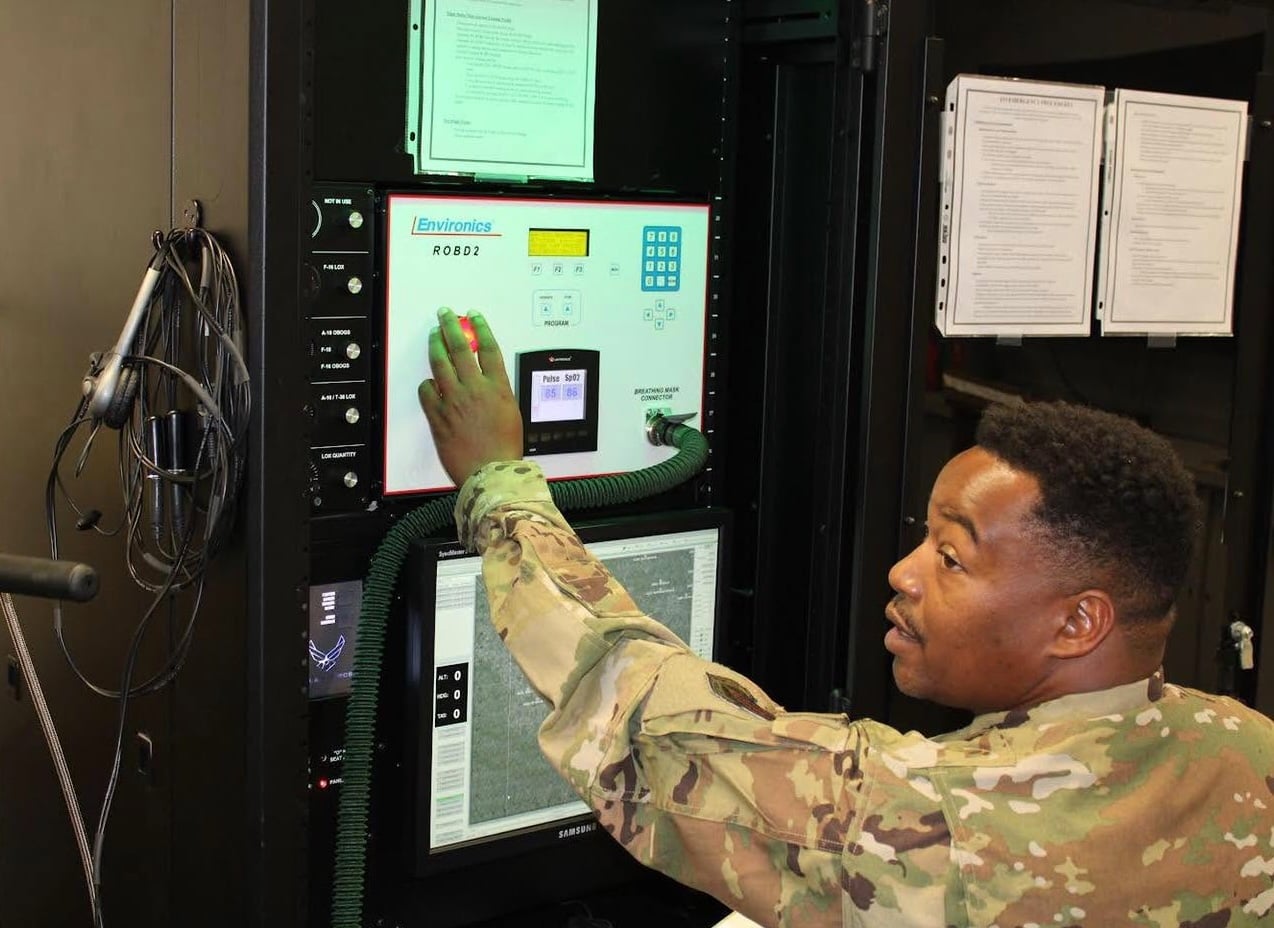
A McConnell Air Force Base airman accused of sexually abusing teenage boys he met through a local church was convicted at a general court-martial of possessing child pornography, multiple indecent-conduct offenses and obstruction of justice, but was acquitted of both sexual-abuse charges prosecutors brought against him.
Senior Airman Randall Race Thomas Moore Jr., 26, assigned to the 22nd Maintenance Squadron, was sentenced to 40 months in military confinement, a dishonorable discharge, reduction to Airman Basic and forfeiture of all pay and allowances after his court-martial concluded Feb. 1, 2026.
Newly released Air Force trial records obtained by The Salty Soldier provide a much fuller picture of a case involving three teenage boys, years of electronic communications, Snapchat exchanges, sleepover invitations, sexualized communications, private encounters and an alleged threat intended to keep one person from revealing the nature of his relationship with Moore.
Editor’s Note: This public version has been edited to omit some explicit details contained in the court records. Readers seeking our full, unfiltered reporting can find the complete story on our ad-free The Salty Soldier Uncensored site.
The records also provide new detail about relationships that began both through Moore’s religious community and online.
McConnell Air Force Base previously said two of the minors involved in the case were people Moore met through a local church, while a third was someone he met online. Prior reporting also said that after allegations involving minors were disclosed, a pastor began an internal inquiry before notifying McConnell officials, triggering a military investigation.
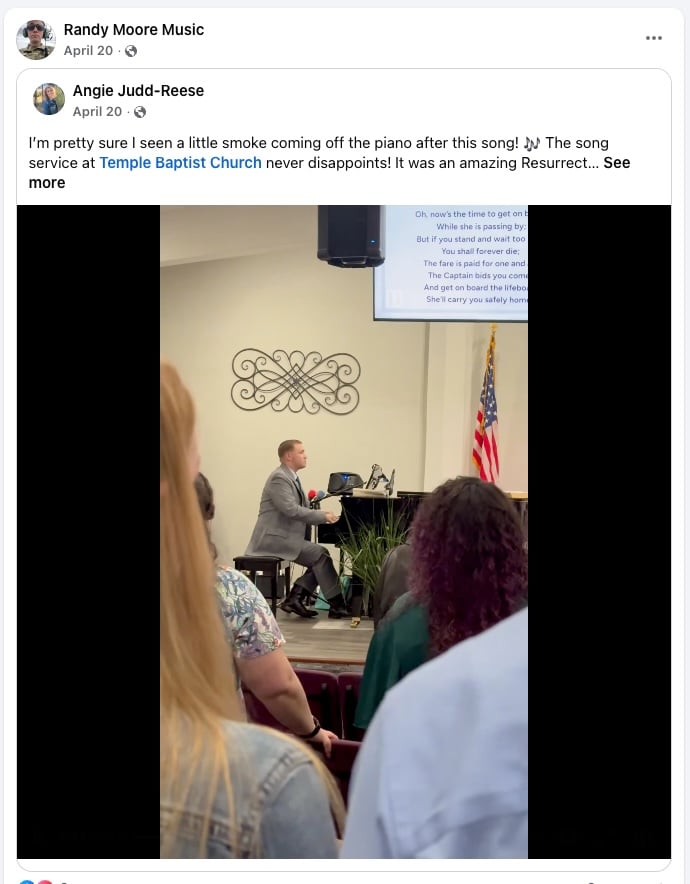
Moore’s publicly accessible social media portrayed him as an active member of Temple Baptist Church in Wichita, where videos showed him serving as a church pianist. The publicly available Air Force information did not identify the local church through which Moore met the two minors, so The Salty Soldier has not independently established that Temple Baptist was the church referenced by McConnell.
The newly obtained court records show that what followed was considerably more complicated than the allegations that initially triggered the investigation.
Moore pleaded not guilty to every charge.
He was found not guilty of both specifications of sexual abuse of a child under Article 120b of the Uniform Code of Military Justice. He was also acquitted of one obstruction charge alleging he deleted messages and images to interfere with the investigation.
But the panel convicted him of the second obstruction charge and all five Article 134 specifications — possession of child pornography and four indecent-conduct offenses involving sexual statements, images and requests involving minors.
In total, Moore was convicted of six specifications.

Pretrial defense records state directly that the government’s allegations involved three minor victims. Other filings repeatedly use male pronouns when describing the teenagers, establishing that the three charged victims were boys.
One of those boys told Air Force Office of Special Investigations agents that he spent nights at Moore’s residence, where the two typically slept on a couch.
The teenager alleged that during one of those occasions Moore played with his hair until he told Moore to stop. At a later point, the boy said Moore tried to get him to lie down with him in Moore’s bedroom. The teenager thought the invitation was strange and refused.
Those interactions became part of one of the government’s two sexual-abuse charges.
Prosecutors alleged Moore committed a lewd act against the boy, who was under 16, through a combination of cuddling with him, putting his fingers through his hair, inviting him into bed to watch a movie and writing sexually suggestive messages.
Moore’s attorneys strongly disputed that interpretation.
Before trial, the defense accused prosecutors of attempting to criminalize “cuddling” and other conduct that, standing alone, was not unlawful.
The military judge refused to dismiss the charge, finding that the alleged conduct could legally constitute a lewd act if prosecutors proved the required sexual intent beyond a reasonable doubt.
The panel ultimately did not convict him.
The second Article 120b specification involved another teenage boy and an invitation to spend the night at Moore’s home.
According to the defense’s summary of the allegation, Moore repeatedly invited the boy to sleep at his residence, but the teenager felt uncomfortable and declined.
Prosecutors alleged the invitation constituted indecent language because Moore made it with sexual intent.
That charge also survived a defense attempt to have it dismissed before trial.
The military judge reasoned that an invitation that could appear innocent in isolation might carry a different meaning when considered in context — including an adult male asking an unrelated minor from his religious community to spend the night at his private residence while allegedly harboring sexual intent.
But surviving a motion to dismiss was not the same as proving the allegation at trial.
The panel acquitted Moore of that specification as well.
The distinction is important: Moore was accused of sexually abusing two teenage boys, but he was not convicted of sexually abusing either of them.
The offenses for which the panel did find him guilty instead centered largely on his electronic communications, sexualized images, possession of prohibited material and an attempt to interfere with the justice process.
Another teenage boy described a relationship with Moore that began online.
According to findings made during pretrial evidentiary litigation, the boy told investigators that Moore sent him a Facebook friend request around 2021, when he was approximately 16 years old.
They began communicating through Facebook Messenger before Moore suggested moving their conversations to Snapchat.
The teenager agreed.
He later told investigators that the relationship became sexualized and included the exchange of sexual images through Snapchat over an extended period.
Those allegations became directly relevant to several of the Article 134 offenses on which Moore was eventually convicted.
The final judgment shows Moore was convicted of knowingly and wrongfully possessing child pornography between approximately January 2021 and December 2023.
Moore was also convicted of multiple indecent-conduct specifications involving sexually explicit statements, sending sexualized images of himself to minors and requesting sexualized images from a minor.
Those findings help explain an otherwise seemingly contradictory verdict: the panel rejected the government’s accusations that Moore committed the charged sexual abuse while finding beyond a reasonable doubt that he committed a series of separate sexualized offenses involving minors.
Electronic evidence became central to the investigation.
Air Force records show investigators seized an Apple iPhone 13 Pro Max from Moore on Nov. 8, 2023, and conducted a data extraction.
The government’s anticipated exhibit list included the phone itself, photographs of Snapchat messages, screenshots of other electronic communications and excerpts from conversations involving Moore and the teenagers. Witnesses were expected to authenticate conversations by testifying that they had exchanged the messages with Moore.
The pretrial records also reveal a physical encounter involving one of the boys that prosecutors wanted the panel to consider when deciding whether other interactions were sexually motivated.
The teenager told investigators that Moore occasionally drove him to McDonald’s around 2020 or 2021.
During one of those trips, according to the teenager, the two were alone in Moore’s vehicle when Moore reached across and placed a hand on the boy’s thigh.
The teenager removed Moore’s hand.
Moore then allegedly said words to the effect of, “I love you.”
Prosecutors wanted to use that encounter to argue that Moore’s later invitations and communications reflected sexual intent rather than an innocent friendship.
The military judge found there was sufficient evidence for a factfinder to reasonably conclude the encounter occurred and allowed prosecutors to use it for the limited purpose of addressing intent.
The ruling did not establish that Moore committed a crime during the encounter, and the panel ultimately acquitted him of the related Article 120b specification.
Other messages offered an additional window into the relationships prosecutors were attempting to reconstruct.
Some communications referred to one of the boys as Moore’s “boyfriend.” Other messages referenced cuddling and physical affection. In one instance, the judge found that a message saying Moore and the boy had “cuddled today” was directly relevant because cuddling was itself part of the conduct alleged in one of the sexual-abuse specifications.
The judge allowed some relationship evidence for limited purposes such as establishing motive or intent while excluding other material where prosecutors could not establish a sufficient connection to the charged offenses.
One of the most significant limitations involved a separate woman who was not one of the three charged victims.
She told investigators she first communicated with Moore online in 2020 when she was approximately 15 years old.
According to the court’s summary, Moore added her on Facebook and the two communicated through Facebook Messenger before eventually moving their conversations to Snapchat.
She told investigators she believed their communications had included the exchange of sexual images.
But when the issue was litigated before trial, the military judge found that part of her account too uncertain.
The woman qualified her recollection and could not clearly remember the details.
The judge ruled prosecutors had not presented enough evidence for a reasonable factfinder to conclude Moore requested sexual images from her or that she actually sent them.
The government therefore could not present the alleged image exchange as evidence of a common plan or scheme.
The judge did find sufficient evidence that Moore communicated with her online beginning when she was 15 and ruled that fact could potentially be used for a much narrower purpose if the defense claimed Moore mistakenly believed another minor was an adult.
The ruling illustrates an important feature of the case: the court did not simply treat every accusation contained in the investigation as established fact. Some evidence was admitted, some was restricted, and some was excluded.
The government also accused Moore of two acts of obstruction.
The first alleged that between June 1 and June 4, 2023, Moore deleted electronic messages and images involving two individuals with the intent to impede the military justice process.
The panel found him not guilty.
The second allegation had a different outcome.
Prosecutors alleged that between March and December 2023, Moore threatened to “ruin the life” of an individual if that person disclosed the existence and nature of their relationship.
The government alleged Moore made the threat while he had reason to believe criminal or disciplinary proceedings were pending and intended to influence the administration of justice.
The panel convicted him of that offense.
Moore’s attorneys fought the government’s case throughout the pretrial process and at trial. They argued prosecutors were stretching the law too far on the sexual-abuse allegations and attempting to transform physical affection and sleepover invitations into criminal conduct.
They also challenged the government’s attempts to introduce uncharged misconduct, arguing some of the evidence was unreliable, too remote or unfairly prejudicial.
The defense succeeded in limiting portions of that evidence, and Moore was ultimately acquitted of both Article 120b sexual-abuse specifications and one of the two obstruction allegations.
But the panel convicted him of every Article 134 specification prosecutors took to trial and the remaining obstruction offense.
After the findings were announced, the military judge sentenced Moore to 40 months in confinement, a dishonorable discharge, reduction from E-4 to E-1, forfeiture of all pay and allowances and a formal reprimand.
There was no plea agreement limiting his punishment.
The final Entry of Judgment, signed March 10, 2026, preserved the sentence.
The reprimand described Moore’s behavior as “inexcusable” and said his conduct brought discredit upon himself and the Air Force, demonstrated a lack of integrity and represented a severe departure from Air Force core values.
The newly released records ultimately reveal a more complicated case than either the original allegations or a list of convictions conveys.
The government entered trial accusing Moore of sexually abusing teenage boys and presenting evidence it said showed relationships that developed through church connections, private encounters, Facebook, Snapchat and years of electronic communication.
The panel rejected some of that case.
It acquitted Moore of both sexual-abuse charges and one obstruction specification.
But it convicted him of possessing child pornography, making sexually explicit statements to a minor, sending sexualized images to minors, requesting sexualized images from a minor and threatening an individual in an attempt to interfere with the military justice process.
The final outcome was six convictions, 40 months in confinement and a dishonorable discharge.
For readers, the newly released filings provide something the final verdict alone cannot: a look at how the relationships developed, what the teenagers told investigators, what prosecutors attempted to prove, what the judge prevented them from using, how Moore’s attorneys challenged the allegations and, ultimately, which parts of the government’s case convinced the panel beyond a reasonable doubt.
The Salty Soldier previously reported on Moore’s military charges before trial. This report is based on newly obtained Air Force court-martial records, including the charge sheet, pretrial motions and rulings, anticipated witness and exhibit lists, Statement of Trial Results and Entry of Judgment.
© 2026 The Salty Soldier. All rights reserved.