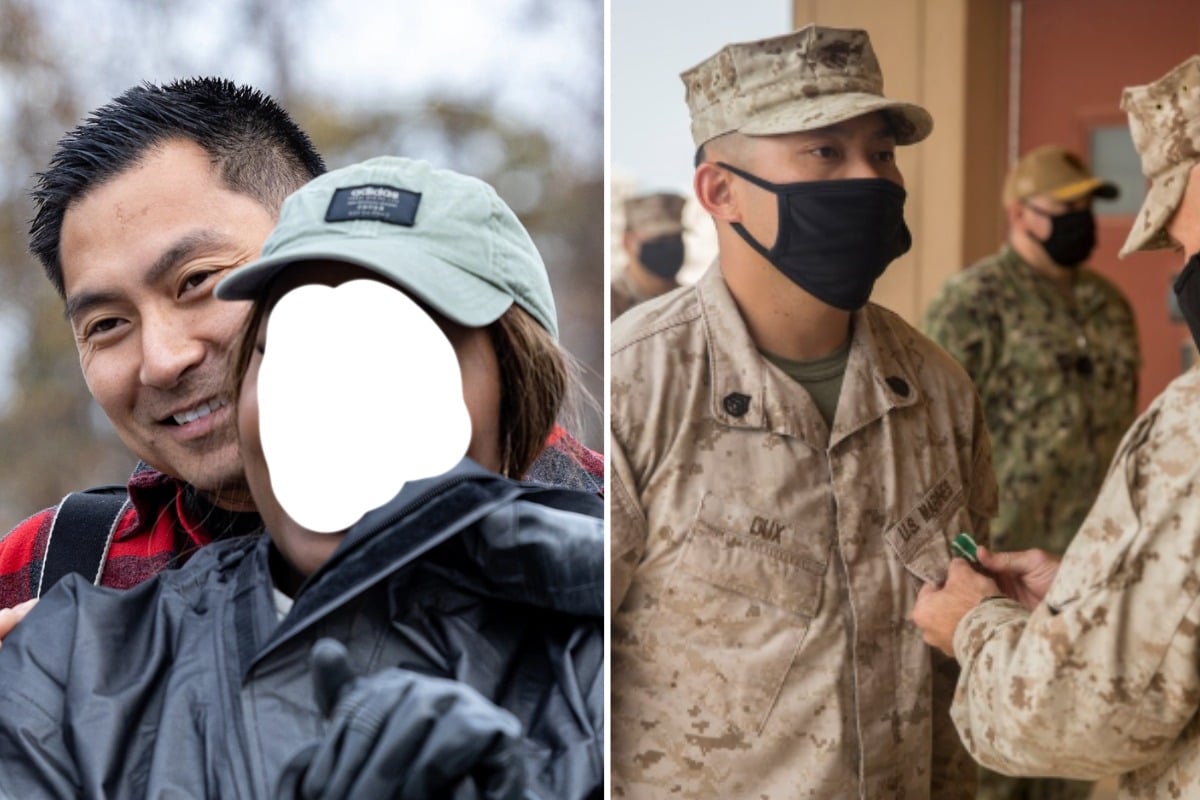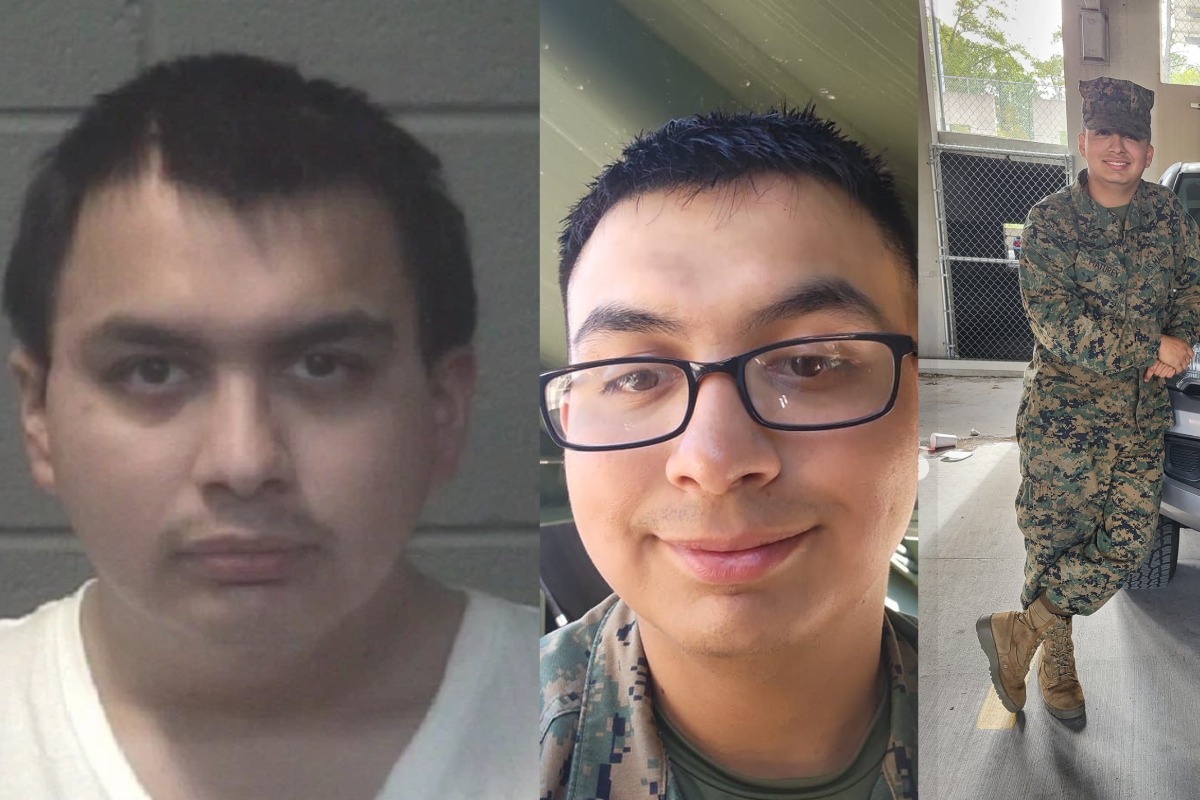
Pvt. Aiden Craig was an 18-year-old Texas high school football standout from a family shaped by the Vietnam War. What caused him to collapse during Marine Corps recruit training remains under investigation.
There are no shortcuts to becoming a United States Marine.
Recruits arrive at boot camp as civilians and spend weeks being broken down, tested and rebuilt before facing the Crucible, a grueling 54-hour culminating event the Marine Corps describes as the final test recruits must complete to earn the title of United States Marine. The Eagle, Globe and Anchor ceremony that follows represents the transformation from recruit to Marine.
Aiden Gregory Craig never got that far.
The 18-year-old Texas native was only 47 days into the Marine Corps’ 13-week recruit training program when he collapsed during a physical fitness test at Camp Pendleton, California, on Aug. 1. He was rushed to Tri-City Medical Center in Oceanside. Four days later, Craig was dead.
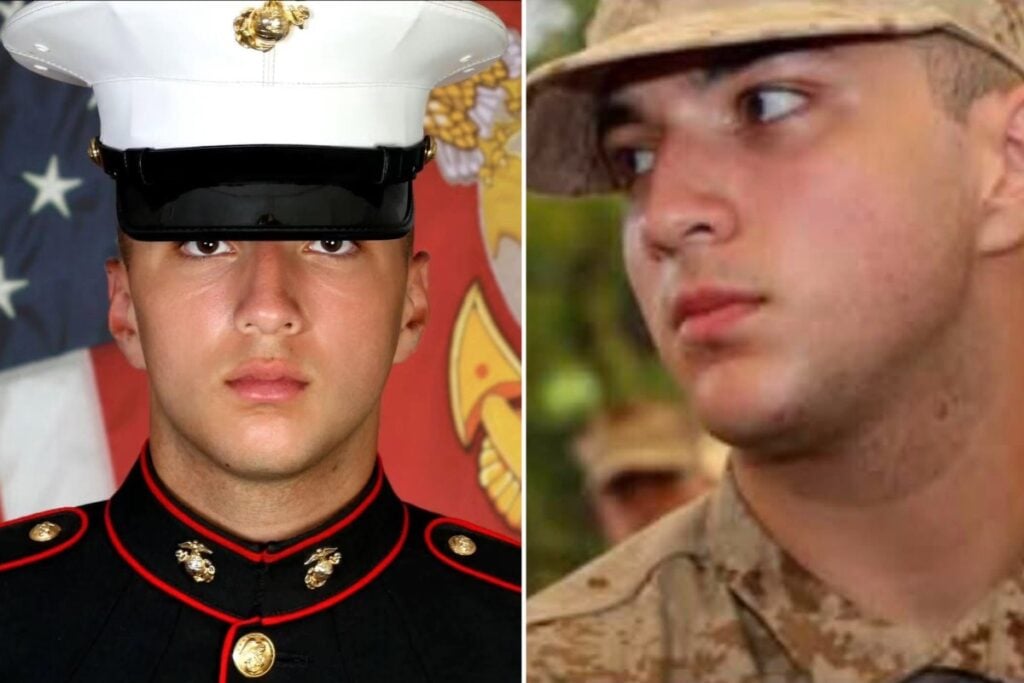
He would never return to Alpha Company.
He would never complete the Crucible with his platoon.
He would never reach the Eagle, Globe and Anchor ceremony in the way generations of Marines before him had.
So the Marines brought that moment to him.
According to Craig’s family, Marines made certain that his commitment and accomplishments were honored while he lay hospitalized. His Eagle, Globe and Anchor was brought to his bedside, and his father, Brent, was given the honor of placing the emblem into his son’s hand as 1st Sgt. Sean Durkee stood beside him and delivered the words Craig would have heard at the culmination of the Crucible.
A photograph posted by Craig’s mother on Aug. 5 appears to capture part of that moment.
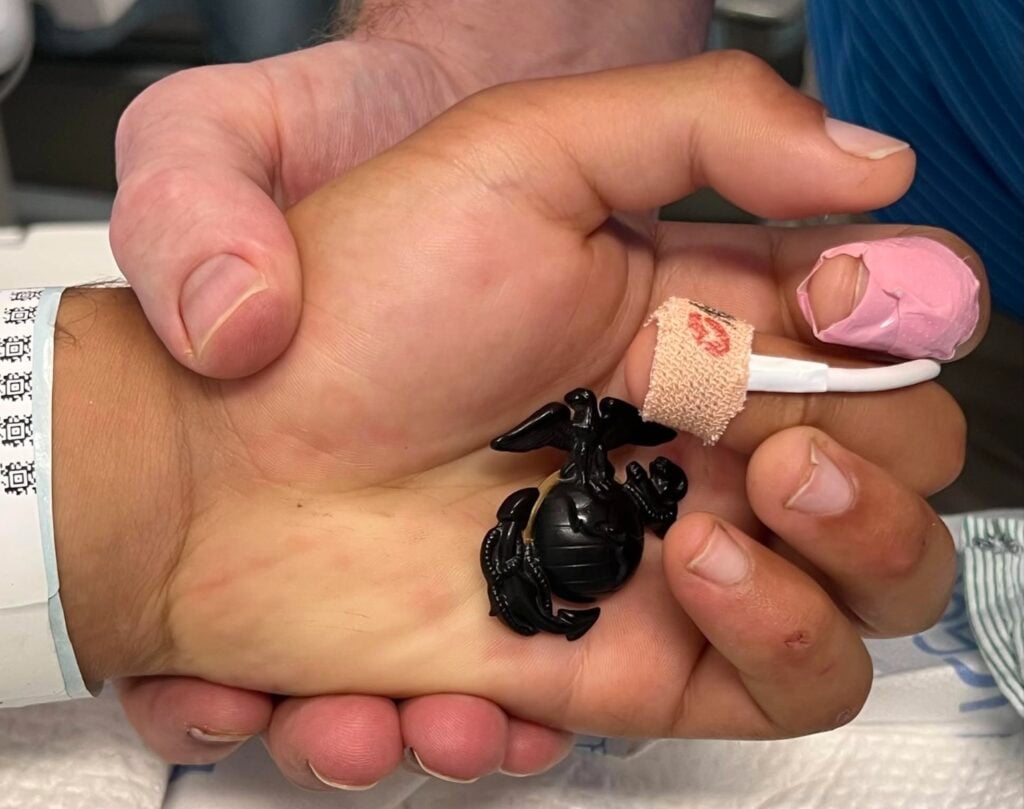
For Marines, the emblem is not simply another piece of uniform insignia.
Official Marine Corps descriptions of the ceremony say recruits receive the Eagle, Globe and Anchor after completing the Crucible, marking the moment their transformation from recruit to Marine is complete.
Craig had not completed that traditional path.
He had collapsed roughly halfway through boot camp. Yet as his medical condition prevented him from returning to training, Marines brought the symbol he had been working toward to his hospital bedside.
After his death, Marine Corps Recruit Depot San Diego confirmed to Military Times that Craig had posthumously earned the title of Marine.
He had left Texas barely two months earlier as a teenager fresh out of high school.
He died a Marine.
Craig was not a young man unfamiliar with strenuous physical activity.
Born Nov. 30, 2007, in Plano, Texas, Craig grew up in Murphy and graduated from Wylie High School with the Class of 2026 on May 23 — only days before leaving home to begin Marine Corps recruit training.
Sports had been part of his life for years.
Craig participated in baseball, basketball, football, discus, shot put and track relays. At Cooper Junior High School, he received the Mr. Patriot Award as the school’s male athletic MVP. By high school, he had become a two-year varsity letterman in both football and track and field.
But football was his passion.
Wearing No. 7 for the Wylie Pirates during his senior season, Craig played defensive end and finished with 50 tackles, four sacks, six quarterback pressures, an interception and six tackles for loss.

He earned Second Team All-District honors at defensive end.
His family remembered his toughness on the football field almost humorously.
According to his obituary, Craig had a habit of playing through injuries. On one occasion, he even broke a cast while playing football and continued through the rest of the game.
That history does not explain what happened at Camp Pendleton. Being young, athletic and accustomed to demanding exercise does not rule out an undetected medical condition.
But it does make the sudden collapse of an 18-year-old varsity athlete during a routine fitness test all the more jarring.
The Marine Corps has not publicly disclosed the underlying medical condition that caused Craig’s collapse or his death. Officials have said the investigation remains ongoing.
USNI News reported that a podcast connected to Wylie High School’s football program said Craig experienced sudden cardiac arrest. The Marine Corps, however, has not publicly confirmed that account or identified what may have caused the medical emergency.
For now, the central medical question remains unanswered.
Only days after walking across the stage at Wylie High School, Craig left Texas for Marine Corps Recruit Depot San Diego.
He became a member of Alpha Company, 1st Recruit Training Battalion. Marine Corps officials said he enlisted June 1, 2026.
His family said the Corps appealed to him because he wanted a challenge and was drawn to its sense of brotherhood.
Craig hoped to serve in artillery. He wanted to be boots on the ground, supporting and protecting the Marines around him.
For his family, that ambition fit the young man they already knew.
Craig was the youngest in his family, but relatives remembered him as someone who routinely carried other people’s burdens. If someone needed a ride, help with a job, food picked up, dogs watched or someone simply willing to show up, his response was usually the same:
“I gotchu.”
His obituary describes a young man who was far more comfortable celebrating other people’s achievements than his own. His family sometimes learned about his awards secondhand because he had never bothered mentioning them. He hid congratulatory yard signs and even chose not to wear his academic cords at graduation.
Recognition, his family said, wasn’t what drove him.
The challenge was.
So was being part of a team.
The toughness, loyalty and brotherhood Craig found on the football field eventually became part of what drew him toward the Marine Corps.
Craig’s decision to wear a military uniform also added another chapter to a family already shaped by war.
His mother, Lisa Craig, publicly describes herself as “the product of the Vietnam war.”
Her family history stretches back to the Vietnam era, where he father met her mother, who is Vietnamese, while serving in the Navy.
A generation later, her youngest son volunteered for military service of his own.
Craig’s family history should not be confused with the unanswered medical questions surrounding his death. Nothing currently available establishes any connection between his ancestry or family history and the emergency he suffered during training.
But as part of the story of who Craig was, the connection adds another layer to a family that had already been touched by American military service long before the 18-year-old left Texas for San Diego.
Craig’s family said his Christian faith also grew stronger while he was at boot camp.
Baptized as a child, Craig chose during recruit training to rededicate his life to Christianity and be baptized again. He worked on memorizing Scripture and carried the words of Joshua 1:9 with him:
“Be strong and courageous. Do not be afraid; do not be discouraged, for the Lord your God will be with you wherever you go.”
Those words took on a different weight after Craig’s collapse.
He was surrounded by family during his hospitalization, along with Marines from the brotherhood he had traveled to California hoping to join.
And although he could no longer continue training, the Marines did not leave the most important symbol of that journey behind at Camp Pendleton.
They brought it to him.
The distinction matters in the Marine Corps.
Graduation is still ahead when recruits complete the Crucible. The transformation occurs earlier, when they finish that final test and receive the Eagle, Globe and Anchor. Marine Corps training materials describe that ceremony as the moment recruits become United States Marines.
Craig had not reached that milestone when he collapsed.
He was on training day 47 — roughly halfway through boot camp.
Under the normal sequence of training, his Eagle, Globe and Anchor was still weeks away.
Instead, it came in a hospital room.
His father stood beside his bed.
A Marine first sergeant stood with him.
And the emblem Craig had left home determined to earn was placed into his hand.
There are still questions the Marine Corps has not answered.
What caused an 18-year-old varsity athlete to collapse during a physical fitness test?
Was there an underlying medical condition nobody knew existed?
What, precisely, happened in the moments before Craig went down?
The Marine Corps says its investigation remains ongoing, and no cause of death has been publicly announced.
Craig’s family will now bury him in Texas.
His funeral is scheduled for Aug. 22 in Allen, with Marine Corps military honors planned at his committal service. An educational endowment is also being established in his memory through the Wylie ISD Education Foundation.
Aiden Craig never got to make the final hike with his platoon.
He never stood at the end of the Crucible while the Eagle, Globe and Anchor was placed into his palm alongside the other recruits with whom he had trained.
His moment came somewhere very different.
It came in a hospital room, with his family at his side and his future suddenly measured not in weeks of training ahead but in hours and days.
The Marine Corps has yet to explain what ultimately took the life of the 18-year-old who had arrived from Texas that summer.
But before Craig died, the Marines made certain of one thing.
He would not die simply as a recruit.
Aiden Craig died a United States Marine.
© 2026 The Salty Soldier. All rights reserved. Reproduction without written consent is strictly prohibited.