Kurdish officials promoted the projects as carrying $110 billion in potential value. What they did not publicly disclose was how much would become corporate profit, how much would reach regional or federal governments, and how much would ultimately benefit the Iraqi people who legally own the resources.
WASHINGTON, D.C. — Iraq’s oil and gas belong to the Iraqi people.
That principle is written directly into the country’s Constitution. Yet in May 2025, the Kurdistan Regional Government signed agreements in Washington giving U.S.-linked companies a path to develop enormous Iraqi oil-and-gas resources without the approval of Iraq’s federal government.
Kurdish officials promoted the projects as carrying a combined $110 billion in potential lifetime value.
But the public announcements did not explain how that money would be divided among private operators, investors, the Kurdish regional government, Iraq’s federal treasury and the Iraqi citizens who legally own the resources.
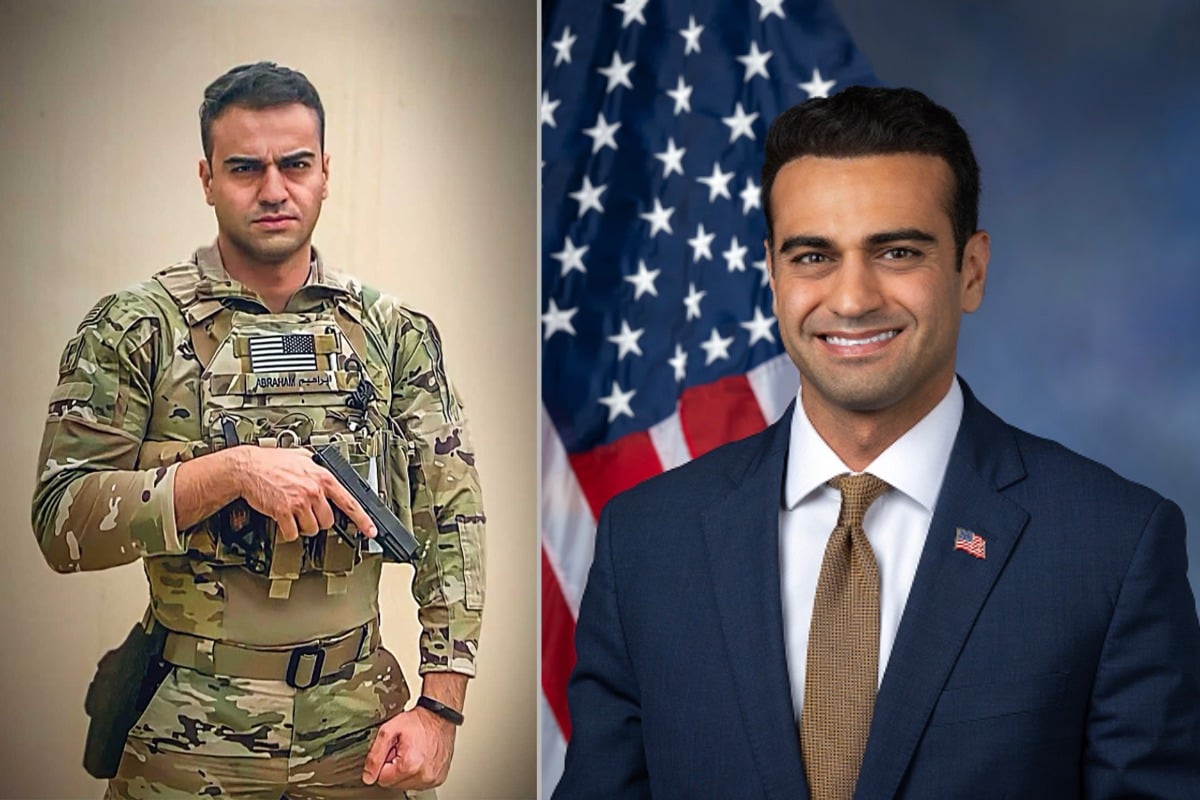
Surrounding those agreements was Rep. Abraham “Abe” Hamadeh, an Arizona Republican and former Army Reserve intelligence officer who would later introduce legislation named after the sound of an A-10 Thunderbolt II firing its cannon.
Months before the contracts were signed, Hamadeh met a senior figure from the Kurdistan Democratic Party as part of a Washington campaign seeking closer American political, military and economic involvement in the Kurdistan Region.
One day after the energy agreements were signed at the U.S. Chamber of Commerce, Hamadeh met Kurdistan Regional Government Prime Minister Masrour Barzani and publicly said economic development seeking to enter Kurdistan had to be allowed to proceed.
There is no public evidence that Hamadeh negotiated the contracts, attended the signing ceremony or held a financial interest in the participating companies.
His documented support nevertheless placed him alongside Kurdish officials and American business interests in a dispute over who could develop the resources—and who would collect the returns.
The $110 billion question
The two agreements were signed May 19, 2025, during a ceremony overseen by Barzani in Washington.
The first involved HKN Energy and ONEX Group through a joint venture called Miran Energy. The companies proposed developing the Miran Gas Field, which was estimated to contain approximately 8 trillion standard cubic feet of recoverable natural gas.
The Kurdistan Regional Government said Miran had the potential to create more than $40 billion in “long-term value.”
The second agreement involved WesternZagros and the Topkhana–Kurdamir development area. Kurdish officials estimated that the combined blocks contained approximately 5 trillion standard cubic feet of natural gas and 900 million barrels of recoverable crude oil.
The KRG projected that Topkhana–Kurdamir could generate approximately $70 billion in revenue over the life of the project.
Those figures created the $110 billion headline.
But they represented two different financial measurements.
The Topkhana–Kurdamir figure was described as projected lifetime revenue. The Miran figure was described more broadly as potential long-term value.
Neither was a $110 billion payment, guaranteed investment or sum placed into an account for the Iraqi population.
The KRG said the Topkhana project would generate “attractive returns for stakeholders” and “substantial value” for investors and strategic partners. Its announcement did not provide a complete public breakdown of anticipated development costs, production shares, taxes, royalties, corporate profit or the amount expected to reach Iraqi citizens.
That missing accounting is central to understanding the controversy.
Foreign companies normally require a financial return before committing capital and accepting the risks involved in developing large energy fields. The issue is not that the companies might earn money.
The issue is whether Iraqis can determine how much value is being transferred to private operators and how much remains available for the public.
What Iraqis could lose remains undisclosed
It would be inaccurate to describe the entire $110 billion as money being taken from Iraqis.
Developing fields that might otherwise remain unused could produce electricity, employment, government revenue and wider economic activity. The KRG says that domestic energy security and around-the-clock electricity are among its objectives.
But those potential benefits do not answer the most important financial question:
Who receives what?
The publicly released materials do not allow Iraqis to calculate the private return on investment, the public return or the difference between what citizens might receive under the disputed Kurdish agreements and what they could receive if the projects were managed through Iraq’s federal system.
That distinction matters because Article 111 of Iraq’s Constitution states that oil and gas are owned by all Iraqi people across every region and governorate. Article 112 provides for federal and regional participation in managing certain fields and calls for revenues to be distributed fairly across the country. The scope of those provisions remains politically and legally contested.
The potential public loss is therefore not automatically $110 billion.
It is the currently unquantifiable amount of resource value that could bypass Iraq’s national revenue system or be captured through contractual terms that have not been fully disclosed to the public.
Hamadeh’s meeting before the signing
Hamadeh entered Congress in January 2025.
That same month, he met Hemin Hawrami, a politburo member of the Kurdistan Democratic Party, or KDP.
The KDP is the political organization most closely associated with the Barzani family. Masrour Barzani serves as the Kurdistan Regional Government’s prime minister, while his father, Masoud Barzani, remains one of the region’s most influential political figures.
A report from Kurdistan24 said Hamadeh and Hawrami discussed strengthening political, military and economic cooperation between the United States and the Kurdistan Region. The outlet characterized the broader discussions as including economic cooperation and “investment opportunities” in Kurdistan.
That language should be understood for what it was: a description published by a Kurdish outlet presenting the region’s diplomatic objectives.
The report did not name Miran, Topkhana or Kurdamir. It does not establish that Hamadeh knew the specific terms of the agreements or that the projects were discussed during the meeting.
What it does establish is that a senior KDP figure was cultivating Hamadeh as part of a broader effort to deepen American involvement in the region months before Kurdish officials announced two massive agreements with U.S.-linked companies.
Hamadeh met Barzani the next day
On May 19, Barzani oversaw the energy signing in Washington.
Hamadeh met him the following day.
The KRG’s official account said Hamadeh welcomed the signing and described the agreements as serving the interests of Iraqi citizens. He also emphasized his Kurdish family heritage, telling Barzani that his paternal grandmother was Kurdish.
In an interview with Rudaw, Hamadeh went beyond a ceremonial acknowledgment.
“It looks like a lot of good economic development wants to go into Kurdistan, so we have to allow that to happen.”
Hamadeh also described the agreements as a positive development and said the Kurdistan Region had support in Congress.
The congressman had no authority to unilaterally validate the contracts.
His statement did, however, place him publicly on the side of allowing the projects to move forward—before the public had been shown how the projected value would be divided or how much would reach Iraqis outside the Kurdistan Region.
The documented sequence is straightforward:
Hamadeh met a senior KDP official in January during discussions aimed at expanding American involvement in the region.
The energy agreements were signed on May 19.
Hamadeh met Barzani and supported allowing the development to proceed on May 20.
That does not prove that he helped arrange the contracts.
It does establish political access and support surrounding their signing.
Baghdad called the contracts “null and void”
Iraq’s federal Oil Ministry immediately rejected the agreements.
Baghdad declared the contracts “null and void,” arguing that the KRG could not independently authorize the development of natural resources belonging to all Iraqis.
The ministry pointed to a 2022 Federal Supreme Court ruling that found the Kurdistan Region’s independent oil-and-gas law unconstitutional and ordered Kurdish authorities to transfer control of crude production to federal authorities.
The KRG rejected Baghdad’s interpretation.
Kurdish officials said the May agreements grew from earlier contracts and maintained that those underlying arrangements had been upheld through Iraqi court proceedings. Iraq’s oil minister responded that the federal government still had serious reservations and that such agreements required federal authorization.
The conflict was not merely a procedural dispute over which office should sign a document.
It concerned control of the resources, the right to contract with private companies and the system through which revenue would be collected and distributed.
In other words, it was also a dispute over return on investment—and whether that return belonged primarily to private operators, the Kurdistan Region or Iraq as a whole.
Hamadeh was not the only lawmaker courted
Barzani met multiple American lawmakers during the same Washington visit.
Hamadeh’s May 20 meeting was therefore not evidence of an exclusive arrangement. Kurdish officials were conducting a broader diplomatic campaign to build support in Congress and strengthen economic and security ties with the United States.
What separates Hamadeh from a lawmaker who appeared in a single diplomatic photograph is the continuing timeline.
His contact with Kurdish political leadership began before the signing and continued afterward.
On April 27, 2026, Kurdistan Region President Nechirvan Barzani held a telephone call with Hamadeh about Iraq, the Kurdistan Region and broader Middle East developments. The Kurdish presidency said both sides emphasized the need for continued congressional support across multiple sectors.
The available record therefore supports describing Hamadeh as an ongoing congressional ally of Kurdish leadership.
It does not establish that he was an agent of the participating companies or that he possessed a secret financial interest in the agreements.
Political connections behind the companies
The ownership and leadership surrounding the American companies add another layer to the story, although they do not by themselves establish wrongdoing.
HKN Energy is part of the business network built by Ross Perot Jr., whose family has been a major Republican donor. HKN has operated in the Kurdistan Region for years, rather than entering Iraq for the first time through the May 2025 agreement.
HKN identifies Mark Rollins as its president and a board member. A company announcement said he oversees HKN’s operations in the Kurdistan Region and manages relationships with senior KRG leadership, including the prime minister and natural-resources minister.
Mark Rollins is the husband of Brooke Rollins, President Donald Trump’s secretary of agriculture. Her federal financial disclosure identifies her spouse’s income from Hillwood Energy and HKN Energy through salary, bonuses and net-profit payments. It also lists a limited-partnership interest valued above $1 million in HKN Energy II, a private oil-and-gas business operating in the Kurdistan Region, which produced more than $1 million in dividends during the reporting period.
Those disclosures do not tie the household’s income directly to the May 2025 agreements.
Nothing reviewed by The Salty Soldier indicates that Secretary Rollins participated in the contracts, used her government office to influence them or had authority over the KRG’s decisions.
WesternZagros was taken private in 2017 through an acquisition involving Crest Energy International and an affiliated company. Crest Investment also has a historical connection to Neil Bush, the brother of former President George W. Bush.
During sworn testimony that became public in the early 2000s, Neil Bush described himself as a paid co-chairman of Crest Investment.
Available records reviewed for this article do not establish that he still held that position in 2025 or participated in the WesternZagros agreement.
The political and family connections do not prove that the companies received favorable treatment.
They show that the private parties positioned to earn returns from Iraqi resources were not politically anonymous companies operating at arm’s length from Washington’s power structure.
The Iraq War still hangs over the deals
The agreements arrived more than two decades after the United States invaded Iraq.
The 2002 authorization for military force cited alleged Iraqi weapons-of-mass-destruction programs and the threat posed by Saddam Hussein’s government. The Iraq Survey Group later concluded that no WMD stockpile was found.
The Senate Intelligence Committee later reported that administration officials had, on numerous occasions, misrepresented the available intelligence and the threat presented by Iraq. A dissenting Republican view argued that flawed intelligence—not deliberate deception—was the basis for the administration’s statements.
Questions about oil were also present before the invasion.
Documents associated with Vice President Dick Cheney’s 2001 energy task force included a map of Iraqi oilfields, pipelines, refineries and terminals. They also included charts of Iraqi oil-and-gas projects and foreign companies interested in Iraqi contracts as of March 2001—roughly two years before American forces entered the country.
The records do not prove that the United States invaded Iraq to seize its oil.
The 2025 agreements do not prove that American companies were receiving spoils from the war.
But the historical context explains why the optics cannot be dismissed as ordinary foreign investment.
The United States invaded Iraq on intelligence claims that did not withstand scrutiny, removed its government and spent years militarily and politically reshaping the country.
More than two decades later, U.S.-linked companies signed agreements in Washington involving Iraqi oil and gas promoted as carrying $110 billion in potential value—while Iraq’s federal government declared the contracts unlawful and the public received no complete accounting of who would collect the returns.
That does not settle whether the war was “for oil.”
It explains why the question remains relevant.
From Army intelligence to the “BRRRRT Act”
Hamadeh’s official biography identifies him as an Army Reserve captain and intelligence officer. His congressional website says he helped identify and stop threats following the 2019 attack at Naval Air Station Pensacola. Another official page says he deployed to Saudi Arabia.
His published military background does not identify him as an Army aviator or military pilot.
Hamadeh has nevertheless made military aviation part of his congressional image. In May 2025, his office promoted a flight with airmen at Luke Air Force Base, describing it as part of his military-focused engagement as a member of Congress.
In July 2026, Hamadeh introduced H.R. 9780, the “Bolstering Recognition, Resurgence, Retention, and Remembrance of the Thunderbolt Act.”
The “BRRRRT Act” takes its name from the distinctive sound of the A-10’s 30 mm cannon.
Hamadeh’s office said the proposal would preserve the A-10 mission through fiscal year 2033 and prevent the aircraft’s retirement before a certified replacement becomes operational. Democratic Rep. Don Davis joined Hamadeh as a co-leader, along with four original Republican cosponsors.
When Military Times reported on the proposal July 22, the bill’s text had not yet been made public. The outlet based its description on a Legislative Counsel draft supplied to reporters.
The headline-ready legislation helped position Hamadeh as a military-focused congressman defending one of America’s most recognizable combat aircraft.
It also provides the public-facing backdrop to another part of his record: an ongoing relationship with Kurdish leaders seeking American support as U.S.-linked companies pursued potentially lucrative rights to Iraqi resources.
Hamadeh first sought statewide office in 2022 as the Republican nominee for Arizona attorney general.
A mandatory recount confirmed that Democrat Kris Mayes defeated him by 280 votes—1,254,809 to 1,254,529—one of the narrowest statewide election margins in Arizona history.
Two years later, Hamadeh redirected his political ambitions toward the U.S. House. He won Arizona’s 8th Congressional District in the 2024 election and took office in January 2025.
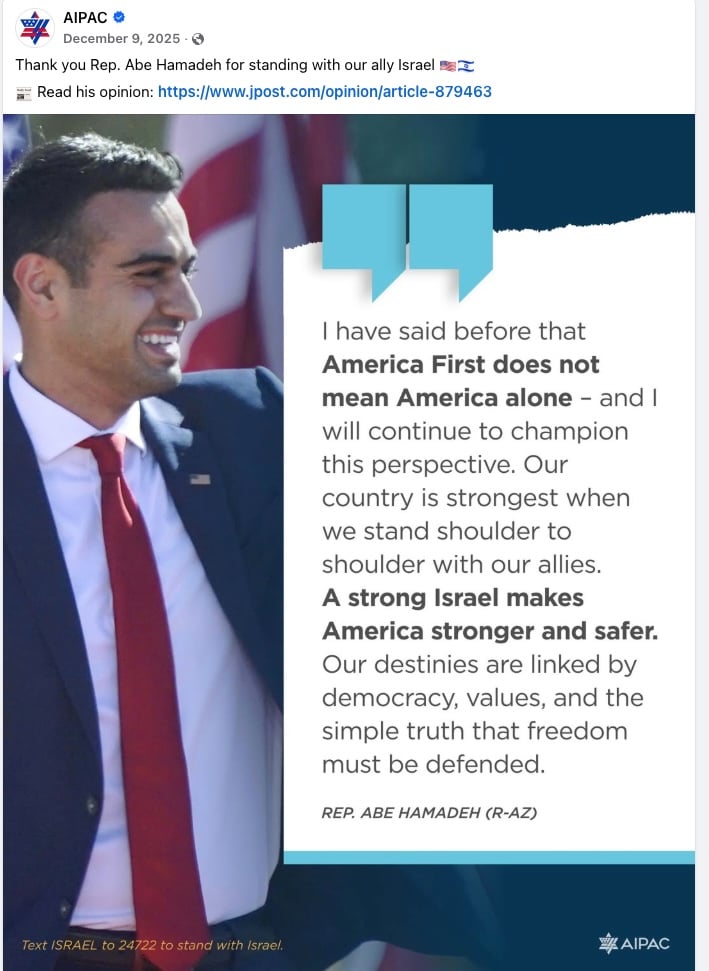
Within weeks of entering Congress, he was meeting with a senior Kurdistan Democratic Party official as Kurdish representatives sought greater American political, military and economic involvement.
Four months later, he met Kurdistan Regional Government Prime Minister Masrour Barzani immediately after the Washington energy signing.
The available public record does not prove that Hamadeh negotiated the energy agreements.
It does not show that he attended the signing ceremony, drafted contractual terms or held a financial interest in HKN Energy, ONEX Group, Miran Energy, WesternZagros or Crest Energy.
It does not establish that company representatives attended his meetings with Hawrami or Barzani.
It also does not prove that the political connections surrounding the companies caused the KRG to award the projects.
The records establish something narrower but still worthy of public scrutiny.
Hamadeh met a senior KDP official before the contracts were signed as Kurdish representatives sought deeper American involvement.
He met the Kurdish prime minister one day after the signing.
He publicly supported allowing the development to move forward.
He maintained contact with senior Kurdish leadership afterward.
And the agreements he supported offered politically connected American business interests a path to earn returns from resources that Iraq’s Constitution says belong to all Iraqi people.
The companies publicized the projects’ potential value.
Kurdish officials publicized economic development.
Hamadeh supported allowing that development to proceed.
What none publicly demonstrated was how much of the projected return would reach the Iraqi people—and how much they could lose if the value of their resources flowed elsewhere.
Editor’s note: Shortly before publication, The Salty Soldier sent Rep. Abe Hamadeh’s office questions concerning his meetings with Kurdish officials, whether the specific energy projects were discussed before their signing, and whether he or his staff communicated with any participating company. The inquiry remains open, and any substantive response will be reviewed and incorporated into this report as appropriate.
© 2026 The Salty Soldier. All rights reserved. Reproduction without written consent is strictly prohibited.