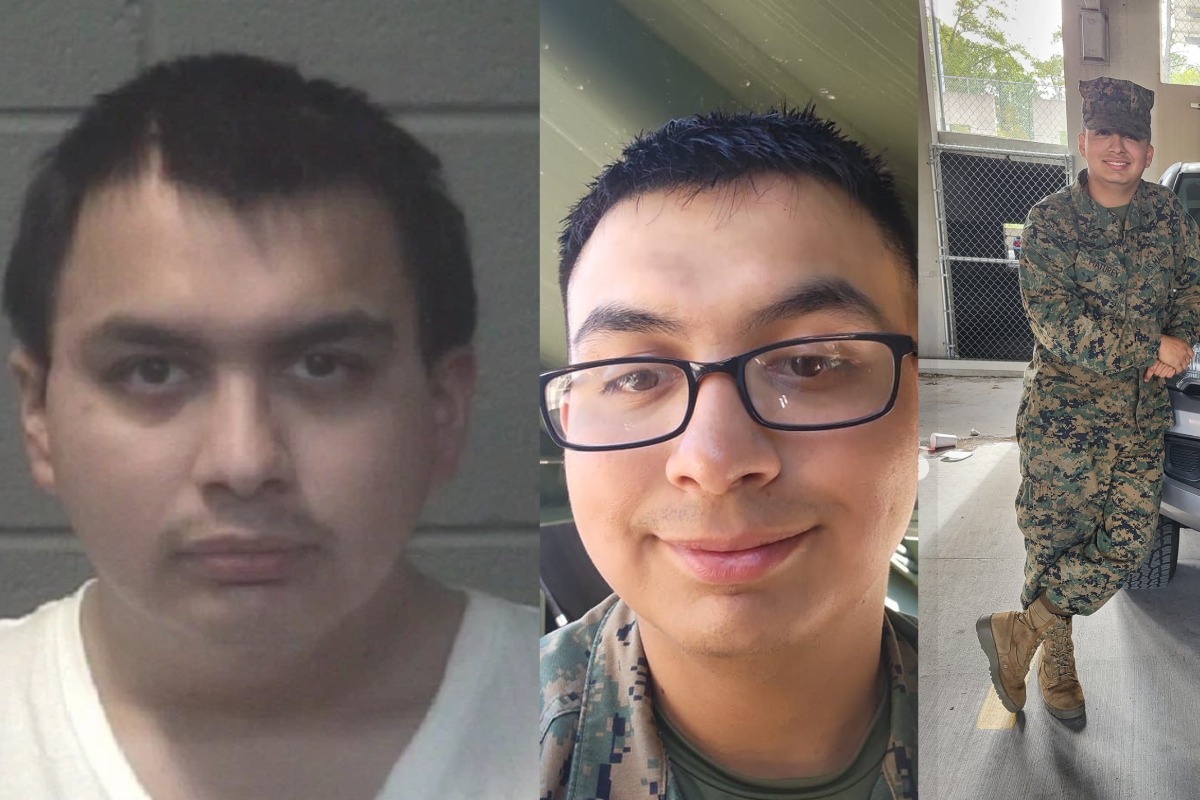
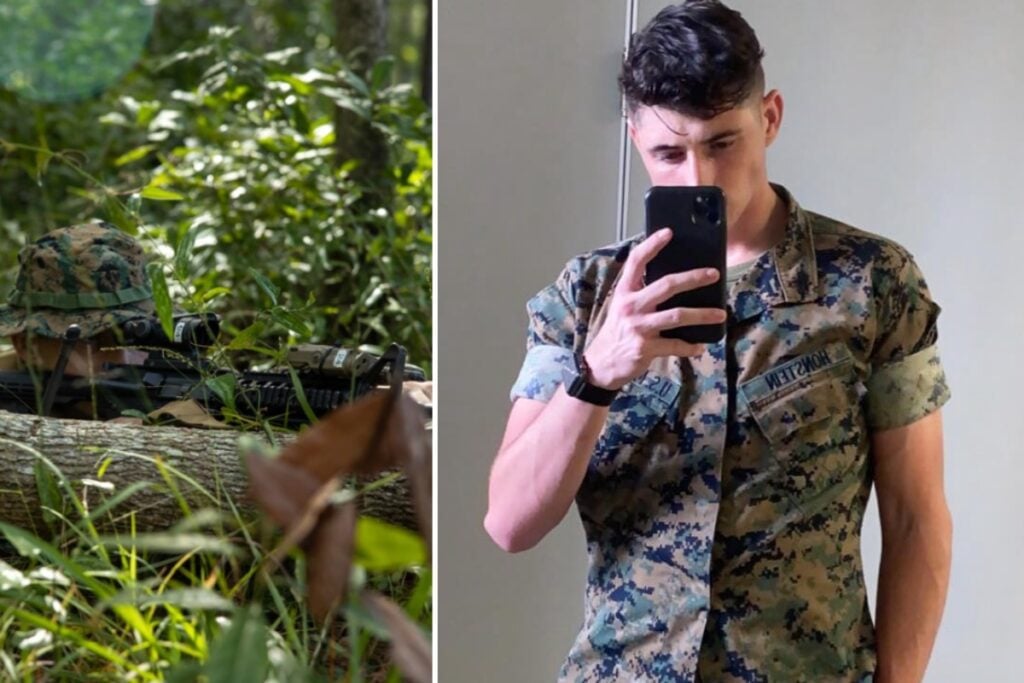
For more than a year, the public story surrounding Sgt. Dakota S. Honstein was relatively straightforward.
A Marine stationed at Camp Lejeune had been accused of murder after a woman was fatally shot inside his barracks room.
But buried within hundreds of pages of court filings, expert witness motions, evidentiary disputes, and trial records is a far more complicated story—one involving online dating, a consensual BDSM encounter, competing accounts of a fatal shooting, and a court-martial panel that ultimately rejected the government’s murder theory.
Court records reviewed by The Salty Soldier show the woman and Honstein were not strangers.
According to filings submitted by the defense, the pair met through the dating application Bumble in January 2024. What followed was not a single-night encounter but several weeks of communication through text messages, phone calls, and FaceTime conversations before they eventually met in person.
Then, during the early morning hours of Jan. 27, 2024, the relationship took a tragic turn.
At approximately 4 a.m., the woman messaged Honstein and told him she had become locked out of her home. According to court filings, Honstein offered to pick her up. She accepted.
Honstein drove from his barracks aboard Marine Corps Base Camp Lejeune to her location and brought her back to Wallace Creek Barracks.
Within a matter of hours, she would be dead.
The details that emerged during the court-martial are striking.
In one motion filed by defense attorneys, the fatal shooting is described as occurring while the pair were “consensually engaged in Bondage, Discipline, Sadism, and Masochism (BDSM) sexual activity.” Other filings similarly characterize the encounter as consensual sexual activity involving a firearm.
Defense filings further state that Honstein told NCIS investigators after the shooting that he and the victim were involved in BDSM-style sexual activity involving a weapon.
In seeking to introduce additional evidence supporting that theory, defense attorneys argued the victim’s DNA was found on both the firearm and its magazine, which they contended was consistent with their claim that she had physically handled the weapon that morning.
Prosecutors did not dispute that the victim voluntarily participated in BDSM activity with Honstein. In a court filing, government attorneys acknowledged they were not alleging the woman was involuntarily present in Honstein’s barracks room or participating against her will. Instead, prosecutors argued that consent to the activity did not relieve a Marine of responsibility for handling a loaded firearm in a manner that showed wanton disregard for human life.
In opposing the defense motion, prosecutors argued the evidence would show a loaded pistol was pressed against the victim’s chest over her heart when it discharged. They further argued that no amount of prior experience with similar activity could reduce the danger posed by a loaded firearm fired at close range.
That context rarely appeared in public discussion of the case but became central to understanding why prosecutors and defense attorneys spent more than a year fighting over what happened inside Honstein’s barracks room.
Court filings also show the defense sought to introduce testimony regarding the victim’s alleged prior involvement in BDSM-related activities. Defense attorneys argued the evidence was relevant to understanding the circumstances surrounding the encounter, while prosecutors sought to exclude it, arguing the victim’s prior sexual behavior was irrelevant to whether Honstein acted with criminal negligence and would only distract from the central question before the court. The dispute became one of several pretrial battles over what information the members would ultimately be allowed to hear.
At 7:06 a.m., a 911 call reported that a woman had been shot inside Wallace Creek Barracks.
Military police and fellow Marines rushed to the scene as emergency responders were dispatched.
According to witness accounts contained in court filings, responders found Honstein covered in blood and emotionally distraught while Marines attempted lifesaving measures on the victim.
One responding Marine later recalled that Honstein repeatedly stated, “she was the one.”
Another account referenced in court records describes Honstein telling responders that the woman had taken the firearm, insisted it was unloaded, pointed it toward herself, and pulled the trigger despite being warned otherwise.
Those statements would later become the subject of suppression motions as defense attorneys challenged whether they had been obtained lawfully.
While both sides agreed a fatal shooting occurred inside Honstein’s barracks room, nearly everything about the circumstances surrounding it became the subject of litigation.
What divided prosecutors and defense attorneys was why it happened and whether Honstein’s actions amounted to murder, manslaughter, or a tragic accident.
The government’s answer evolved significantly over time.
Prosecutors ultimately alleged that Honstein intentionally pulled the trigger of a loaded firearm while it was pointed at the victim, pursuing murder charges under Article 118 of the Uniform Code of Military Justice.
The defense argued the shooting was accidental.
To support that theory, defense attorneys sought firearms experts, challenged witness statements, attacked portions of the investigation, and repeatedly emphasized the circumstances surrounding the encounter itself.
The litigation became so contentious that prosecutors eventually withdrew and re-referred charges after a dispute over the wording of the murder specification.
What began as a homicide prosecution increasingly became a battle over intent.
Did Honstein intentionally commit an act so dangerous that it amounted to murder?
Or was the death the result of reckless conduct during a consensual encounter that spiraled into tragedy?
The answer delivered by the court-martial panel landed somewhere in between.
After hearing the evidence, the members rejected the government’s murder theory.
Honstein was found not guilty of murder.
The panel did, however, convict him of involuntary manslaughter by culpable negligence as well as unlawfully possessing the firearm aboard Camp Lejeune.
The distinction was significant.
The verdict reflected a finding that Honstein was criminally responsible for the woman’s death while simultaneously rejecting the allegation that he committed murder.
The military judge sentenced Honstein to a dishonorable discharge, forfeiture of all pay and allowances, reduction to E-1, and a total of eight years in confinement.
The case stands as one of the more unusual military homicide prosecutions in recent years.
Rather than involving a domestic dispute or a traditional murder allegation, the court record describes a relationship that began on a dating app, progressed through weeks of communication, and ended in a Camp Lejeune barracks room during a consensual BDSM encounter involving a loaded firearm.
The public narrative surrounding the case was long defined by a single fact: a Marine had been accused of murder after a woman was shot in his barracks room.
The court-martial record tells a far more complicated story—one involving a dating app, a consensual BDSM encounter, a loaded firearm, and a fatal shooting that prosecutors argued was murder but a court-martial panel ultimately determined was manslaughter.
© 2026 The Salty Soldier. All rights reserved.