When an American service member dies overseas, particularly in a country where large-scale combat operations have largely ended, the expectation is not immediate certainty — but eventual answers.
In the case of Spc. Travis Jordan Pameni, even that expectation went unmet.
Army records show the administrative investigation into Pameni’s death was completed in November 2024. The findings were not released publicly until January 2026, more than a year later — and even then, the report contained no medical cause of death.
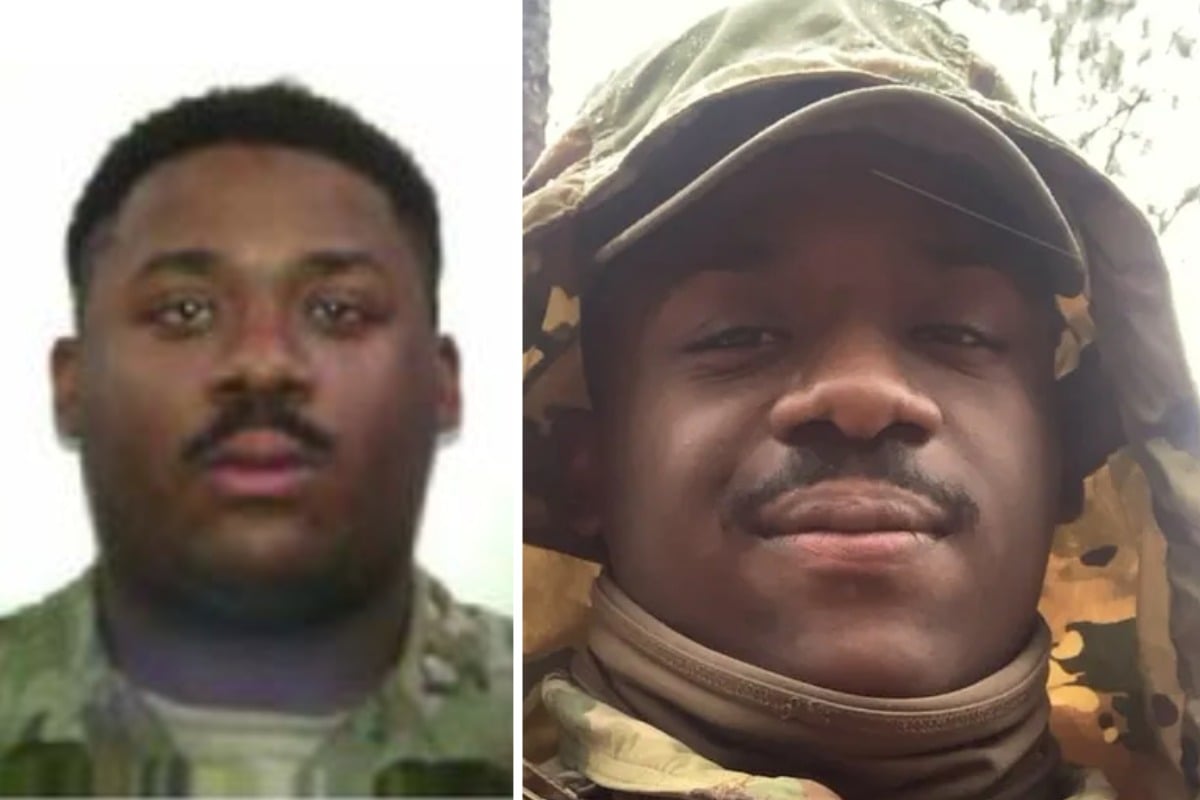
Pameni, a 23-year-old Georgia National Guard soldier from Douglasville, Georgia, was assigned to the 1st Battalion, 121st Infantry Regiment, which deployed to the Iraq in April 2024. His unit fell under Task Force Spartan and was responsible for security operations at the Baghdad Embassy Complex, where U.S. forces continue to support diplomatic missions.
Pameni died on July 31, 2024, after collapsing during physical activity at the embassy complex, according to investigative records released to The Salty Soldier following repeated Freedom of Information Act requests.

The delay in releasing those records was not the result of an ongoing investigation.
The Army’s own documents show the investigation had already concluded.
Within days of Pameni’s death, the Army initiated both a formal Line of Duty investigation and an administrative inquiry under Army Regulation 15-6. Emergency response actions were documented. Criminal Investigation Division personnel were notified. Behavioral health and chaplain assets were deployed for soldiers assigned to the embassy security mission.
From the outset, investigators acknowledged that medical findings would be central to the case.
Over the following months, the investigating officer requested multiple extensions, each citing the same unresolved issue: the autopsy had not been completed, and the cause of death had not yet been determined. Those findings, investigators wrote, were required before the case could be closed.
Each extension was approved. Each pushed the deadline further out.
Then, in early November 2024, the investigation ended anyway.
The final AR 15-6 findings are dated November 7, 2024. They document Pameni’s collapse, outline the unit’s response, and summarize the steps taken by commanders and investigators. They include a death certificate listing the date, time, and location of death.
Where a cause of death would normally be identified, the certificate states that the disease or condition directly leading to death remained pending determination by the Armed Forces Medical Examiner.
No autopsy report appears in the file.
No medical addendum follows.
No cause of death is identified anywhere in the completed investigation.
Despite that absence — and despite repeated written acknowledgments that the investigation could not be completed without those findings — the Army closed the case.
What the investigation does include is extensive detail on Pameni’s medical history prior to his death.
Army records document multiple routine medical encounters during his deployment, including treatment for a knee injury sustained months earlier while exercising at a gym. Notes describe the use of a knee brace, activity limitations, and follow-up care. Pameni was placed on a temporary profile restricting activities such as running and ruck marching, while still being cleared to walk and bear weight as tolerated.
The investigation notes that Pameni was not taking medications beyond those prescribed for muscle soreness, had no known allergies, and had reported no health concerns during pre-deployment screening. Medical records reviewed by investigators show no diagnosis of a life-threatening condition.
What they do not show is any medical explanation tying those prior injuries or treatments to his sudden collapse and death.
There is no analysis connecting the documented knee injury to a fatal outcome. There is no indication of cardiac, neurological, or environmental findings. There is no autopsy result evaluating whether heat, exertion, undiagnosed illness, or another factor played a role.
In short, the investigation meticulously catalogs what did not explain Pameni’s death — while never establishing what did.
As The Salty Soldier continued pressing for records throughout 2025, the Army cited family notification as the reason for withholding the investigative file. When the documents were finally released, they revealed not newly completed findings, but a report that had been finalized more than a year earlier and still contained no answers.
During that same period, The Salty Soldier also requested records related to the death of another Georgia National Guard soldier, Spc. Owen James Elliott, who died in Iraq just days before Pameni. The Army has since stated that Elliott’s records are not yet ready for release, offering no timeline for disclosure.
The result is a stark contrast: two young soldiers from the same state died overseas within days of each other in a theater where such deaths have become increasingly rare — and more than a year later, the public has received one completed investigation with no cause of death, and another investigation that remains entirely withheld.
This reporting does not allege misconduct or wrongdoing. The investigation followed procedural steps, gathered statements, and reviewed available records. What it did not produce — and what the Army ultimately released after more than a year — was an answer to the most basic question.
An American soldier died overseas.
The investigation ended.
And more than a year passed before the public learned that the Army had closed the case without determining why.
That gap — between death, investigation, and disclosure — now sits plainly in the record.
© 2026 The Salty Soldier. All rights reserved.