The U.S. Air Force has issued a force-wide order requiring commanders to inspect every single dorm room and unaccompanied housing (UH) unit by October 29, part of a Pentagon-wide crackdown on the deteriorating living conditions of America’s service members.
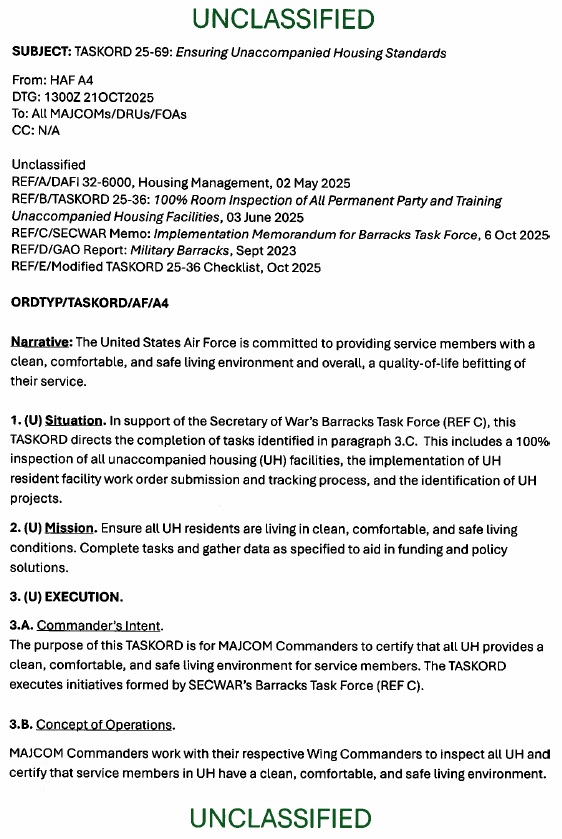
The directive, known as TASKORD 25-69: “Ensuring Unaccompanied Housing Standards,” was sent from Headquarters Air Force A4 on October 21. It orders all major commands to certify that every Airman living in dorms or other unaccompanied housing is residing in “clean, comfortable, and safe living conditions.”
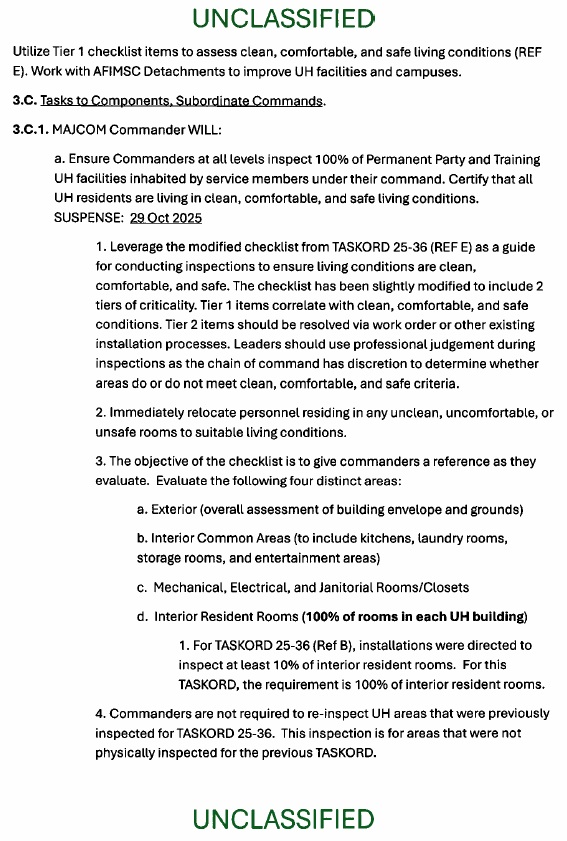
According to the memo, commanders must inspect 100 percent of all rooms—not the 10 percent sampling used in previous evaluations—and immediately relocate any service members living in unsafe or unsanitary quarters. Commanders have just over a week to complete the inspections, identify problem areas, and submit detailed improvement plans.
“Leaders should use professional judgment during inspections,” the memo states, “as the chain of command has discretion to determine whether areas do or do not meet clean, comfortable, and safe criteria.”
The order also directs the Air Force Installation and Mission Support Center (AFIMSC) to create a force-wide system allowing Airmen to directly submit and track dorm maintenance requests—something many junior troops have complained doesn’t currently exist.
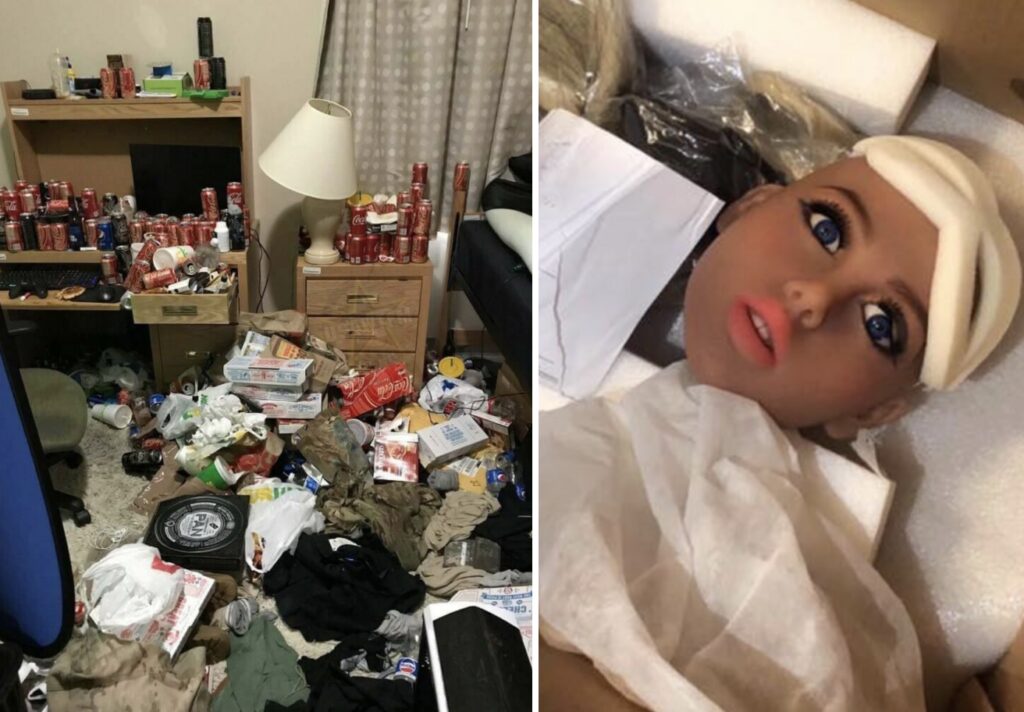
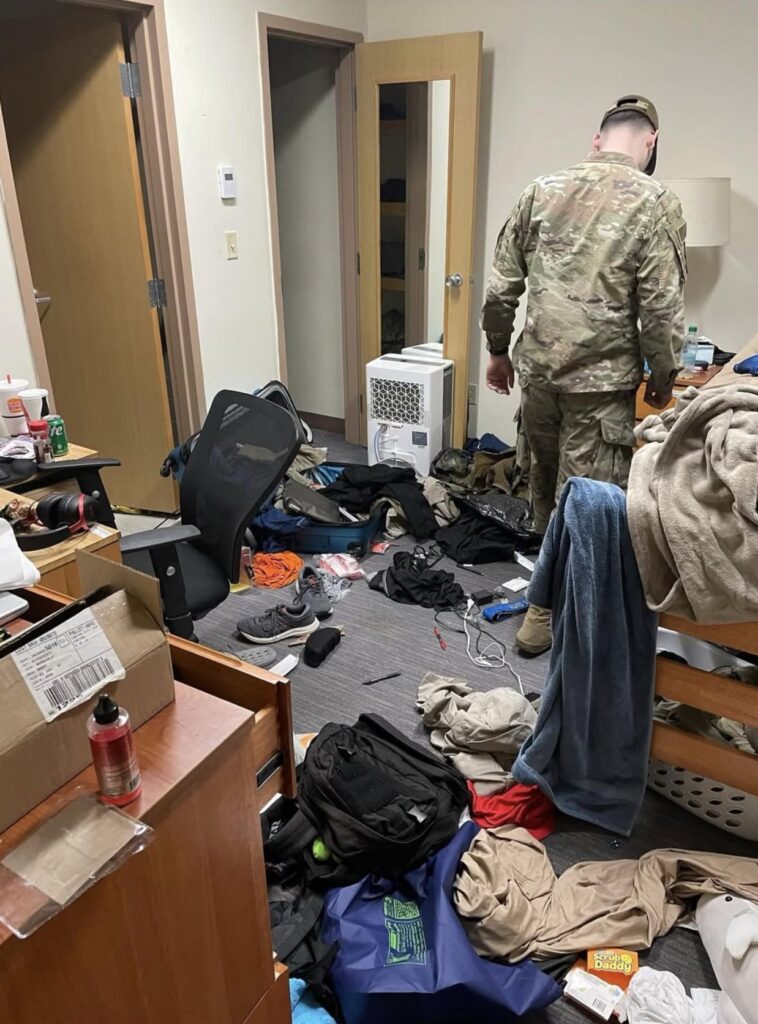
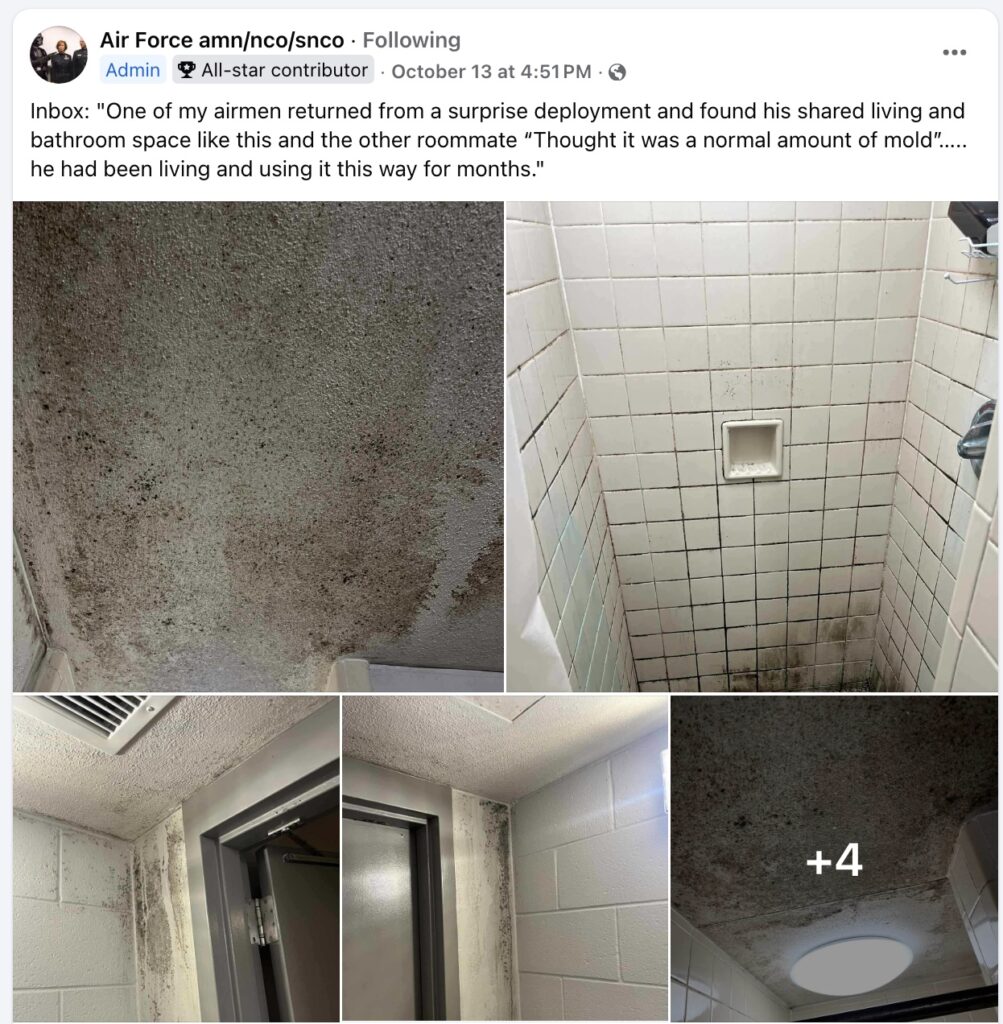
The Air Force directive supports Defense Secretary Pete Hegseth’s newly established Barracks Task Force, announced October 7, which aims to overhaul troop housing across all branches. The task force was created after years of congressional hearings, watchdog reports, and viral social media posts revealed filthy, mold-infested, and neglected barracks across the services.
“As too many know, too often, barracks are shabby and without basic modern amenities,” Hegseth said earlier this month. “That’s where our warriors live, rest, and recover. How can we expect them to be ready for anything on the battlefield when their own living space is a constant source of stress and frustration?”
A photo of an Airman’s dorm room posted by the Air Force amn/nco/snco Facebook group on October 2, 2025.
The move comes in response to a 2023 Government Accountability Office (GAO) report that found barracks at multiple U.S. military installations plagued by mold, sewage leaks, pests, broken HVAC systems, and poor water quality—all of which the GAO said were affecting morale, mental health, and even retention.
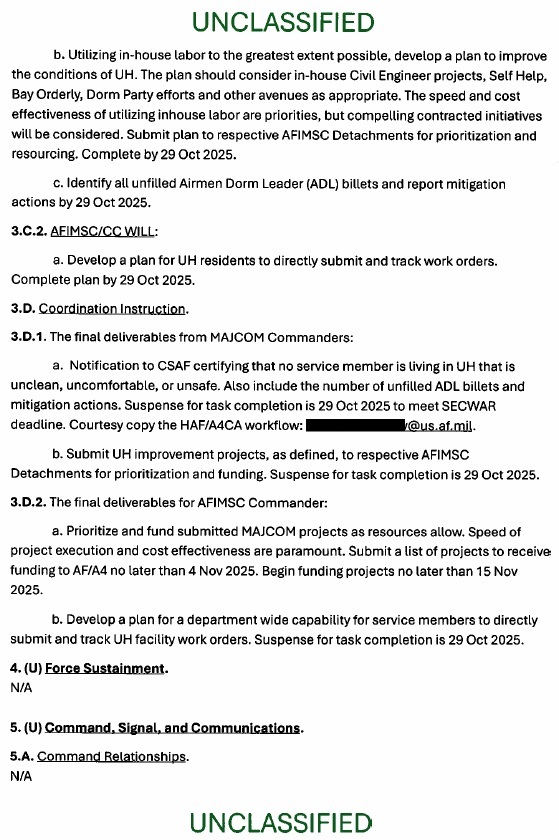
According to the Air Force memo, commanders are to “utilize in-house labor to the greatest extent possible” when making repairs or improvements, using Civil Engineer units, self-help programs, and dorm party efforts before contracting out work. However, the memo leaves room for “compelling contracted initiatives” if internal resources fall short.
Each Major Command (MAJCOM) must also:
Identify unfilled Airman Dorm Leader billets and report mitigation steps.
Submit UH improvement projects for funding prioritization by October 29.
Provide notification to the Chief of Staff of the Air Force (CSAF) certifying that no Airmen remain in unsafe or unsanitary rooms.
Funding requests are due to Air Force headquarters by November 4, with project starts expected no later than November 15, according to the document.
The Air Force isn’t the first branch to face this reckoning. In 2024, the Marine Corps launched its “Barracks 2030” initiative after internal inspections found 17,000 Marines living in substandard conditions. The Navy followed suit earlier this year after its Secretary, John Phelan, was “shocked and dismayed” by the state of sailor housing at Andersen Air Force Base on Guam—ordering immediate evacuations and triggering $71 million in renovation contracts.
The Army has faced similar issues, with surveys showing troops living amid mold, pests, security failures, and maintenance delays. The situation became a running joke among troops online—but for those living in these conditions, it’s no laughing matter.
For now, the Air Force’s task order marks a significant shift from passive policy to active accountability. Installation commanders have one week to prove that their Airmen aren’t living in filth—and to fix the problem if they are.
But for many service members, especially those who’ve been complaining for years about broken dorms and unresponsive maintenance systems, this feels like a long-overdue response.
Whether the Air Force’s promise of “clean, comfortable, and safe” housing turns into lasting reform—or just another short-term inspection blitz—will depend on what happens after October 29.