Editor’s Note: This article has been updated to reflect additional review of released emails, text messages, and reporting related to Jeffrey Epstein’s private correspondence. The update refines the framing and incorporates newly examined material. Further updates may follow as verified information becomes available.
Jeffrey Epstein’s correspondence does not read like the inbox of a financier operating on the margins of global affairs.
Across multiple email chains and text exchanges, Epstein appears embedded in private discussions involving active war zones, strategic infrastructure, global health operations, and elite political access—often alongside billionaires, former heads of state, senior diplomats, and power brokers whose decisions carried national and international security implications.
What makes the communications striking is not simply who appears in them, but how casually matters of consequence were discussed: specific funding amounts, named heads of state, militant reactions, and discreet access strategies—circulated through private networks rather than formal government channels.
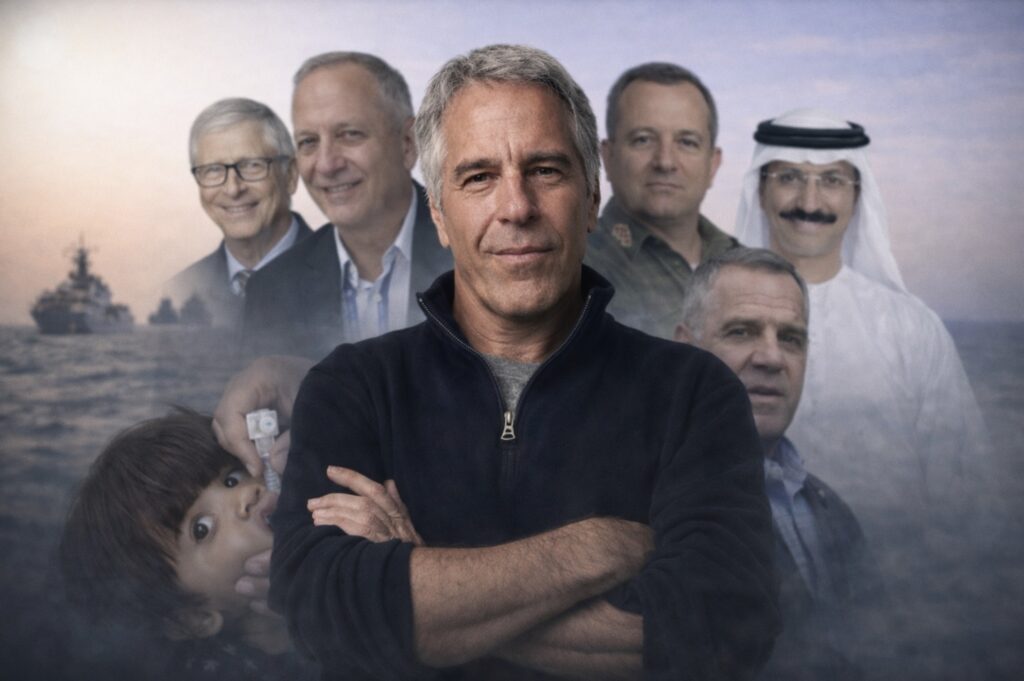
Taken together, the documents point to an informal, largely unaccountable influence environment, where geopolitically sensitive issues were discussed outside visible public oversight or institutional decision-making. The central question raised is not conspiracy, but alignment: when influence operates privately, whose interests are actually being advanced—and who is accountable?
Afghanistan, polio, and private coordination in an active war zone
In June 2013, while the United States remained deeply engaged in Afghanistan, a private email chain circulated among senior diplomatic and NGO figures discussing polio eradication efforts inside the country—not as a routine humanitarian initiative, but as a delicate political and security challenge requiring discretion.
The exchange involves Terje Rød-Larsen, a veteran back-channel negotiator best known as one of the architects of the 1993 Oslo Accords and a former senior United Nations official. By 2013, Rød-Larsen had decades of experience conducting off-the-record diplomacy in conflict zones involving militant groups, governments, and non-state actors.
In an email forwarded to Jeffrey Epstein, Rød-Larsen states that Bill Gates had spoken directly by telephone with Afghan President Hamid Karzai regarding polio eradication in Afghanistan. The message treats the call as a completed engagement and frames it as a catalyst for next steps.
Epstein’s response is brief and specific:
“bg will send 5 million to start.”
The correspondence places Epstein inside a private information loop tracking a concrete funding commitment tied to a sensitive initiative in a country where U.S. combat operations were ongoing. At the time, polio campaigns required negotiations for access in Taliban-influenced areas, coordination with local power structures, and careful management of security risks.
Other emails in the same chain underscore why discretion was central. Rød-Larsen warned that a visible Gates Foundation action had “hardened the Pak Taliban’s position” and threatened to derail what he described as “very discreet and very confidential outreach” with militant actors. Only weeks earlier, the Afghan Taliban had expressed support for polio eradication—but explicitly on the condition that no foreigners be involved.
These were not abstract humanitarian concerns. They were discussions of optics, militant reaction, and political fallout, with Epstein included as a recipient of those assessments.
Strategic infrastructure and maritime power
Epstein’s presence in security-adjacent discussions was not limited to global health.
In separate correspondence, he appears in exchanges involving Sultan Ahmed bin Sulayem, the longtime chairman and CEO of DP World, whose global port holdings sit at the intersection of commerce, military mobility, and national security.

DP World-operated ports are integral to energy transit, supply chains, and military logistics, placing their governance squarely within geopolitical planning. In a 2009 email exchange during a period of heightened scrutiny, Epstein offers prescriptive guidance on managing accountability, controlling information, and severing sensitive back channels. The tone is confident and advisory, directed at an executive whose portfolio governments routinely treat as strategic infrastructure.
The exchange suggests Epstein was comfortable advising figures operating at the core of global logistics and maritime power—domains inseparable from security planning.
Israel, shipping, and industrial power
Another figure appearing in Epstein’s correspondence is Idan Ofer, an Israeli industrialist whose interests span shipping, energy, and large-scale infrastructure.
A former Israeli Navy officer, Ofer controls assets in sectors governments closely monitor for strategic risk, including maritime logistics and fuel supply. In a 2012 email, Epstein discusses hosting a private, off-calendar meeting involving senior U.S. figures, Chinese participants, and explicitly naming Ofer.
The proposed gathering is framed not as a diplomatic summit or public forum, but as a private meeting to be held at a venue fully controlled by Epstein. No government sponsor is identified. No institutional mandate is cited. Access itself appears to be the currency.
Several such meetings were proposed for Epstein’s private island, Little Saint James—an environment where access, movement, and documentation were tightly managed. While later criminal allegations reshaped public understanding of that setting, the correspondence shows how normalized such private, controlled venues were within elite networks at the time.
Ehud Barak, Larry Summers, and the Epstein advisory network
Among the most extensive and revealing correspondences in Epstein’s archive is his long-running relationship with former Israeli Prime Minister and Defense Minister Ehud Barak, a relationship that continued for years after Epstein’s 2008 sex-offense conviction.
Released emails show Epstein acting not as a passive financier, but as a trusted adviser, fixer, and strategic sounding board for Barak on matters spanning defense-adjacent technology, cyber capabilities, energy assets, global health ventures, and elite political access.
What distinguishes the Barak correspondence is scope. Epstein reviewed Israeli startups developing high-altitude, long-endurance drone platforms with surveillance applications; advised on “offensive cyber” investments; weighed in on biotech ventures tied to malaria testing; and evaluated the proposed sale of a multibillion-dollar oil and gas company involving outreach to Chinese, Russian, and Western financial interests.
Threaded through this correspondence is the presence of Larry Summers, the former U.S. Treasury Secretary and Harvard University president. Summers appears not as a peripheral contact, but as part of the same informal advisory environment—one in which Epstein functioned as a connector between Israeli leadership, U.S. economic policymakers, financiers, and global capital.
The inclusion of Summers underscores the non-ideological nature of the network. These exchanges do not read as advocacy for a single national agenda. They read as coordination among individuals accustomed to operating above institutional boundaries, where alignment shifted depending on the issue, the moment, and the available leverage.
Epstein also encouraged Barak to seek private meetings with senior leaders, including Russian President Vladimir Putin during Barak’s 2013 visit to Moscow, where Barak acted as an informal backchannel conveying Israeli concerns related to the Syrian civil war.
A recurring feature of Epstein’s involvement was his provision of controlled, private environments. Barak used an Epstein-arranged Manhattan apartment to write his autobiography, and Epstein hosted or proposed hosting meetings at his properties, including Little Saint James. At the time, these arrangements appear to have been normalized within elite circles, offering discretion, exclusivity, and insulation from public scrutiny.
The significance of the Barak correspondence lies not in a single outcome, but in what it reveals about process: a former head of government relying on a private individual—without public mandate—for advice and access on matters touching defense, energy, and geopolitics.
Text messages, Iran, Gates, and real-time influence
The most revealing material appears not in formal emails, but in Jeffrey Epstein’s private text exchanges.
Unlike curated correspondence, these messages capture real-time reactions to unfolding political and geopolitical events, often stripped of institutional language or procedural caution. In several exchanges, Epstein and his correspondents discuss U.S. foreign policy decisions casually and without formal framing—treating escalation, sanctions, and war as topics for private commentary rather than public deliberation.
Iran emerges as a recurring fault line.
In one exchange, Epstein and a former senior U.S. official discuss President Trump’s decisions regarding Iran and China, weighing whether public intervention might be advisable and who should deliver it. Epstein speaks as someone aware of behind-the-scenes pressure, asking whether a third party has urged a public argument against escalation. The conversation assumes that elite commentary—properly timed and delivered by the right voice—could meaningfully shape the policy environment.
These exchanges matter because Iran represents an arena where U.S. and Israeli interests often overlap but diverge in execution. When private intermediaries and former officials casually discuss whether war is “a bad idea,” who should speak publicly, and how leaders might react—outside formal decision-making channels—the absence of accountability becomes the story.
A parallel set of text messages involving Bill Gates underscores how this informal influence extended beyond politics into philanthropy and global policy.
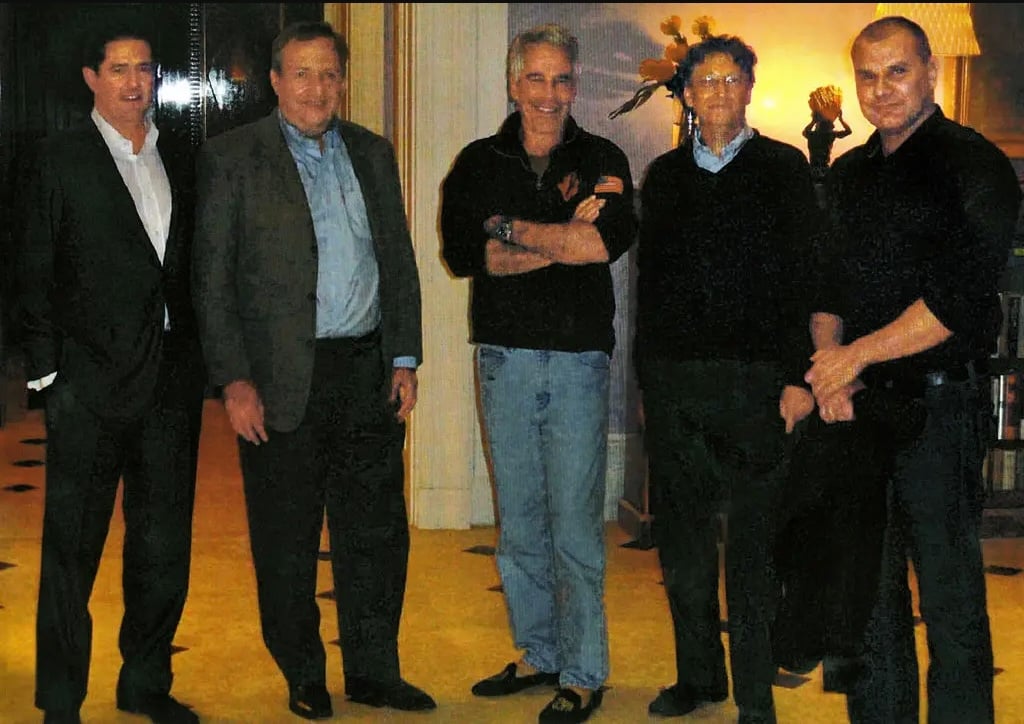
In one September 2017 exchange, Epstein is asked whether there are “any signals” or specific words that could be used to let both a third party and Gates know the sender was “not messing around.” Epstein replies:
“With bg. All you would have to say, is you should know that I’ve told jeffrey everything — everything.”
The message frames Epstein himself as the leverage. The correspondent’s immediate response—expressing concern that Gates would “immediately retaliate”—suggests the signal carried understood weight.
Epstein then adds:
“You can always say I also like blue dresses :)”
The phrase is presented as language to be deployed, not explained. Coming immediately after guidance on signaling seriousness, it relies on implication rather than argument—suggesting that effectiveness lay in what was understood privately, not what was stated publicly.
Taken together, these exchanges—spanning war, sanctions, public messaging, and philanthropic power—do not suggest formal authority. What they reveal instead is policy gravity without responsibility: influence exercised through proximity, confidence, and assumed access, rather than mandate or oversight.
The Gray Zone
The correspondence reviewed here does not establish a single command structure, formal alliance, or unified ideological agenda.
What it does show—based on the material currently available—is a pattern of private engagement in which former officials, sitting leaders, and powerful private actors discussed war, sanctions, strategic infrastructure, and crisis response outside formal national decision-making processes, often across international lines and in informal settings.
This record is necessarily incomplete. It reflects only what has surfaced through released emails, texts, and reporting, not the full scope of what may have occurred. Drawing definitive conclusions about intent, allegiance, or outcome based on this material alone would be premature.
Still, the correspondence raises questions that cannot be avoided.
When discussions touching war, escalation, foreign policy, and strategic access take place privately—among individuals no longer bound by office but still capable of influence—what interests are actually being advanced? Are these efforts aligned with U.S. policy, Israeli security priorities, Chinese strategic objectives, or some shifting combination of all three? Or are they driven less by national alignment than by access, capital, and the opportunity to shape outcomes in strategically sensitive regions?
The documents do not answer those questions. What they do suggest is that influence in the modern geopolitical environment does not always flow through formal channels, and that decisions affecting regions, conflicts, and populations may be shaped in spaces where accountability is diffuse and authority is informal.
In that context, the most important issue is not whether a hidden hand can be proven, but whether the distance between formal national power and private influence has grown large enough to matter—and who bears responsibility when it does.
© 2026 The Salty Soldier. All rights reserved.