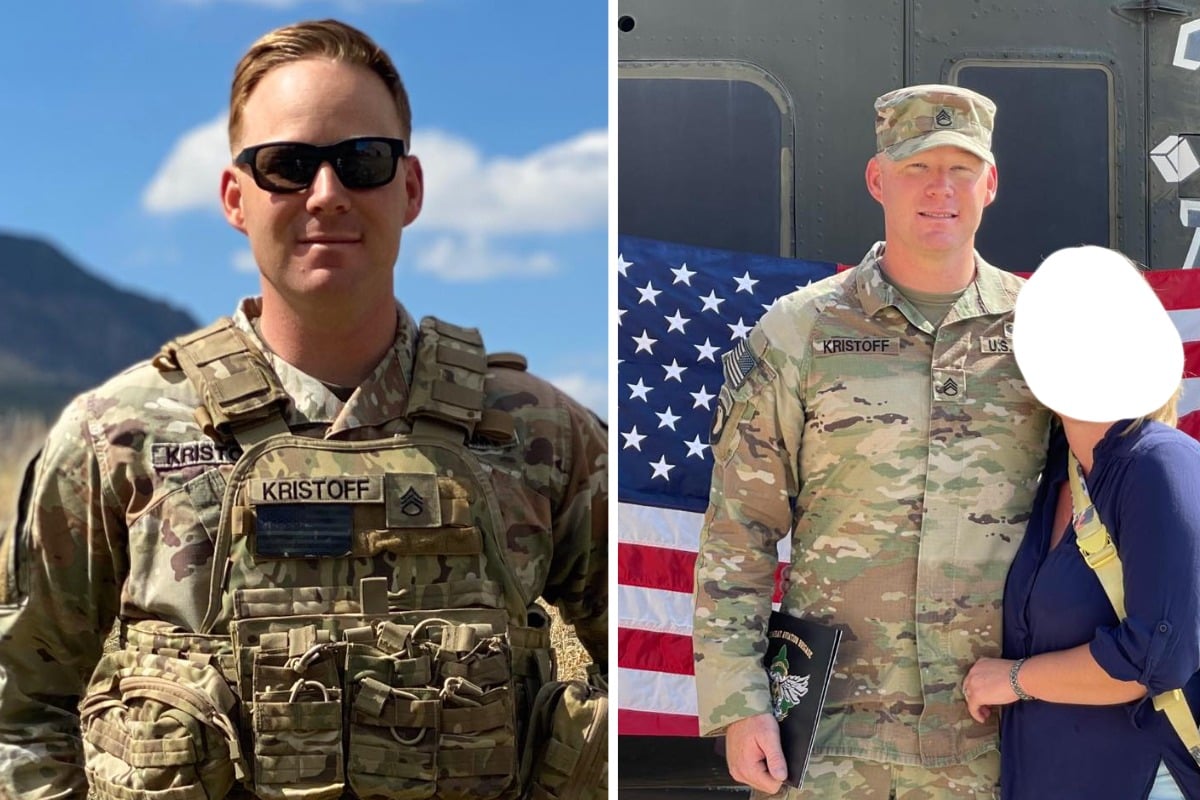
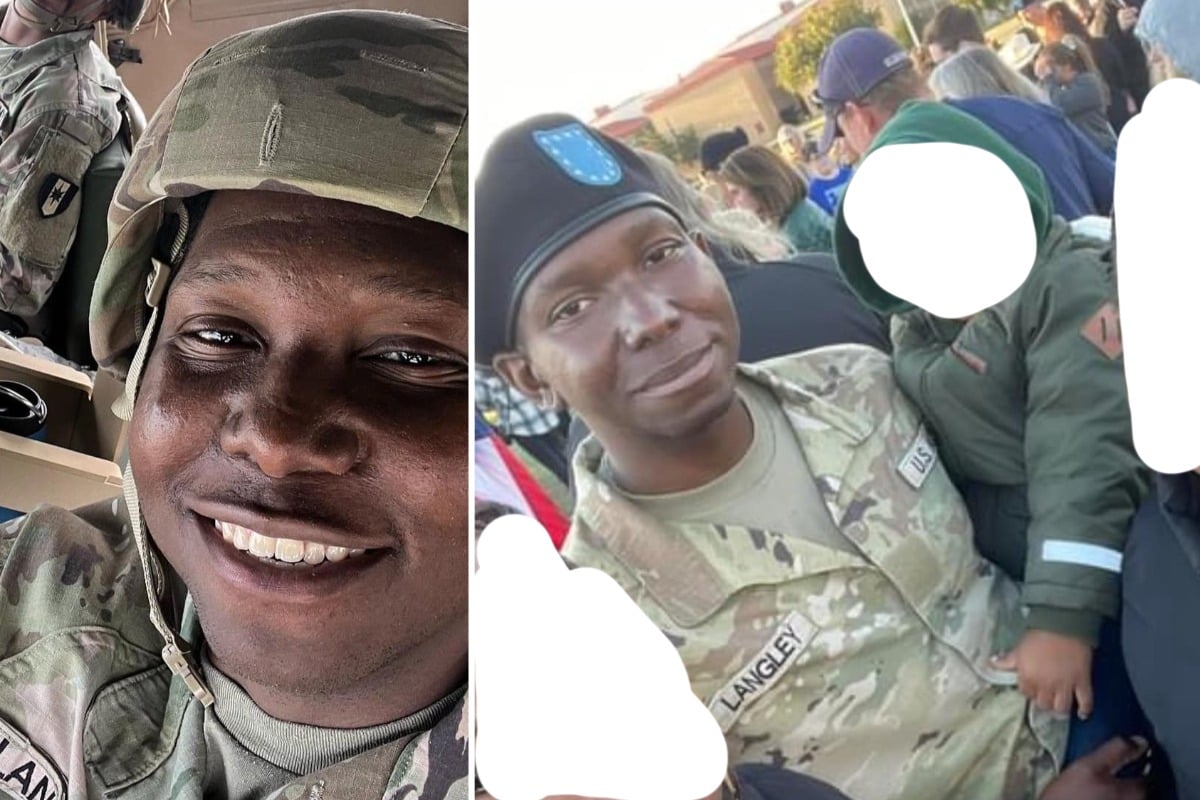
A former U.S. Army officer who began military service as a male and was born male, and who later began medical transition while on active duty, appears to have taken direct aim at Secretary of War Pete Hegseth, using social media to mock his physical fitness after being separated from the Army.
In a recent Instagram post shared by former Army Major Kara Corcoran, the ranger-qualified infantry officer referenced her removal from service under transgender separation policies before pivoting to a pointed critique of Hegseth’s pull-up form—specifically his failure to achieve consistent full arm extension during a widely circulated workout video.
The post did not explicitly name the Secretary of War, but the reference was widely understood. It followed months of online commentary centered on resurfaced footage of Hegseth performing pull-ups, which has become a recurring point of criticism among both political opponents and some veterans.
Corcoran served for years in uniform, including combat deployments, before beginning medical transition while on active duty. Her military career ended following a January executive order barring individuals diagnosed with gender dysphoria or undergoing medical transition from continued service. The policy, administered by the Department of War, applies force-wide rather than through individualized medical waiver determinations.
A Pattern of Public Pushback
Corcoran is not the first public figure to use physical fitness as a means of criticizing the Secretary of War.
In November 2025, environmental activist and drag performer Pattie Gonia posted a viral video completing a high-repetition pull-up set while mocking Hegseth’s form and policy positions. The clip circulated widely on social media and reignited discussion about the Secretary’s past fitness demonstrations, as well as his views on transgender military service and combat standards.
That renewed attention stemmed from an older video showing Hegseth struggling near the end of a 50-rep pull-up attempt, with inconsistent repetition depth. Veterans across multiple branches noted the contrast between the video and the strict form standards typically enforced during official military fitness testing.
While the exchanges have taken on a performative tone online, they are rooted in deeper disagreements over who sets standards, how those standards are enforced, and whether symbolic displays of fitness meaningfully reflect leadership competence.
Hegseth has argued publicly for maintaining uniform combat standards and has supported policies limiting service eligibility based on medical and physiological criteria. Supporters view those positions as consistent with historical military practice; critics argue they disproportionately affect certain groups and remove otherwise capable personnel.
From SAMS to Separation
Corcoran’s case illustrates how those policies have played out at the individual level.
In July 2025, she disclosed that after completing the Army’s School for Advanced Military Studies (SAMS)—an elite academic program focused on operational-level planning—she was directed to comply with male grooming and uniform standards for her graduation ceremony. According to Corcoran, the directive originated from higher headquarters rather than her immediate chain of command.
Despite her academic performance, operational background, and prior evaluations, the Army proceeded with separation under Department of War policy governing transgender service members.
Following separation, Corcoran transitioned into competitive athletics, playing full-contact football in the Women’s National Football Conference, while continuing to comment publicly on military policy, leadership decisions, and institutional standards.
Her recent social media post reflects continued engagement with those issues, using physical performance as a point of comparison with senior civilian leadership.
More Than a Meme
While pull-ups have become the visual shorthand, the underlying dispute centers on broader questions about military readiness, medical standards, and command authority.
The transgender separation policy is grounded in long-standing military rules governing medical fitness, deployability, and worldwide availability—areas where the armed forces have historically enforced strict disqualification criteria. Conditions requiring ongoing medical treatment, specialized pharmaceuticals, or continuous monitoring have often limited eligibility for service, particularly in combat arms roles expected to deploy to austere environments.
Supporters of the policy argue that medical transition can introduce variables—such as hormone dependency, surgical recovery, or long-term treatment requirements—that may conflict with expeditionary service and unit readiness. Critics counter that such risks should be assessed individually rather than through categorical exclusions.
Against that backdrop, public criticism of the Secretary of War—whether from activists, entertainers, or former officers—has increasingly taken symbolic forms, including challenges framed around physical fitness and performance. For some veterans, these critiques reflect frustration with leadership decisions; for others, they distract from the more substantive debate over medical policy, operational risk, and uniform standards.
Corcoran’s post, whether intended as satire or commentary, reflects that tension. It places personal experience and physical capability in contrast with institutional rules designed to apply consistently across the force.
As the pull-up videos continue to circulate, the larger questions remain unresolved:
How should the military balance individual service records against medical standards?
Where should discretion end and uniform policy begin?
And who ultimately bears responsibility for enforcing those boundaries?
© 2026 The Salty Soldier. All rights reserved.