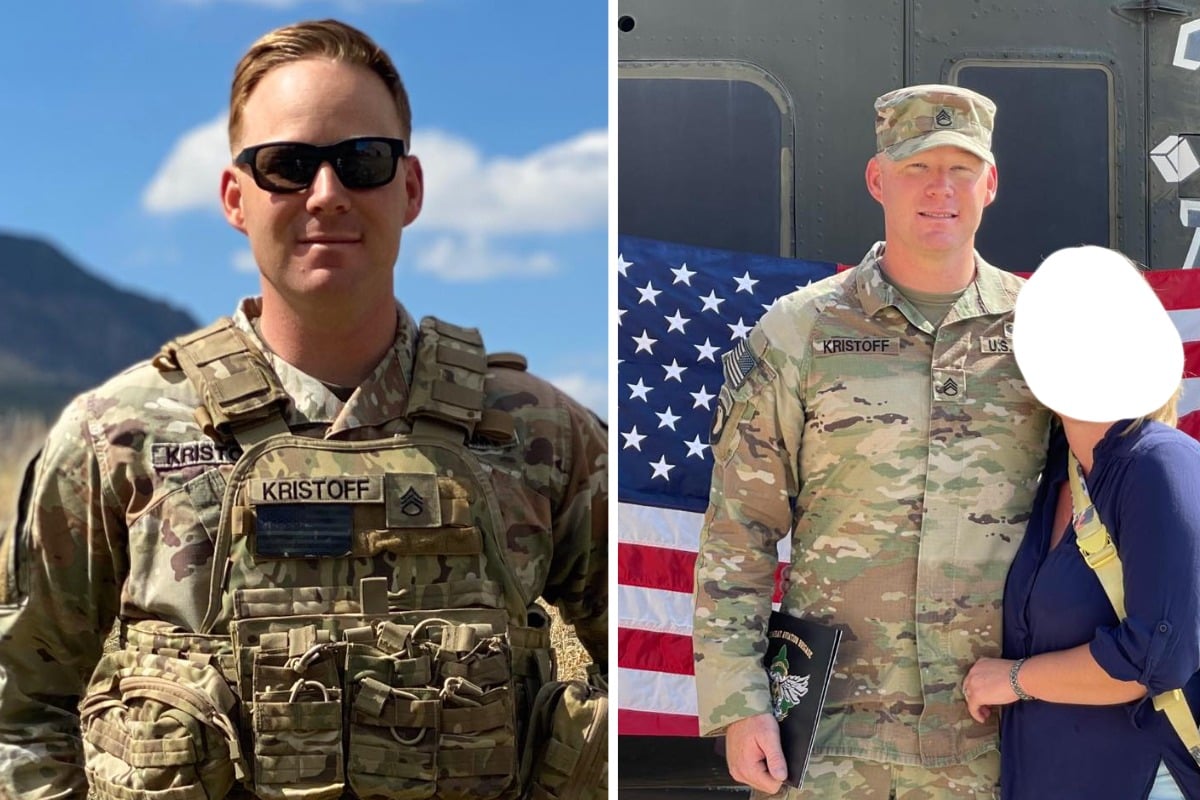
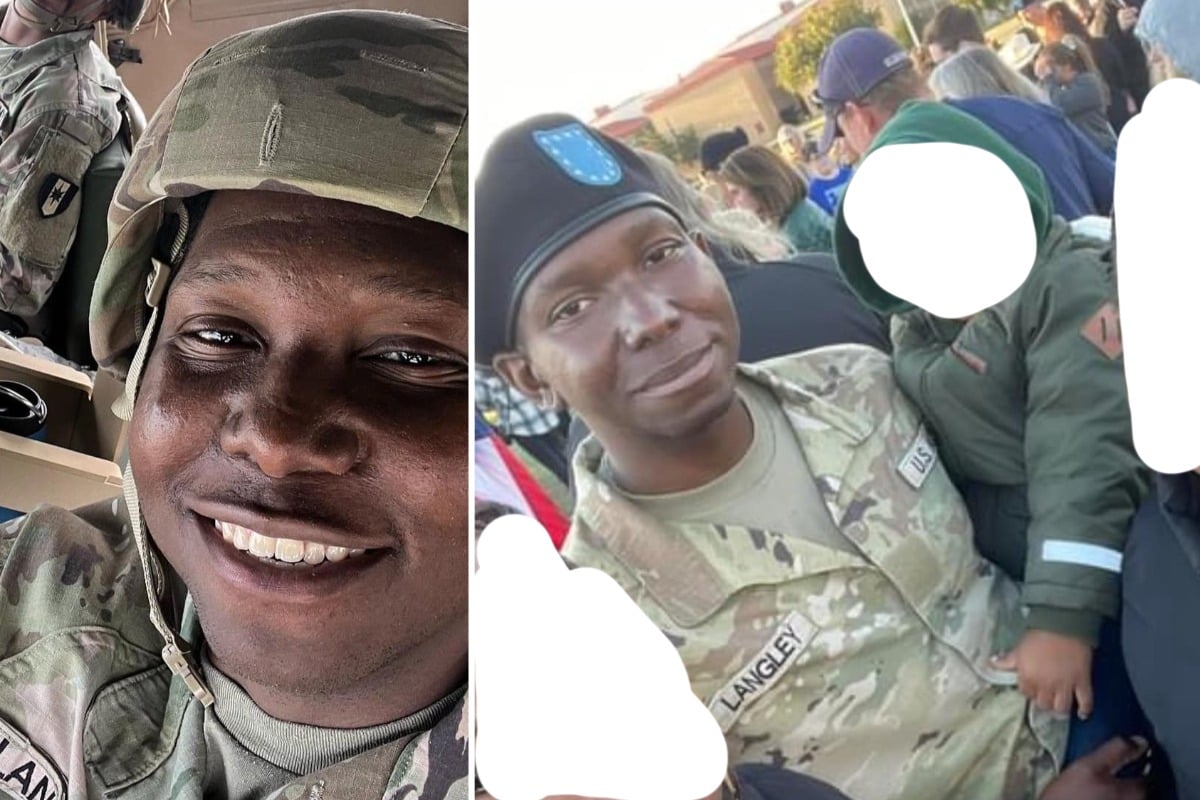
An Army staff sergeant was reduced in rank following a special court-martial at Fort George G. Meade, Maryland, after pleading guilty to charges involving extramarital sexual conduct and indecent conduct under the Uniform Code of Military Justice.
According to official court-martial results, Staff Sgt. Nicholas Heskett was convicted on Dec. 16, 2025, at a special court-martial convened by U.S. Army Garrison Fort Meade. Heskett pleaded guilty to one specification of extramarital sexual conduct and one specification of indecent conduct, both prosecuted under Article 134 of the UCMJ, commonly referred to as the military’s “general article.”
As part of the sentence, Heskett was reduced in rank to sergeant (E-5). The sentence was consistent with the terms of a plea agreement. No confinement or punitive discharge was imposed.
What Article 134 Is — and Why It’s Rarely Used This Way Anymore
Article 134 criminalizes conduct that is prejudicial to good order and discipline or brings discredit upon the armed forces. For decades, it served as a tool for addressing behavior commanders believed undermined unit cohesion or professionalism, including certain forms of sexual misconduct.
In recent years, however, criminal prosecutions for consensual sexual behavior have become increasingly rare, particularly when the conduct does not involve coercion, sexual assault, fraternization across ranks, or misuse of authority.
In many cases, similar allegations are handled administratively through counseling statements, nonjudicial punishment, or no action at all.
That makes Heskett’s court-martial notable.
A Stark Contrast With What Is Openly Tolerated
The conviction comes at a time when overt sexual exhibitionism and alternative sexual lifestyles are increasingly visible within military-adjacent online spaces, often without apparent consequence.
Through prior reporting, The Salty Soldier Uncensored has documented numerous cases involving service members publicly monetizing or broadcasting their personal relationships, advertising participation in alternative lifestyle communities near military installations, or using military identifiers such as rank, uniform, or duty station as part of online branding.
Much of this activity exists in plain sight across mainstream platforms, drawing large audiences and engagement. In many instances, it appears to result in little or no formal disciplinary action.
No court-martial.
No public discipline.
No consistent enforcement.
So Why This Case?
That question has become a source of growing frustration among service members.
Military justice experts note that Article 134 prosecutions almost always hinge on secondary effects — not the conduct itself, but the consequences it allegedly created. These can include workplace disruption, command involvement, public exposure that embarrasses a unit or the service, or conduct crossing from private behavior into service-discrediting territory.
Without transparency, however, the line between tolerated behavior and criminally charged conduct often appears arbitrary. One service member may build a highly visible online persona without repercussions, while another faces a federal criminal conviction for conduct the Army itself struggles to define consistently.
A Culture Problem, Not Just a Discipline Problem
This case does not exist in a vacuum.
It unfolds against a backdrop in which personal boundaries have become increasingly blurred, online attention and monetization reward more extreme behavior, and commanders are often forced to react to exposure rather than enforce clear, consistent standards.
The result is a system where the rules technically exist, but enforcement feels selective — creating uncertainty for service members and raising questions about fairness, accountability, and leadership credibility.
Service Background
Publicly available social media posts reviewed by The Salty Soldier suggest Heskett may have previously served with the 103rd Expeditionary Sustainment Command, headquartered in Des Moines, Iowa, where he appears to have been first promoted to the rank of E-5. Court-martial records indicate he was promoted to staff sergeant in 2021 while later serving within the Army Reserve’s Military Police command structure at Fort Meade.
The 200th Military Police Command, headquartered at Fort Meade, serves as the senior command for nearly all U.S. Army Reserve Military Police units and is responsible for training and deploying forces for missions including route security, detention operations, and law enforcement support.
While the Army has not released details describing the specific conduct underlying the charges, the conviction underscores that consensual sexual conduct can still carry serious career consequences when commanders determine it undermines good order and discipline or brings discredit upon the service.
At the same time, cases like this continue to raise questions about consistency, transparency, and predictability in military discipline, particularly as personal behavior increasingly intersects with public online platforms.
As with all military justice cases, the conviction and sentence are matters of public record following completion of the court-martial proceedings.
Additional reporting on the intersection of sexual culture, online behavior, and military discipline is available to subscribers at The Salty Soldier Uncensored.
© 2025 The Salty Soldier. All rights reserved. Reproduction without written consent is strictly prohibited.