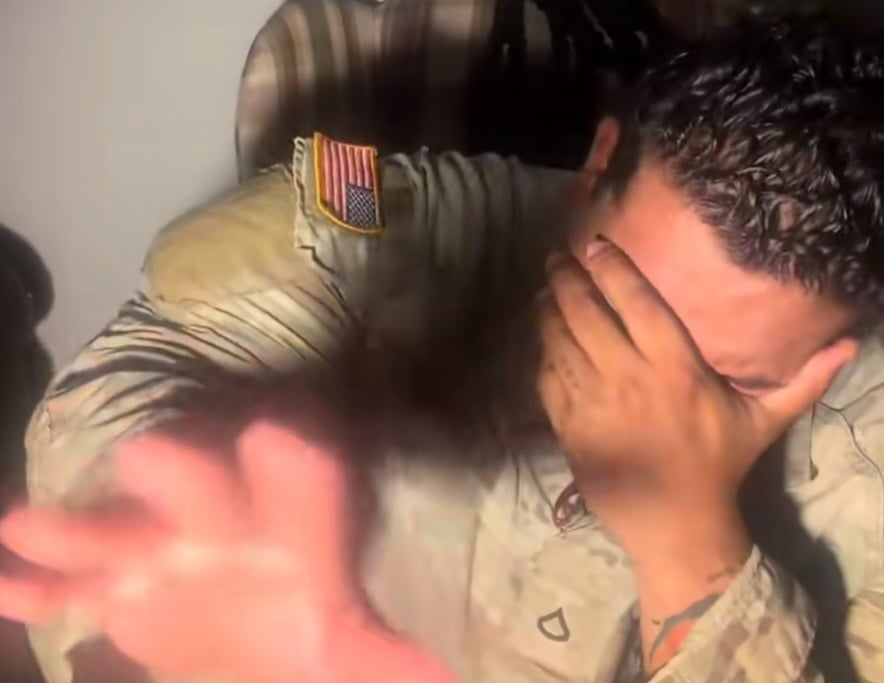
WASHINGTON — Defense Secretary Pete Hegseth has ordered the creation of a new Barracks Task Force aimed at tackling one of the military’s longest-running quality-of-life problems: substandard troop housing.
In a memorandum dated October 6, Hegseth directed the Under Secretary of War for Acquisition and Sustainment (USW[A&S]) to form the task force and appoint the Assistant Secretary of War for Energy, Installations and Environment (ASW[EI&E]) as its lead. The ASW( EI&E) will serve as the Department of War’s Chief Housing Officer and report progress directly to Hegseth.
“Barracks are where our warriors live, rest, and recover,” Hegseth wrote. “For too long this Department has neglected its responsibilities to set and maintain appropriate standards for barracks — that ends now.”
The order gives the task force 30 days to produce an initial execution plan for review.
Speaking Tuesday at Naval Air Station Oceana in Virginia, Hegseth told recruits that the Pentagon can no longer tolerate unsafe and unsanitary living conditions. “It is simply unacceptable that in some cases, our warriors continue to live in substandard housing,” he said. “Every service member deserves housing that is clean, comfortable, and safe.”
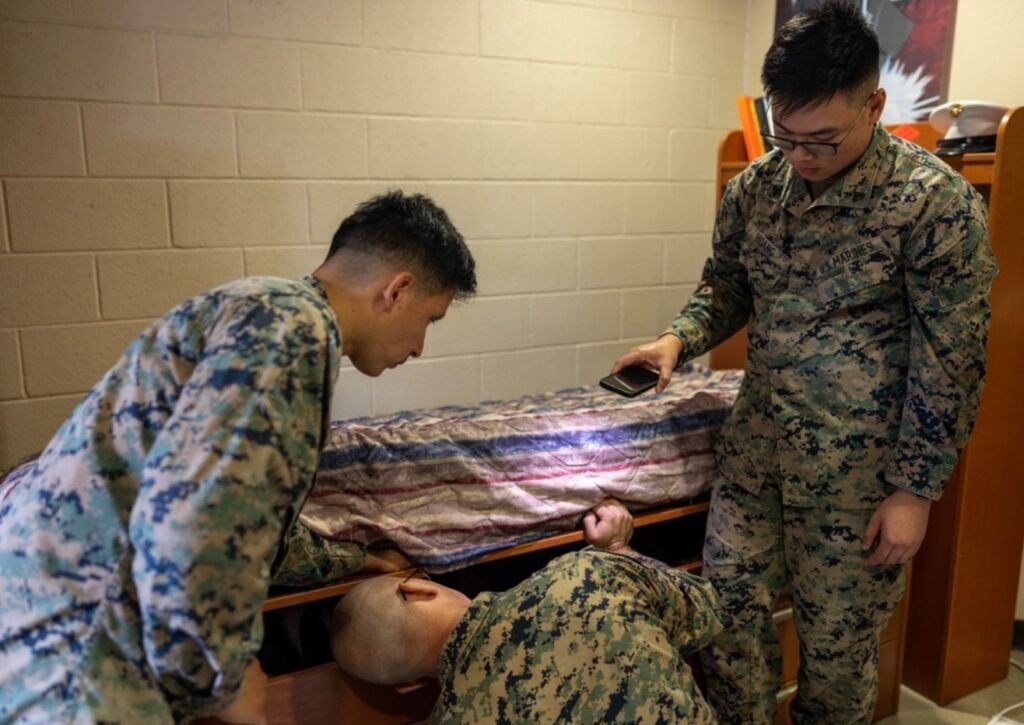
The move follows a 2023 Government Accountability Office report that documented widespread problems across the services — including black mold, raw sewage leaks, pest infestations, and broken HVAC systems. The report found that poor living conditions were undermining morale, health, and combat readiness, particularly among junior enlisted troops.
What the Task Force Will Do
According to the memorandum, the Barracks Task Force will be responsible for:
- Developing a department-wide Barracks Improvement Execution Plan;
- Identifying regional and cross-cutting investment opportunities, including new acquisition and contracting strategies not bound by traditional Pentagon planning;
- Establishing department-wide housing standards focused on air and water quality;
- Recommending ways to empower local commanders to take more direct action on maintenance and repairs.
The memo also directs the task force to promote “barracks self-help programs,” allowing troops to make minor fixes themselves rather than waiting for civilian contractors or base housing offices.

Bringing in Private Sector Partners
A follow-up X (formerly Twitter) video, released on Thursday, outlined that the Pentagon will leverage private industry to modernize aging barracks. Hegseth said the goal is to “accelerate construction and renovation where we can” by consolidating contracts and adopting commercial best practices.
“We’ll leverage the expertise of private industry to deliver innovative technologies and contracting strategies,” he said in the video. “We’re also going to empower unit commanders and senior enlisted leaders to fix issues at their level without having to wait on Pentagon bureaucracy.”
The task force, which has already met three times, includes representatives from across the Department of War’s personnel, readiness, and financial offices, along with service branch delegates and contracting experts.
Troops and Veterans Sound Off
The announcement has sparked strong reactions online from both veterans and active-duty troops.
One Marine veteran wrote: “Our son’s barracks still have no AC and ceiling tiles missing. Contractors hide behind red tape and do nothing.”
Another servicemember recalled black mold and rodent infestations in barracks at Grafenwöhr, Germany, describing the living conditions as “horrifying.”
Still, some veterans voiced skepticism. “Quonset huts and open squad bays were good enough for us,” one user commented. “Now we need a task force to build luxury barracks?”
Others welcomed the initiative but urged the Pentagon not to forget military families living in privatized base housing. “My home flooded, and there’s mold inside the walls,” one spouse posted. “We need this same energy for family housing too.”
Billions Already in Motion
Congress has already approved more than $1 billion for troop housing improvements in this year’s defense spending bill. In Europe, large-scale projects are underway to replace aging facilities.
In Vicenza, Italy, home to the 173rd Airborne Brigade, a $500 million housing initiative is adding 470 new homes by 2028, with the first 111 set for completion this year. Upgrades are also planned for Baumholder and Wiesbaden, Germany — the latter of which recently ranked lowest in satisfaction among European Army garrisons.
Despite the funding, Hegseth acknowledged that “it can take years for new barracks to go from planning to completion.” The task force’s job, he said, is to find ways to make that process faster and more effective.
Hegseth closed his memorandum with a message that resonated with many in uniform:
“We owe this to our Warriors — and we have their backs.”
The Pentagon’s challenge now will be proving that this isn’t just another task force destined to gather dust, but a serious commitment to improving the daily lives of the men and women who serve.
© 2025 The Salty Soldier. All rights reserved.
Reproduction without written consent is strictly prohibited.