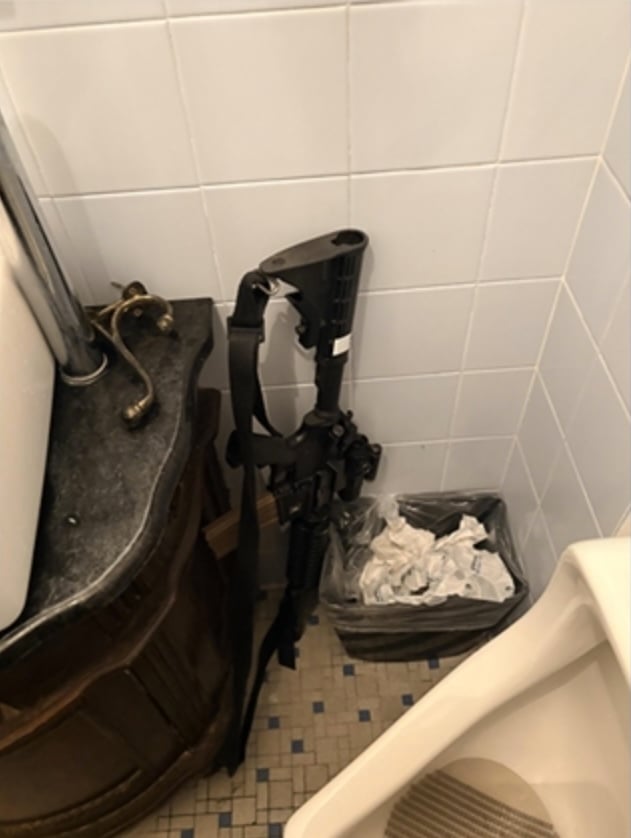
A Louisiana National Guard soldier leaving his service rifle unattended inside a Bourbon Street hotel bathroom during Mardi Gras patrols was, at its core, an individual lapse.
The weapon was recovered. The Guard confirmed the matter is being handled internally. The incident, while serious, appeared localized.
But the moment offered something else — a reminder of how modern military operations intersect with a far larger institutional framework that often goes unseen.
The Public Voice — and the Trail It Sparked
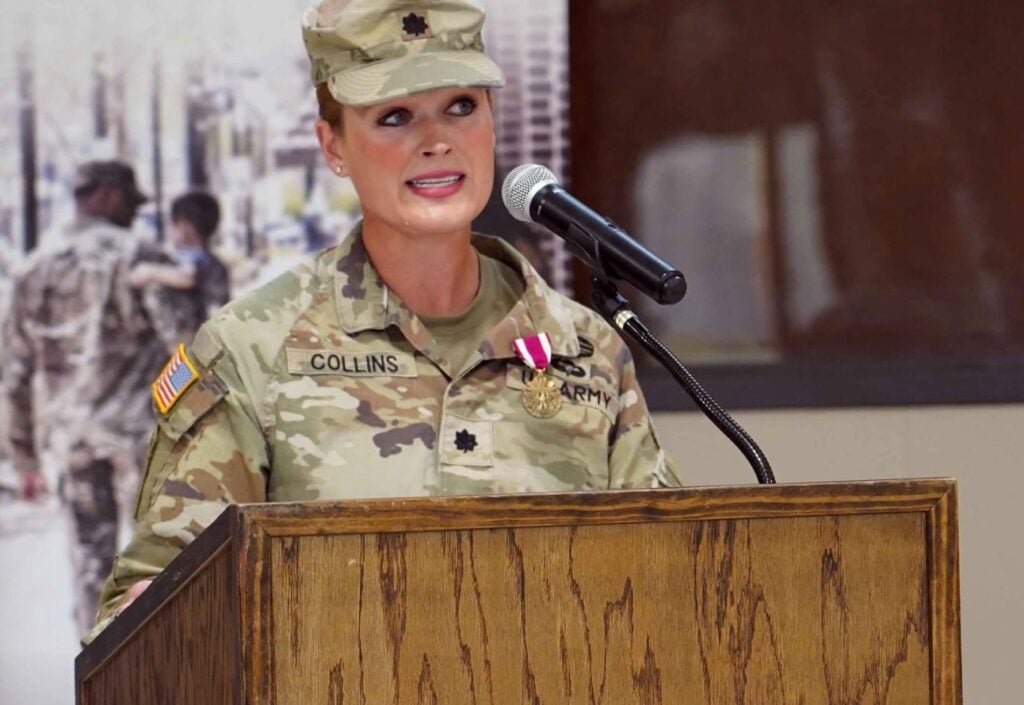
In confirming the incident, Lt. Col. Noel Collins, Director of Public Affairs for the Louisiana National Guard, served as the official spokesperson.
A review of publicly available biographical information shows that, prior to her current full-time Guard role, Collins held civilian positions with Serco Group plc, a major federal contractor supporting Department of Defense programs.
There is no public evidence suggesting any improper overlap between her Guard service and prior civilian employment. National Guard officers across the country routinely maintain civilian careers in industries that support federal missions.
But that résumé detail raised a broader structural question: how extensively are multinational, publicly traded corporations embedded within the operational and support architecture of the U.S. military?
The answer extends far beyond Louisiana.
The Contractor Footprint
Serco Group plc is a publicly traded multinational corporation headquartered in the United Kingdom, operating through a substantial North American subsidiary.
According to the company’s published materials, Serco has performed work on more than 200 contracts in North America and more than 600 contracts worldwide. Its portfolio spans a wide range of federal contract vehicles and task orders, including:
- Defense logistics and maintenance support
- Tactical communications systems
- Engineering and integration services
- Human capital and training solutions
- Cybersecurity and information systems
- Program management and acquisition support
Serco operates under major federal contracting vehicles such as Alliant 2, RS3, SeaPort-NxG, OASIS+, HCaTS, and others — procurement frameworks that allow agencies across the Department of Defense and federal government to issue task orders for integrated mission support services.
The scale becomes clearer when viewed through programs like the Transition Assistance Program (TAP), an area in which Collins previously worked during her civilian tenure with Serco.
From 2012 through 2016 — while she was concurrently serving as an officer in the Louisiana National Guard — Collins held civilian positions including ACAP Career Counselor, Contractor Installation Manager for SFL-TAP, and Quality Control Inspector at Fort Polk in Leesville, Louisiana. Those roles were civilian contractor positions tied to federally mandated transition services for separating service members.
In October 2024, Serco announced a $193 million recompete contract supporting the Department of Labor’s Veterans’ Employment and Training Services Transition Assistance Program — assisting approximately 200,000 transitioning service members annually at more than 250 military installations.
Programs of that scale involve high-volume interaction with service members navigating employment readiness, benefits counseling, and separation processing. While federal agencies maintain systems of record and retain ultimate authority over data governance, contractors performing these services may handle sensitive personal and career information in the course of executing their task orders.
The volume underscores the extent to which private-sector firms are embedded within military personnel support systems.
Embedded Within the Infrastructure
The modern U.S. military support system does not operate solely within uniformed chains of command.
Personnel readiness, installation support, communications infrastructure, transition counseling, logistics planning, and systems integration frequently involve private prime contractors executing federally funded task orders.
This structure is lawful, longstanding, and heavily regulated.
It is also expansive.
When a single publicly traded corporation holds access to multiple federal contract vehicles spanning defense systems, cyber infrastructure, personnel services, and logistics functions, it becomes part of the operational architecture that supports national defense.
Public Mission, Private Governance
Serco, like many large federal contractors, is governed by fiduciary obligations to its shareholders and operates within global capital markets. At the same time, it performs mission-critical work for U.S. federal agencies.
That dual structure — private corporate governance operating within public national missions — is not unusual in today’s defense contracting environment. Federal acquisition regulations, cybersecurity requirements, compliance audits, and inspector general oversight mechanisms exist to ensure contractual obligations and data protections are enforced.
But the scale of reliance matters.
When essential government services — particularly those involving personnel systems, readiness infrastructure, and potentially sensitive information — are delivered by multinational, shareholder-governed firms, oversight frameworks become central to public confidence.
The issue is how alignment between shareholder accountability and public-interest obligations is maintained, audited, and enforced across hundreds of simultaneous contracts.
Public filings indicate that Serco’s ownership structure is predominantly institutional, with no single entity holding a majority controlling stake. As of late 2025 and early 2026, BlackRock, Inc. is consistently identified as the largest institutional shareholder in Serco Group plc, holding approximately 9.3% to 10.1% of the company’s shares. Other major institutional investors with significant holdings include JP Morgan Asset Management, The Vanguard Group, and Fidelity International.
Ownership alone does not dictate operational decisions. However, the corporate governance model underscores the importance of regulatory oversight when publicly traded entities perform large volumes of federally funded mission support work.
Concentration and Accountability
The defense contracting landscape increasingly relies on large prime contractors managing broad portfolios across agencies and mission domains.
Contract vehicles such as RS3, SeaPort-NxG, and Alliant 2 allow federal entities to procure services efficiently and at scale. That efficiency can also result in concentration of capability among a relatively small number of firms.
Concentration is not misconduct.
But it elevates the importance of:
- Cybersecurity compliance
- Data governance controls
- Contract oversight and audit enforcement
- Transparency in subcontractor relationships
- Clear delineation of authority between federal agencies and private vendors
When hundreds of contracts operate under one corporate umbrella, oversight becomes less about a single task order and more about systemic governance.
The Rifle Was the Spark
The Bourbon Street rifle incident did not involve a contractor.
It did not involve Serco.
It involved a soldier who made a mistake during a high-visibility deployment.
Yet the moment served as a reminder of how interconnected today’s defense ecosystem has become. Uniformed personnel, state National Guard structures, federal agencies, and multinational contractors operate within the same operational space.
The public rarely sees that infrastructure unless something goes wrong.
The rifle incident was visible.
The contract architecture behind modern military support is not.
As federal reliance on private-sector execution continues to expand, scrutiny naturally extends beyond individual lapses to structural realities.
In an era where mission support functions intersect with global corporations managing hundreds of federal contracts, public trust depends not only on soldier discipline — but on durable oversight of the institutions that support them.
Stay salty.
© 2026 The Salty Soldier. All rights reserved. Reproduction without written consent is strictly prohibited.