SPRINGFIELD, Georgia — Newly obtained police footage and records reviewed by The Salty Soldier suggest significant investigative shortcomings in the second DUI arrest of the driver responsible for the crash that killed a decorated U.S. Army Ranger — failures that may help explain why the case ultimately ended in a plea deal.
The materials relate to the September 6, 2025 arrest of Jadon Demani Mike by Effingham County Sheriff’s Deputy Aaron McKinney, which occurred while Mike was awaiting trial for the March 7, 2024 crash that killed Master Sgt. Christopher Alan Decker, a decorated Army Ranger assigned to the 1st Battalion, 75th Ranger Regiment at Hunter Army Airfield near Savannah.
Decker, 34, had deployed 11 times to combat during his career and was serving as an ROTC instructor at Georgia Southern University at the time of his death.
Mike was originally indicted on charges including homicide by vehicle in the first degree and DUI drugs in connection with the fatal crash.
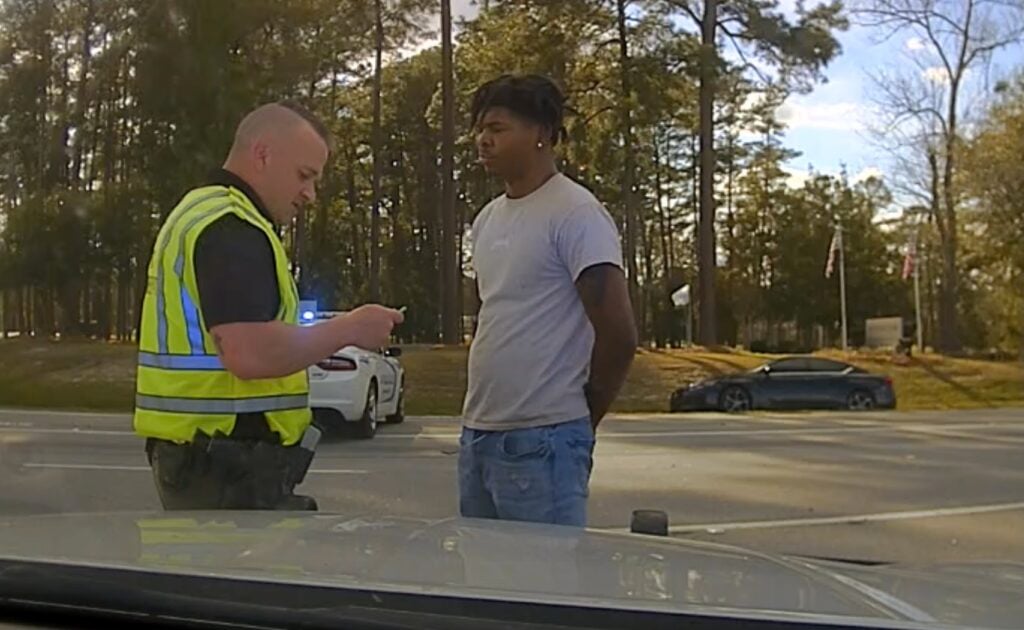
But newly obtained video and records show the subsequent DUI arrest — which could have strengthened the prosecution’s case — appears to have been documented in ways that may have made it difficult to prove in court.
A DUI Arrest That Should Have Been Straightforward
According to Deputy McKinney’s report, he encountered Mike after his 2022 Chevrolet Silverado pickup truck left the roadway near Highway 119 South and Samuel Rahn Road in Guyton, Georgia shortly after midnight.
The report states Mike showed clear signs of intoxication, including slurred speech and difficulty following instructions.
Inside the truck, McKinney reported finding:
• a Glock Model 43 9mm handgun
• 9mm ammunition
• approximately $2,103 in cash
• an open bottle of Johnny Bootlegger alcohol reportedly located under the driver’s seat
Mike ultimately refused a chemical breath or blood test after McKinney read Georgia’s implied consent warning, which informs drivers that refusing testing can result in suspension of their driving privileges.
Dashcam footage from the arrest also captured McKinney speaking with a tow truck driver who arrived to remove the vehicle. During the conversation, the deputy can be heard describing Mike’s condition, stating:
“He’s drunk as shit.”
Taken together, the observations documented in the report — along with the deputy’s own comments captured on video — suggest that officers believed Mike was clearly intoxicated at the scene.
But the footage and records ultimately produced by the sheriff’s office tell a different story.
Evidence That Should Exist — But Doesn’t
Dashcam footage obtained by The Salty Soldier begins with Deputy Aaron McKinney already parked at the scene.
The recording does not capture the initial encounter with Jadon Demani Mike, the deputy approaching the vehicle, or any interaction between the deputy and the driver before the investigation began.
In fact, Mike never appears on camera at any point in the dashcam recording.
The footage does not show Mike exiting the vehicle, does not record the deputy first observing his condition, and does not capture any questioning or interaction between the two men.
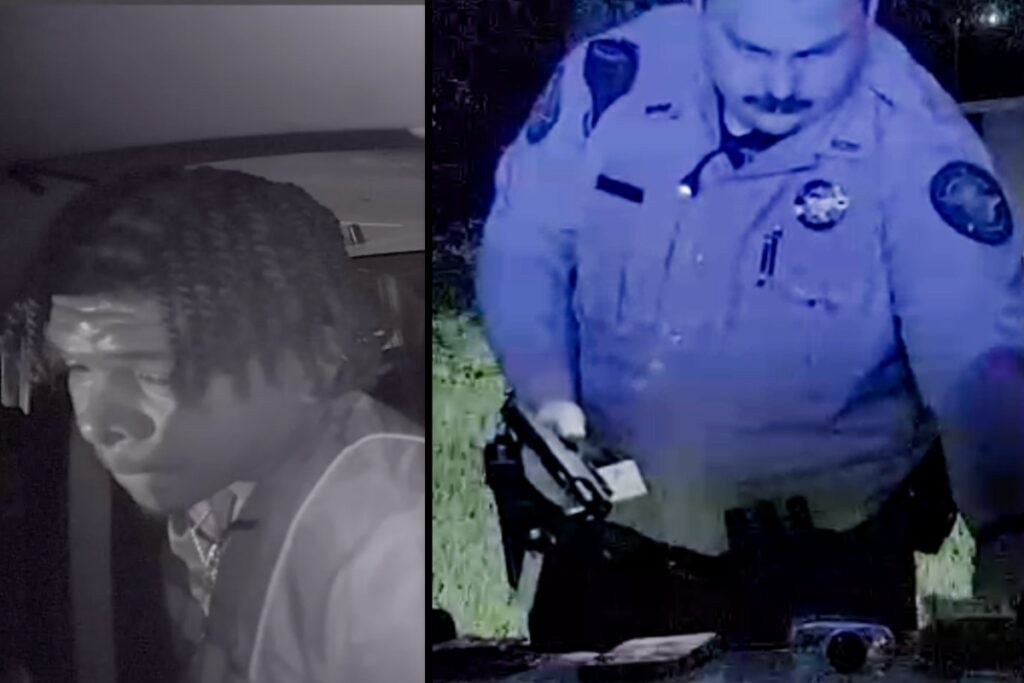
At one point early in the recording, an unidentified individual — not listed anywhere in the incident report — approaches the Silverado and enters the vehicle through the passenger side.
Shortly afterward, the truck is seen driving away from the scene, traveling down the road, turning around, and returning several minutes later.
The footage does not clearly show who is driving the vehicle when it returns.
The sequence is notable because the vehicle is moved before any evidence appears to be documented on camera.
After the truck returns, Deputy McKinney begins processing items associated with the arrest.
The footage shows several items — including the handgun, cash, and the bottle of alcohol described in the report — being placed on the hood of McKinney’s patrol vehicle.
The deputy then appears to photograph the items using a cell phone.
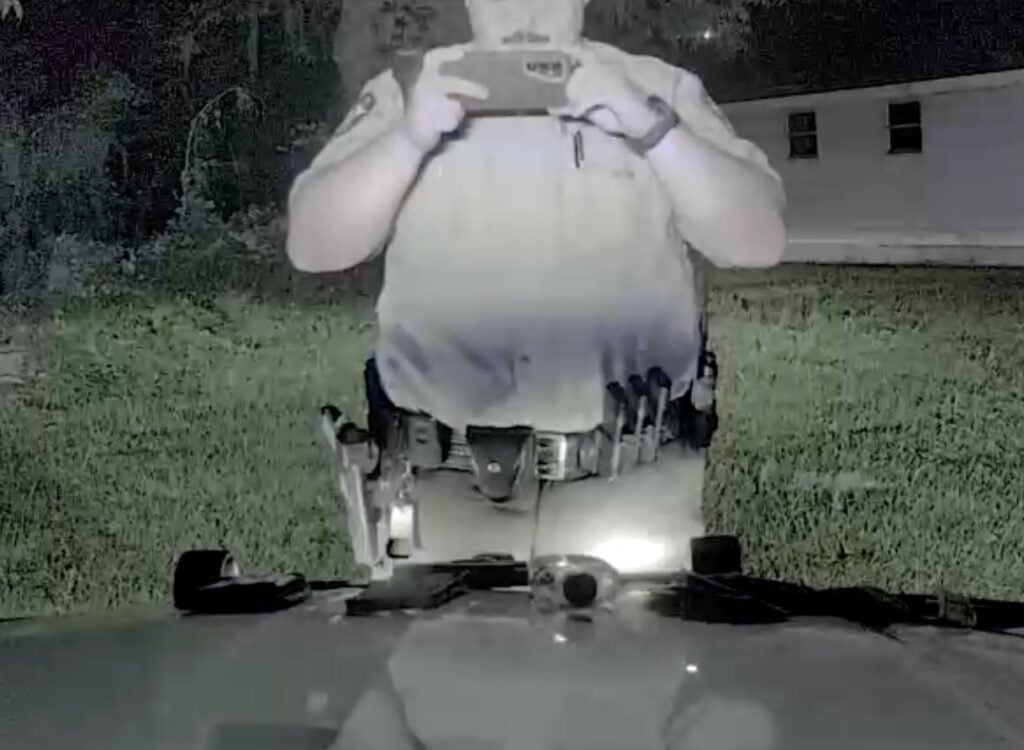
What the footage does not show are photographs documenting where those items were originally located inside the vehicle.
In DUI investigations, particularly those involving open containers of alcohol, officers typically photograph the evidence in the exact location where it was found inside the vehicle before removing it.
Those photographs help establish both the location of the evidence and the chain of custody during the investigation.
In this case, however, those types of photographs were not included in the records produced by the sheriff’s office.
Sheriff’s Office Says Photos Were Taken on Personal Phone
In email correspondence reviewed by The Salty Soldier, the Effingham County Sheriff’s Office acknowledged that Deputy McKinney took photographs during the investigation using a personal cell phone.
However, the agency indicated that the images were not retained by the department and are not part of the official case file.
As a result, the photographs the deputy appears to take in the dashcam footage — documenting the handgun, cash, and alcohol bottle placed on the patrol car hood — are not available as part of the official investigative record.
Why the Second DUI Arrest Mattered
The problems with the 2025 DUI investigation are significant because that arrest occurred while Mike was already facing felony charges in the 2024 crash that killed Decker.
That earlier case already contained substantial evidence showing Mike caused the fatal collision.
Dashcam footage from the crash scene includes witnesses telling deputies that Mike turned directly into the path of Decker’s motorcycle, causing the crash.
Crash investigators ultimately concluded Mike failed to yield the right of way, striking Decker as he rode through the intersection.
However, the impairment evidence in the fatal crash investigation was more limited.
According to the grand jury indictment filed months later, toxicology testing showed marijuana and delta-9-tetrahydrocannabinol (THC) in Mike’s blood.
Under Georgia law, drivers can be charged with DUI “less safe” if drugs impair their ability to drive.
But unlike alcohol cases, there is no universally accepted THC threshold that automatically proves impairment, which can make drug-impairment cases harder to prove to a jury.
Investigators also reported detecting the odor of burnt marijuana coming from Mike’s vehicle following the crash.
While that evidence was sufficient for prosecutors to pursue charges and secure an indictment, proving drug impairment in court can be significantly more difficult than proving alcohol impairment.
A Second DUI That Could Have Strengthened the Case
That is why the September 2025 DUI arrest was potentially so important.
Unlike the earlier crash investigation, the second arrest involved alcohol, which is typically easier to demonstrate in court through officer observations, physical evidence, and chemical testing.
On paper, the incident described in the report could have significantly strengthened the prosecution’s case by showing a pattern of impaired driving behavior while Mike was already facing charges for the fatal crash.
But the newly obtained footage suggests that key pieces of evidence were never fully documented or preserved.
Without chemical test results — because Mike refused testing — and without preserved photographs documenting the evidence inside the vehicle, prosecutors may have faced challenges presenting a clear and complete DUI case to a jury.
How That May Have Affected the Fatal Crash Case
Those weaknesses may help explain why the broader case ultimately ended with a negotiated plea agreement in February 2026.
Under the deal, the original felony charge of homicide by vehicle in the first degree was reduced to misdemeanor homicide by vehicle in the second degree, and the DUI drug charge connected to the fatal crash was dismissed.
Mike was sentenced to 30 days in jail followed by 12 months of probation and a $1,000 fine.
Given the circumstances surrounding Decker’s death, the plea agreement sparked outrage among many in the military and veteran community.
But the newly obtained footage and records suggest prosecutors may have been facing a far more complicated case than the original charges suggested.
A Ranger Remembered
For those who knew him, Master Sgt. Christopher Decker was far more than a name in a court record.
A native of Steubenville, Ohio, Decker spent years serving with the 75th Ranger Regiment, deploying repeatedly to combat during the post-9/11 wars.
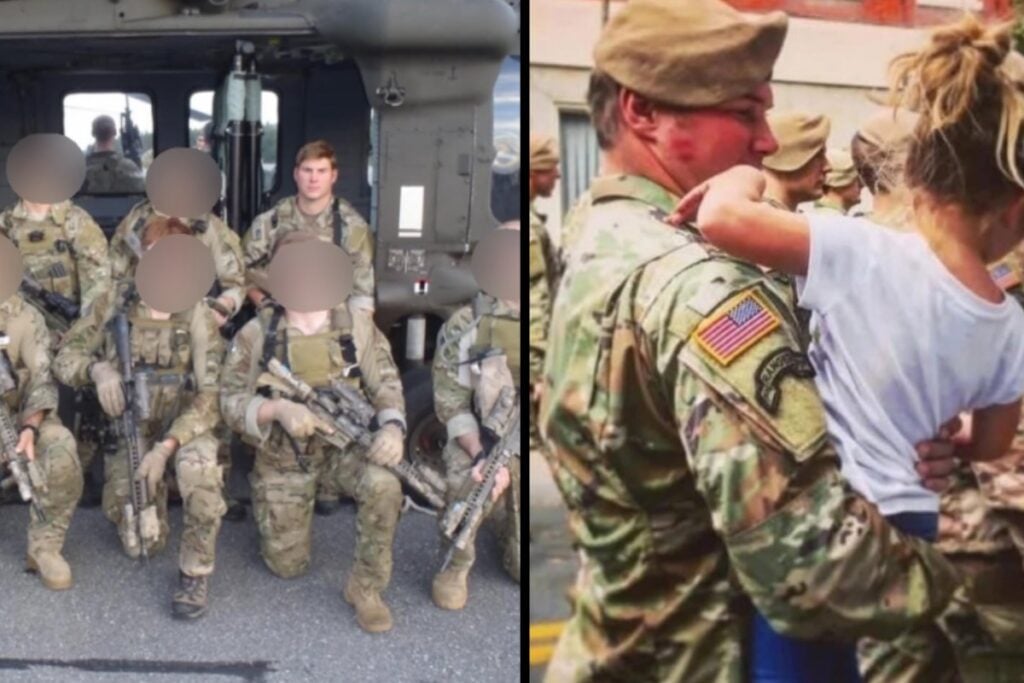
According to his obituary, he later chose to serve as an ROTC instructor at Georgia Southern University, helping train the next generation of Army officers.
He earned numerous decorations during his career, including two Bronze Stars, the Combat Infantryman Badge, the Expert Infantryman Badge, and the Senior Parachutist Badge.
He is survived by his daughter, Sadie.
What the Sheriff’s Office Says Exists — and What Doesn’t
In response to open records requests, the Effingham County Sheriff’s Office stated that it has provided all records in its possession related to the investigation and arrest.
That means the photographs the deputy appears to take in the dashcam footage — which the department said were captured on his personal phone — along with any other evidence documentation that might normally accompany a DUI investigation, are not part of the official case file provided by the department.
For prosecutors building a case around impaired driving, documentation of where evidence was located inside a vehicle can be critical.
In this case, however, the available records show no preserved photographs of the open alcohol bottle reportedly found beneath the driver’s seat, no documented images showing the handgun or cash inside the vehicle, and no chemical test results due to Mike’s refusal.
Those gaps in the investigative record may help explain why the broader case ultimately ended with a negotiated plea agreement rather than a trial.
For the family of Master Sgt. Christopher Decker — and for members of the 75th Ranger Regiment he once served alongside — the unanswered questions surrounding how key evidence was handled may remain part of a long search for justice.
As many continue to ask how the driver responsible for the Ranger’s death ultimately received such little jail time, the records reviewed by The Salty Soldier suggest the outcome may have been shaped not only by what investigators found — but by what was never fully documented.
Editor’s Note: In the interest of transparency, the police reports, dashcam footage, and other records referenced in this investigation will be released later today for subscribers of The Salty Soldier Uncensored.
© 2026 The Salty Soldier. All rights reserved