A Minnesota social media influencer known for filming highly produced “acts of kindness” is facing renewed scrutiny after distributing retired U.S. Army camouflage uniforms to members of the homeless population in what appears to be the Minneapolis–St. Paul area during one of the most politically tense periods the region has experienced in recent years.
Josh Liljenquist, who operates online under the handle “Joshlilj,” has built a following of more than 10 million on TikTok and hundreds of millions of likes across platforms by documenting large-scale donations to strangers and people experiencing homelessness. His slogan, “Live to Love,” is prominently featured throughout his content.
In a recent video filmed at CC Military Surplus — a military surplus store located in Maplewood, a suburb just northeast of downtown St. Paul and roughly 15 minutes from Minneapolis — Liljenquist purchased stacks of Army Combat Uniform tops and bottoms before what appears to be the distribution of those items in the Minneapolis–St. Paul metro area.
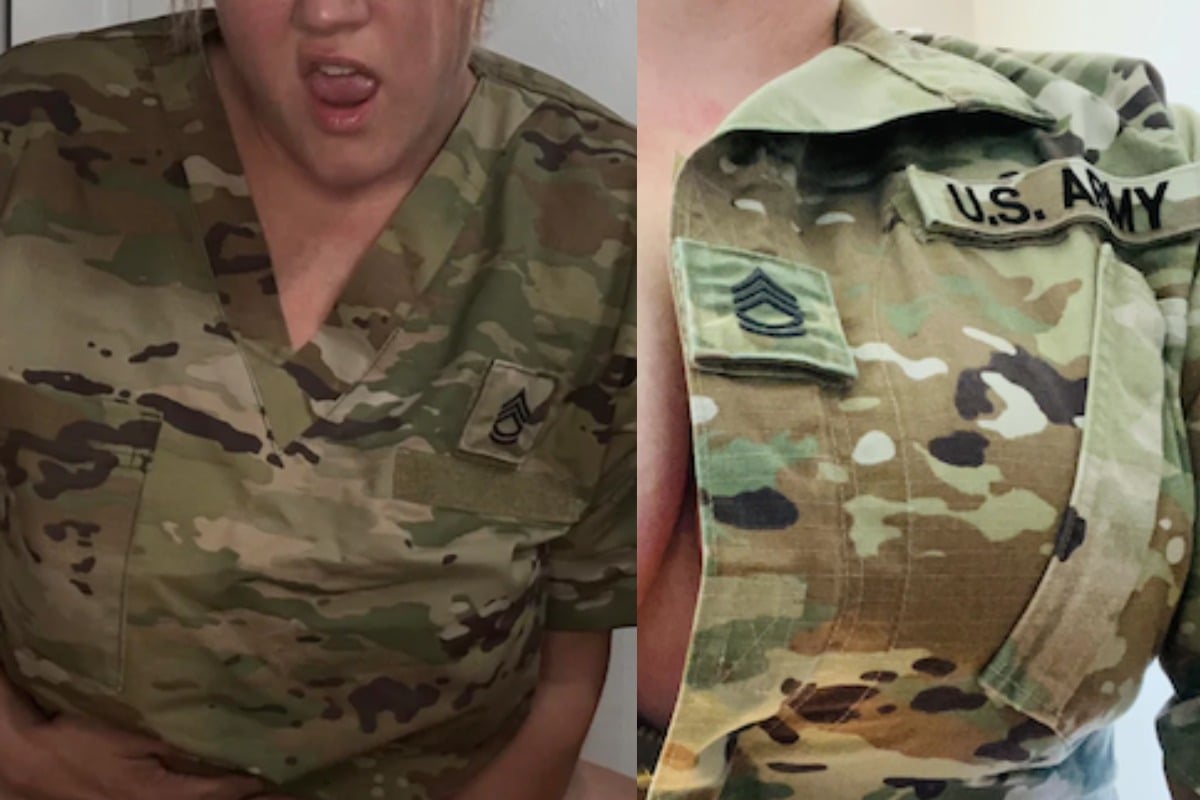
The uniforms shown in the video are not the Army’s current Operational Camouflage Pattern (OCP). They are the older Army Combat Uniform in Universal Camouflage Pattern (UCP) — the pixelated blend of desert sand, foliage green, and slate gray used by the Army from 2005 until its phased retirement in 2019.
While no longer the active-duty standard, the UCP uniform is still immediately recognizable as U.S. Army camouflage.
During the video, Liljenquist can be heard telling recipients the uniforms would keep them warm in temperatures “down to -40 degrees.”
That claim is inaccurate.
The UCP Army Combat Uniform was designed as a temperate-weather duty uniform. Made primarily of a nylon-cotton ripstop blend, it offers durability and breathability, not insulation. On its own, it provides minimal protection against severe cold.
In actual Army doctrine, soldiers rely on the Extended Cold Weather Clothing System (ECWCS) — including thermal base layers, fleece jackets, insulated parkas, and outer shells — when operating in extreme temperatures. The ACU itself is not cold-weather gear.
If the objective was strictly warmth during Minnesota winter conditions, insulated civilian outerwear, thermal underlayers, fleece jackets, or surplus cold-weather systems would arguably provide greater protection without introducing the visual implications of distributing full military camouflage uniforms.
It is not publicly known whether those alternatives were discussed.
The timing is significant.
The Minneapolis–St. Paul region is currently navigating heightened tensions tied to a large-scale federal immigration enforcement operation known as “Operation Metro Surge.” Thousands of federal agents have operated in the area since late 2025, leading to protests, violent confrontations, and intense political backlash. Local leaders, including Jacob Frey and Keith Ellison, have publicly condemned aspects of the operation and called for reductions in federal presence.
In that climate, distributing military camouflage uniforms — even retired versions — carries implications beyond fabric and stitching.
In areas where federal agents, law enforcement personnel, and demonstrators are operating simultaneously, civilians wearing military-style camouflage risk misidentification. From a distance, especially in chaotic environments, older UCP camouflage may not be immediately distinguishable from other tactical apparel.
To bystanders — or even responding officers making rapid assessments — groups of individuals wearing military camouflage could appear organized or aligned with a cause, regardless of intent.
Intent and perception are not always the same thing.
Liljenquist is no stranger to criticism.
Across the Minneapolis–St. Paul metro, online discussions have questioned whether his videos are staged in coordination with participating businesses. Past content has featured restaurants appearing surprised by large food orders that are later distributed to homeless individuals — followed by waves of five-star reviews encouraging online support.
Supporters argue the model still helps people in need. Critics describe it as philanthropy optimized for engagement.
Estimates place Liljenquist’s net worth between approximately $500,000 and $3 million as of 2025, though such figures remain speculative.
The Salty Soldier previously reported on another one of his viral “kindness” videos that inadvertently involved a senior Army commander.
None of this diminishes the reality that people in the Twin Cities need warmth. Minnesota winters are unforgiving, and outreach efforts can mean the difference between safety and exposure.
But in a city currently balancing protest, federal enforcement, and strained community relations, symbolism carries weight.
A retired Army uniform is still a U.S. Army uniform.
Even if no deception is intended, placing military camouflage into a tense urban environment during an active federal operation invites questions:
• Was the visual impact of camouflage part of the content strategy?
• Were recipients informed that the uniform alone is not extreme cold-weather gear?
• Could alternative clothing have reduced the potential for misidentification or confrontation?
Philanthropy filmed for millions of viewers does not occur in isolation. It occurs within a real-world environment shaped by politics, law enforcement presence, and community tension.
In Minneapolis–St. Paul right now, perception matters.
And sometimes, what appears generous on camera can carry consequences off of it.
© 2026 The Salty Soldier. All rights reserved. Reproduction without written consent is strictly prohibited.